

If you have ever watched a soccer match in Spain, joined a pickup basketball game in Mexico, or tried talking about your favorite team with a Spanish-speaking friend, you have probably noticed how quickly sports vocabulary comes up!
Knowing a few key terms can help you understand commentary, follow sports news, and even cheer alongside native speakers — this is exactly the kind of practical, high-frequency vocab that good language learning apps prioritize.
In this guide, you’ll learn 50 essential Spanish sports vocabulary words, how to pronounce them, how to use them naturally, and where sports language differs between Spain and Latin America.
If you want to hear these terms used the way commentators and fans actually say them, AI language apps are great for that kind of listening practice, and Babbel also covers casual, topic-based vocabulary like this.
50 Spanish Sports Vocabulary Words at a Glance
Use this Spanish sports glossary before diving deeper. These Spanish sports words cover essential sports vocabulary in Spanish, common Spanish sports terms, and practical Spanish athletic vocabulary you’ll hear during matches, training sessions, and everyday conversations.
| Spanish | English |
|---|---|
| el deporte | sport |
| el fútbol | soccer/football |
| el baloncesto | basketball |
| el béisbol | baseball |
| el tenis | tennis |
| el voleibol | volleyball |
| la natación | swimming |
| el ciclismo | cycling |
| el atletismo | athletics/track and field |
| el boxeo | boxing |
| el golf | golf |
| el equipo | team |
| el jugador | player |
| la jugadora | female player |
| el entrenador | coach |
| el árbitro | referee |
| el aficionado | fan |
| el estadio | stadium |
| la cancha | court/field |
| el campo | field |
| el partido | match/game |
| el torneo | tournament |
| la liga | league |
| el campeonato | championship |
| el entrenamiento | training/practice |
| el gol | goal |
| el punto | point |
| el marcador | score/scoreboard |
| el empate | draw/tie |
| la victoria | victory |
| la derrota | defeat |
| ganar | to win |
| perder | to lose |
| empatar | to tie |
| jugar | to play |
| competir | to compete |
| entrenar | to train |
| marcar | to score |
| lanzar | to throw/shoot |
| pasar | to pass |
| correr | to run |
| saltar | to jump |
| defender | to defend |
| atacar | to attack |
| el balón | ball |
| la pelota | ball |
| la raqueta | racket |
| la portería | goal |
| el uniforme | uniform |
| la medalla | medal |
Popular Sports Names in Spanish
If you want to chat about a game, these sports names in Spanish are the best place to start. Honestly, fútbol confused me at first because it means association football, or soccer in Spanish, not American football.
| Spanish | English | Pronunciation |
|---|---|---|
| el fútbol | soccer/football | el FOOT-bol |
| el baloncesto | basketball | el bah-lon-SEHS-toh |
| el béisbol | baseball | el BASE-bol |
| el tenis | tennis | el TEH-nees |
| el voleibol | volleyball | el boh-lay-BOL |
| la natación | swimming | lah nah-tah-SYON |
| el ciclismo | cycling | el see-KLEES-moh |
| el atletismo | athletics | el aht-leh-TEES-moh |
| el boxeo | boxing | el bok-SEH-oh |
| el golf | golf | el golf |
Baloncesto, the usual word for basketball in Spanish, connects balón and cesto—“ball” and “basket.” Béisbol is easier: Spanish adapted it from English “baseball,” which makes it memorable.
Try these: “Me gusta jugar al fútbol” means “I like playing soccer.” “Practico natación los sábados” means “I go swimming on Saturdays,” while “Ella juega al tenis” means “She plays tennis.”
Football in Spanish dominates conversation in Spain and much of Latin America, while béisbol is especially big in the Caribbean. Memory trick: picture the sport while saying its name aloud. One common mistake? Saying jugar fútbol instead of jugar al fútbol. Keep going—the next sports terms get more useful.
Spanish Words for Players, Coaches, Fans, and Teams
Sports conversations get easier once you know who everyone is. You’ll hear these words constantly during matches.
| Spanish | English | Pronunciation |
|---|---|---|
| el equipo | team | el eh-KEE-poh |
| el jugador / la jugadora | player | hoo-gah-DOR / hoo-gah-DOR-ah |
| el entrenador / la entrenadora | coach | en-tray-nah-DOR / en-tray-nah-DOR-ah |
| el árbitro / la árbitra | referee | AR-bee-troh / AR-bee-trah |
| el aficionado / la aficionada | fan/supporter | ah-fee-syoh-NAH-doh / ah-fee-syoh-NAH-dah |
For team in Spanish, equipo is your go-to word, while equipo nacional means “national team.” A player in Spanish changes by gender: jugador or jugadora. The same pattern works for coach in Spanish and referee in Spanish.
Honestly, one common trap: aficionado usually means a sports fan or supporter, not simply an expert like in English.
“Mi equipo favorito juega hoy” means “My favorite team plays today.” “Los aficionados celebran la victoria” means “The fans celebrate the victory.” Keep these people words handy—the action vocabulary comes next.
Spanish Vocabulary for Matches, Tournaments, and Competitions

Sports conversations move fast, so knowing event words helps. These are terms you’ll hear when someone talks about schedules, practice, or a final.
| Spanish | English | Pronunciation |
|---|---|---|
| el partido | match/game | el par-TEE-doh |
| el torneo | tournament | el tor-NEH-oh |
| la liga | league | lah LEE-gah |
| el campeonato | championship | el kam-peh-oh-NAH-toh |
| el entrenamiento | training/practice | en-tray-nah-MYEN-toh |
| competir | to compete | kom-peh-TEER |
| la competición | competition | kom-peh-tee-SYON |
For match in Spanish, partido is common in soccer and basketball. It works for game in Spanish with team sports. Torneo is the word for tournament in Spanish, while liga means league in Spanish and describes a competition.
“El partido empieza a las ocho” means “The match starts at eight.” “Participamos en un torneo local” means “We are participating in a local tournament.” Entrenamiento means practice, not a match. That distinction tripped me up. Next, let’s get into scoring and winning.
Spanish Words for Scores, Winning, and Losing
Sports results get exciting. Use these to follow the scoreboard, celebrate, or explain loss.
| Spanish | English | Pronunciation |
|---|---|---|
| el gol | goal | el GOHL |
| el punto | point | el POON-toh |
| el marcador | score/scoreboard | el mar-kah-DOR |
| el empate | draw/tie | el em-PAH-teh |
| la victoria | victory | lah beek-TOR-yah |
| la derrota | defeat | lah deh-ROH-tah |
| ganar | to win | gah-NAR |
| perder | to lose | pehr-DEHR |
| empatar | to tie | em-pah-TAR |
| marcar | to score | mar-KAR |
For goal in Spanish, use gol; marcar un gol means “to score a goal.” Punto is point in Spanish, while marcador is used for score in Spanish.
You can ganar un partido, “win a match,” or perder por un punto, “lose by one point.” To say teams finished tied, use quedar empatados.
“España marcó dos goles.” “El marcador es 2-1.” “El partido terminó en empate.” Remember ganar for win in Spanish, perder as its opposite. Next: player actions.
Essential Spanish Sports Action Verbs
Once the game starts, Spanish sports verbs make everything feel alive. These are the action words you’ll hear from players, coaches, and commentators.
| Spanish | English | Pronunciation |
|---|---|---|
| jugar | to play | hoo-GAR |
| competir | to compete | kom-peh-TEER |
| entrenar | to train | en-tray-NAR |
| marcar | to score | mar-KAR |
| lanzar | to throw/shoot | lan-SAR |
| pasar | to pass | pah-SAR |
| correr | to run | koh-REHR |
| saltar | to jump | sal-TAR |
| defender | to defend | deh-fen-DEHR |
| atacar | to attack | ah-tah-KAR |
For play in Spanish, jugar is essential: jugar al fútbol and jugar al tenis are the natural patterns. My Spanish teacher drilled that al into me.
For run in Spanish, use correr; for train in Spanish, use entrenar. “Corremos todos los días” means “We run every day,” while “Ella lanza la pelota” means “She throws the ball.”
Don’t memorize every conjugation yet. Learn a few present-tense forms in sentences first, and these verbs will start sticking.
Sports Equipment and Places in Spanish
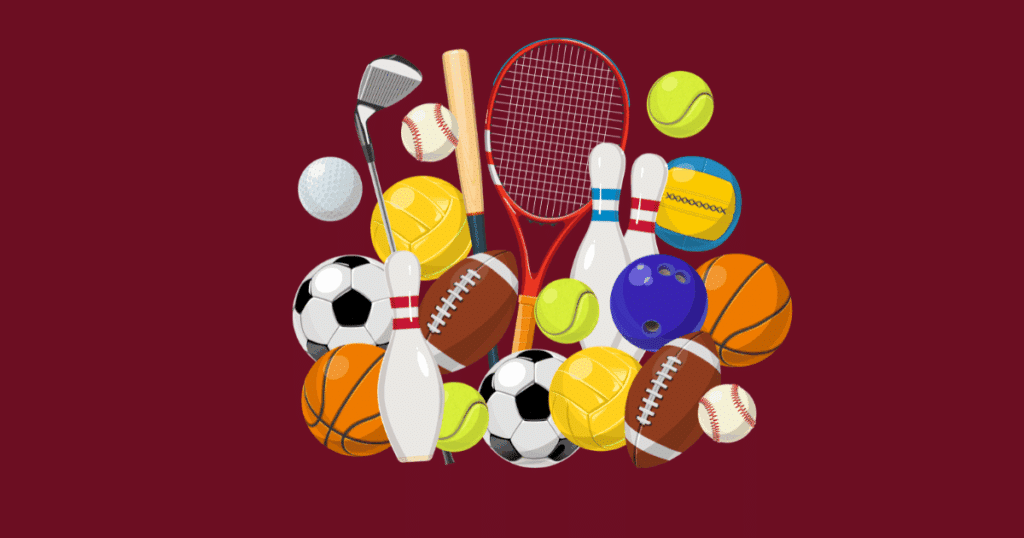
At a stadium, gym, or sports club, these words help you understand what people are using and where the action happens.
| Spanish | English | Pronunciation |
|---|---|---|
| el balón | ball | el bah-LON |
| la pelota | ball | lah peh-LOH-tah |
| la raqueta | racket | lah rah-KEH-tah |
| la portería | goal | lah por-teh-REE-ah |
| el uniforme | uniform | el oo-nee-FOR-meh |
| la medalla | medal | lah meh-DAH-yah |
| el estadio | stadium | el es-TAH-dyoh |
| la cancha | court/playing field | lah KAHN-chah |
| el campo | field | el KAHM-poh |
| el gimnasio | gym | el heem-NAH-syoh |
For ball in Spanish, both balón and pelota work depending on the sport and region. Cancha is common for court in Spanish across Latin America, while campo is natural for field in Spanish, especially soccer.
“Necesito una raqueta nueva” means “I need a new racket.” “Los jugadores están en el campo” means “The players are on the field.” For stadium in Spanish, remember estadio. These sports equipment in Spanish terms make matches easier to follow.
How to Pronounce Spanish Sports Vocabulary Correctly
Spanish sports pronunciation gets easier once you notice repeating patterns. Spanish vowels stay fairly consistent, so practice them clearly instead of changing sounds like English often does.
Start with fútbol: say FÚT-bol, stressing the first syllable. Béisbol also carries stress up front, while árbitro begins with a strong ÁR. Break longer words into chunks: baloncesto becomes ba-lon-CES-to, entrenador ends with en-tre-na-DOR, and competición stresses the final -ción. For campeonato, try cam-pe-o-NA-to.
Written accent marks are your shortcut because they show unusual stress directly. During Spanish pronunciation practice, say each word slowly, then naturally. This makes Spanish vocabulary pronunciation feel much less intimidating.
Example Sentences Using Spanish Sports Vocabulary
Example Sentences Using Spanish Sports Vocabulary
These Spanish sports sentences make talking about sports in Spanish easier.
- ¿Cuál es tu deporte favorito? — What is your favorite sport?
- ¿Qué equipo apoyas? — Which team do you support?
- El partido empieza a las siete. — The match starts at seven.
- Ella marcó un gol increíble. — She scored an incredible goal.
Mini Spanish sports conversation: “¿Qué equipo apoyas?” “Apoyo al Madrid.” “¿El partido empieza a las siete?” “Sí, vamos juntos.” Practice aloud and switch the team name.partido empieza a las siete?” “Sí, vamos juntos.” Practice aloud and switch the team name.
Spanish Sports Vocabulary in Spain vs. Latin America
Spanish Sports Vocabulary in Spain vs. Latin America
Spanish regional vocabulary changes a little across countries, but don’t let that stress you out. Fútbol works almost everywhere for soccer, while baloncesto is standard for basketball.
In Latin American sports vocabulary, cancha is extremely common for a court or playing field. Campo is also widely understood, especially for soccer fields.
For Spain sports vocabulary, aficionado is a common word for supporter, while hincha is frequently heard in parts of Latin America for a passionate fan. Baseball terms matter more in Caribbean countries with strong baseball cultures. The good news? You do not need every regional variation at once.
Easy Ways to Memorize Spanish Sports Vocabulary Faster
The easiest way to learn Spanish sports words is to connect them with real situations, not random lists. Group words by sport, watch short Spanish match highlights, and label equipment at home.
Try Spanish sports flashcards with an image on one side and the Spanish word on the other. Practice complete phrases like marcar un gol, then write five sentences about your favorite sport.
To memorize Spanish vocabulary faster, review tricky words with spaced repetition and speak aloud for five minutes daily. Following a Spanish-speaking team on social media also makes the vocabulary feel natural.
Conclusion: Start Using Spanish Sports Vocabulary Today
Learning spanish sports vocabulary gives you much more than a list of new words—it helps you talk about teams, matches, scores, athletes, equipment, and the sports you already enjoy.
You now have 50 useful sports terms, pronunciation guidance, practical example sentences, regional vocabulary differences, and common mistakes to avoid. Instead of trying to memorize everything at once, choose 10 words today and use each one in a sentence.
Then watch a short Spanish sports video or talk about your favorite team using your new vocabulary. The more you connect these words to real sports and real conversations, the faster they will stick!
