
Want to find the Best AI language learning apps?
I tested 21 popular AI language learning apps for three MONTHS. I checked each one for speech recognition, personalized lessons, course quality, and price. These 9 apps beat all the others by a mile.
You don’t want to waste money on an app that just gives you the same old flashcards with a chatbot slapped on top. Learning a new language is hard enough already — your app should make it easier, not harder.
Pick one of these 9 apps, and you’ll get real conversation practice, lessons that adjust to how you learn, fair prices and actually makes you fluent and gets you results.
I only picked apps with a track record of real results, so you’re choosing from tools that actually work — not just ones that sound good on paper.
Ready to finally hold a real conversation in a new language?
Let’s dive in!
What are the Best AI language learning apps?
Here are my top picks for the best AI language learning apps in 2026
1. Babbel.
Best overall AI language learning app on our list .
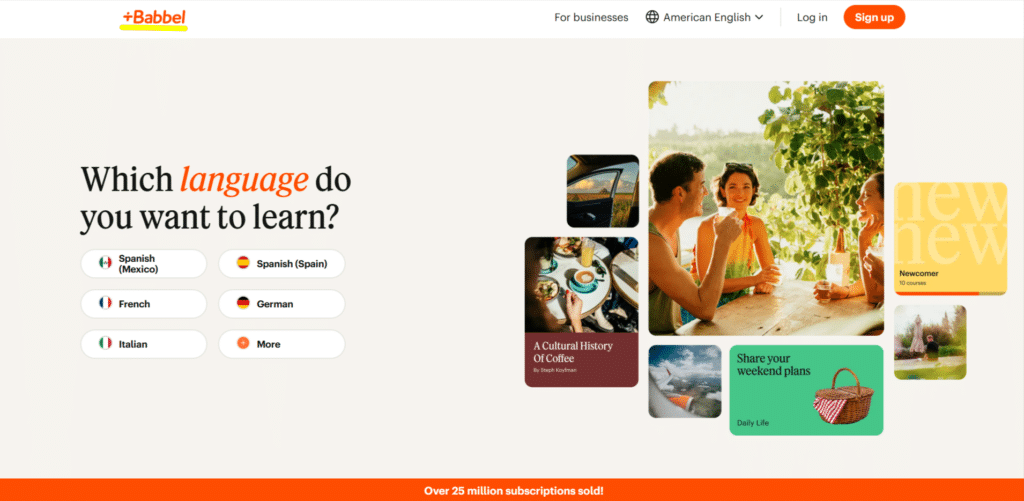
Babbel is the best overall AI language learning app.
When I first opened Babbel, I thought it would be just another boring flashcard app. I was wrong. Instead, I found an app that actually helps you learn a language — and somehow makes it fun instead of feeling like studying.
What makes Babbel different is simple: it wants you to actually speak, not just memorize words.
Most speech tools are built to understand what you’re saying. Babbel’s AI goes a step further — it was designed specifically to help people who are still learning, which makes a big difference.
One of its best features is called Babbel Speak. It’s an AI tool that helps you practice real conversations.
A lot of people struggle to start speaking a new language because they don’t know how to begin — Babbel Speak solves that. It walks you through everyday situations step by step, in a relaxed space where you don’t have to worry about saying something wrong. There’s even a small breathing bubble animation on the screen that shows you when it’s your turn to talk.
It’s a small touch, but it makes the whole thing feel like a real conversation instead of a computer quiz.
Key Benefits:
- AI-powered Babbel Speak feature acts as a virtual conversation partner, guiding you through realistic scenarios using natural language processing
- AI-enhanced speech recognition that analyzes thousands of phoneme samples to assess pronunciation accuracy, trained across multiple accents and voice ranges
- Expert-designed real-life conversation scenarios covering travel, ordering food, booking hotels, and everyday interactions
- Over thousands of lessons across 14 languages, with bite-sized 10–15 minute sessions and full offline access
Pros :
- Completely ad-free experience with a clean, non-distracting interface
- Built-in hint buttons, slow-playback options, and real-time translations reduce pressure and make conversation practice accessible even for complete beginners
- Scientifically validated methods with backing from academic institutions, offering one of the best cost-per-hour learning values in the industry
Cons:
- Babbel Speak is currently limited to English,Spanish, French, German, and Italian — with more languages planned to be available
- Can feel expensive for some people
Personal Experience:
I tested Babbel over 8 months using the Spanish course, starting from an intermediate level and working through the conversational modules daily.
For context, I also had Duolingo and Mondly running in parallel during the same period, which gave me a useful side-by-side comparison.
The first thing I noticed was how different the pacing felt compared to Duolingo. Where Duolingo pushed me through quick bursts with a gamified urgency, Babbel felt more like sitting down with a structured textbook — but one that actually talked back.
The 10–15 minute lessons weren’t just a marketing claim; I timed several of them, and they consistently landed in that window, making it genuinely easy to fit into a lunch break.
When I got into Babbel Speak, the experience surprised me. I went in skeptical — most AI conversation tools I’ve used feel robotic .
Babbel Speak held up better than expected. I practiced a “checking into a hotel” scenario three times back to back, and by the third run, I was responding without using the hint button at all.
That felt like actual progress, not just the illusion of it.
The breathing bubble animation that pulses while the AI is “listening” sounds like a small detail, but it genuinely reduced the awkwardness of waiting for the system to respond — something that other apps handle poorly, leaving you unsure whether it heard you or froze.
The speech recognition was noticeably more forgiving than Mondly’s in my testing.
Where Mondly would sometimes reject a pronunciation I knew was close, Babbel’s system accepted natural, slightly imperfect speech while still flagging genuine errors.
I mispronounced habitación consistently in early sessions, and the app flagged it each time without being so harsh that I wanted to skip the exercise entirely.
I did reach out to Babbel’s support team once, after a syncing issue caused me to lose a week’s progress data. The response came via email within 18 hours, which was reasonable.
Overall I Recommend Babbel as my #1 choice as the Best AI language learning app RIGHT NOW.
2. Speak.
Best for Speaking Practice
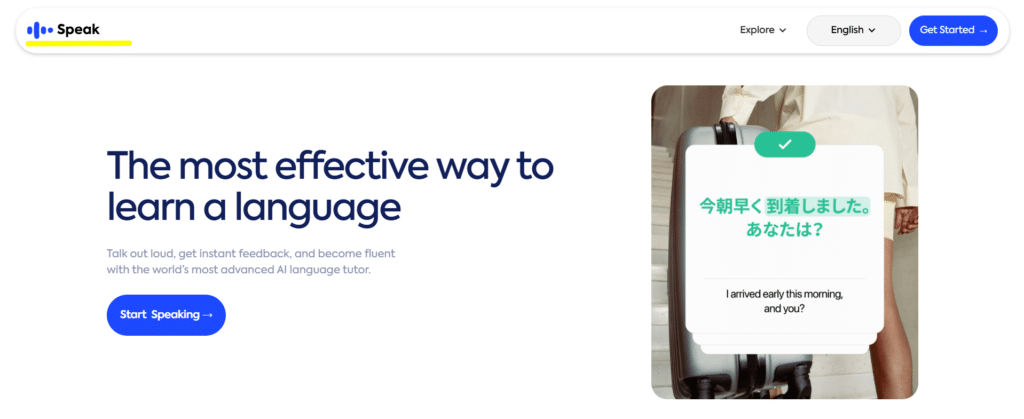
When I first came across Speak.com, I noticed it made a bold promise right on its homepage: getting you speaking out loud from day one.
Most language apps I’ve tested ease you in with vocabulary lists and multiple-choice quizzes before eventually nudging you toward speaking. Speak skips all of that. From the moment you open it, the expectation is clear — you will talk, and you will talk a lot.
Speak was built around a core belief that before AI tools like this existed, language learning apps simply didn’t have meaningful speaking components. And when they did, the speech recognition wasn’t accurate enough to handle accented speech.
That legacy problem is exactly what Speak set out to fix. Supported by OpenAI technology, the system delivers natural dialogue, precise speech recognition, and quick feedback during conversations — making it feel less like a quiz app and more like an actual practice partner.
Speak Tutor is your on-the-go conversational partner, designed to practice speaking on any topic at any time, while designing a personalized curriculum based on getting to know you at a surprisingly deep level.
This is an app built for people who are tired of learning a language in theory but freezing the moment they have to actually use it.
Its also one of best AI language learning apps.
Key Benefits:
- Advanced AI that analyzes speech and provides real-time assessment of pronunciation, intonation, and fluency during immersive conversation sessions
- Speak Tutor creates a fully personalized curriculum based on your goals, keeping you motivated and accountable throughout your learning journey
- Roleplay and Free Talk modes offering structured scenarios as well as open-ended conversation practice, with cultural context built in
- A continuous speaking loop where you respond, receive feedback, adjust, and try again — turning passive knowledge into active communication skills over time
Pros:
- Audio quality is strong, with smooth and natural-sounding voices that avoid the robotic stiffness common in older AI tutors
- Polished and intuitive interface with well-paced beginner content and engaging roleplay scenarios
- Far more cost-effective than hiring a human tutor — the yearly subscription works out to roughly $0.33–$0.49 per day, compared to $10–$30 per single tutor session
- Available across Spanish, English, French, Italian, Japanese, and Korean, with a curriculum that adapts to both beginner and advanced learners
Cons:
- Feedback after conversations is brief and lacks the depth needed for sustained improvement at intermediate and advanced levels
- Speech recognition can be overly lenient — in Speaking Drill lessons, mispronounced words or even reversed word order can still receive a perfect score
Personal Experience:
I tested Speak.com over three weeks, primarily using the Spanish course at an intermediate level.
The onboarding was refreshingly fast. Within two minutes of downloading the app, I was already mid-conversation — no lengthy setup, no placement test pages. The AI asked me a few simple questions about my goals and immediately dropped me into a dialogue scenario.
The Roleplay mode was where the app genuinely impressed me. I tried a “checking into a hotel” scenario and a “catching up with a friend” scenario back to back.
The AI kept the flow natural, responded to what I actually said rather than just advancing a script, and the voice quality was noticeably warmer than what I’d heard on Duolingo’s speaking exercises.
The Free Talk feature felt exciting at first but showed its limits after about five sessions.
One practical frustration: the difference between Premium and Premium Plus is not obvious until you’re already inside the app. I spent time in week one trying to access “Made for You” personalized lessons, only to discover mid-session that they required the higher tier. A clearer breakdown of speak at signup would save users real confusion.
3. Memrise.
Best for Real-World Vocabulary
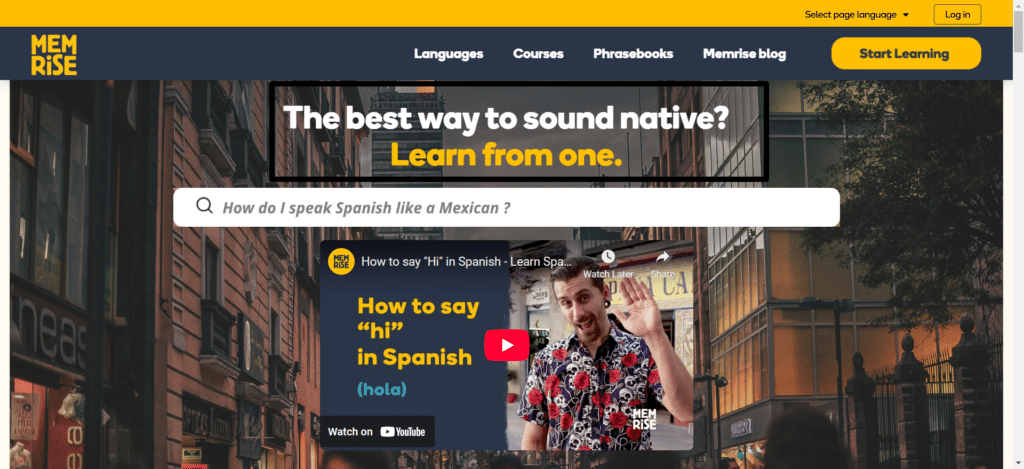
As someone who’s spent countless hours with different language apps, Memrise stands out for its unique blend of AI-powered conversation practice and professionally produced video content. It has an AI-powered chatbot called MemBot that helps users learn new languages efficiently.
What really grabbed me was how it uses AI to create a learning system that feels more like playing a game than studying. The app combines real native-speaker video content with AI technology to help you remember words and phrases more effectively, using vocabulary retention tools that measure language learning effectiveness. Memrise has also expanded MemBot into a full set of “AI Buddies,” including a Grammar Buddy, a Role Play Buddy, a Translator Buddy, and a Culture Buddy, each focused on a different part of the learning process.
Key Benefits:
- AI-powered spaced repetition system for optimized learning
- Video clips of native speakers with AI pronunciation analysis
- Real-world video content with AI-enhanced translations
- Smart review system that predicts when you’ll forget words
- A growing suite of AI Buddies for grammar, roleplay, translation, and cultural context
Pros:
- Makes learning feel natural with real native speaker videos
- AI technology remembers your weak spots and focuses on them
- Structured, CEFR-aligned courses backed by scientific learning methods
- Excellent for building practical, everyday vocabulary
- Engaging gamification that keeps you motivated
Cons:
- Premium version needed for full AI-powered features
- Some languages have more content than others
- Best results require regular practice sessions
Personal experience using Memrise:
One of my favorite features is how the AI integrates real-world video content into lessons. You’re not just learning textbook phrases — you’re learning language as it’s actually used by native speakers in everyday situations.
The AI helps break down these authentic conversations, making them digestible for learners at any level.
I’ve found Memrise particularly effective for building practical vocabulary. Through MemBot and the video-based lessons, I learned phrases that I actually use in real conversations, not just the formal language you might find in textbooks.
Memrise seems to understand which words are most useful for everyday communication and prioritizes them in your learning path.
4. Praktika.
Best for Personalized AI Tutoring
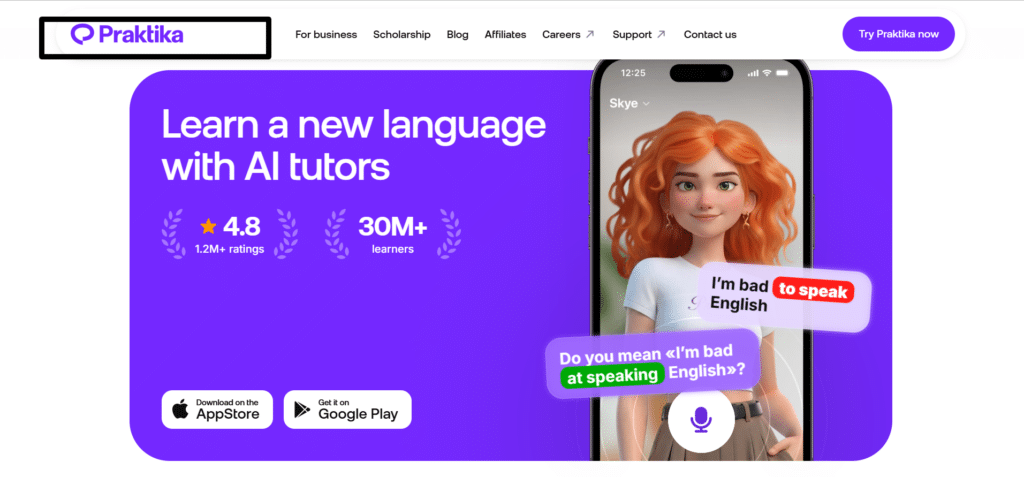
I’d heard a lot of buzz about Praktika before I tried it, mostly people talking about its “AI avatars” that look and sound like real tutors. I went in curious whether that would feel gimmicky, but it turned out to be one of the more polished apps on this list.
Praktika’s whole approach is built around ultra-realistic AI tutors who guide you through conversations that feel personal rather than scripted, helping millions of people confidently speak new languages through avatars that feel like having a private conversation partner in your pocket.
It covers speaking, listening, reading, vocabulary, grammar, and pronunciation all in one place, and the tutor even speaks to you in your own native language at first, so you’re never thrown into the deep end.
Key Benefits:
- Ultra-realistic AI avatar tutors that simulate real, face-to-face style conversations
- Personalized study plans that adjust based on your goals, interests, and pace
- Instant, gentle corrections on pronunciation, grammar, and word choice
- Built-in prep tools for exams like IELTS and TOEFL, alongside everyday conversation practice
Pros:
- Huge, well-reviewed user base with strong ratings across app stores
- Great for building speaking confidence, especially for beginner and lower-intermediate learners
- Clean, engaging interface that makes daily practice feel less like a chore
- Reasonably priced compared to human tutoring
Cons:
- The learning path can feel rigid, with less flexibility to customize lessons than some competitors offer
- No audio-only mode, so the avatar is always on screen, which some learners find distracting
- Free trial requires a payment method upfront
Personal Experience:
I tested Praktika for about three weeks on Spanish, coming in at a lower-intermediate level. The first thing that struck me was how quickly it got me talking. My “tutor” introduced herself, asked about my goals, and had me speaking in full sentences within the first five minutes.
What I liked most was how the avatar reacted to me in real time. I stumbled over a sentence about ordering coffee, and instead of just marking it wrong, the app gently corrected my word order and had me try again right away. That immediate loop of speak, get feedback, retry is where Praktika really shines.
Where it started to feel limiting was around week two. The lessons follow a fairly fixed path, and I couldn’t easily jump around to practice specific situations I actually needed, like a work meeting I had coming up. I also found myself missing an option to just listen to the tutor without the avatar animation on screen, especially when I was practicing on the go.
Overall, Praktika is an excellent pick if you’re a beginner who needs structure and confidence-building, but it’s less flexible for learners who want to steer their own lessons.
5. Univerbal.
Best Value for Money
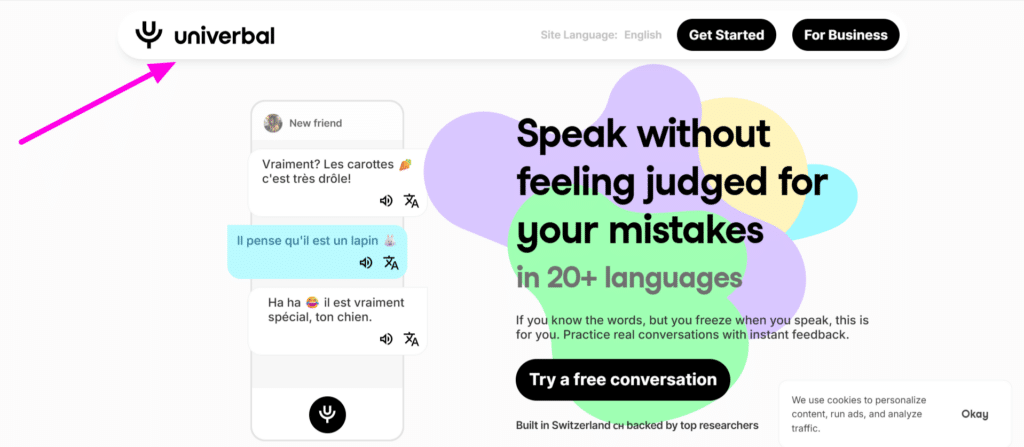
Univerbal was the newest app on my list, and it stood out immediately for how conversational it felt. Instead of walking you through a course, it drops you straight into a chat with an AI partner and lets you pick the topic.
The app focuses on real-time feedback and hands-on language quests, with interactive AI conversation partners built to feel like real-life interactions. It supports 22 languages and gives adaptive, instant feedback, and leans into practical, everyday situations like ordering food, handling travel, or holding a business conversation. One detail I appreciated is that it mixes text and audio together, so you can read your partner’s question, reply out loud, and see your response written out before sending it.
Key Benefits:
- Unscripted, free-flowing AI conversations built around your own interests, not a fixed script
- Real-time grammar and pronunciation feedback during the conversation itself
- Custom scenario builder, so you can create your own topic instead of picking from a list
- Multimodal chat that blends text and voice, useful for learners who want to read along while they speak
Pros:
- Feels closer to a real conversation than a structured lesson, which is great for building confidence
- Wide language support, including some less common options
- Fast AI response times that keep the conversation flowing naturally
- Friendly, low-pressure interface that’s easy to pick up
Cons:
- Doesn’t offer much in the way of structured grammar or vocabulary teaching, so you may need another resource alongside it
- Accent recognition can still stumble on strong regional accents
- A few users have reported minor interface bugs, like the on-screen keyboard covering the text box
Personal Experience:
I used Univerbal for two weeks, working on my German. The setup was quick: a short assessment, a few questions about my interests, and I was talking to my AI partner within about ten minutes.
What surprised me was how natural the conversations felt. I picked “ordering at a restaurant” one day and “discussing a movie” the next, and the AI stayed in character and responded to what I actually said instead of just running through a checklist. When I fumbled a sentence, it corrected me on the spot without breaking the flow of the conversation, which made it easy to just keep talking.
Univerbal is fantastic at getting you speaking, but I didn’t feel like I was building a strong grammar foundation the way I did with Babbel.
Univerbal is a strong pick if you already have some basics down and just want to practice talking freely, but it’s not the best starting point if you’re a total beginner who needs structured lessons.
6.Talkpal Ai.
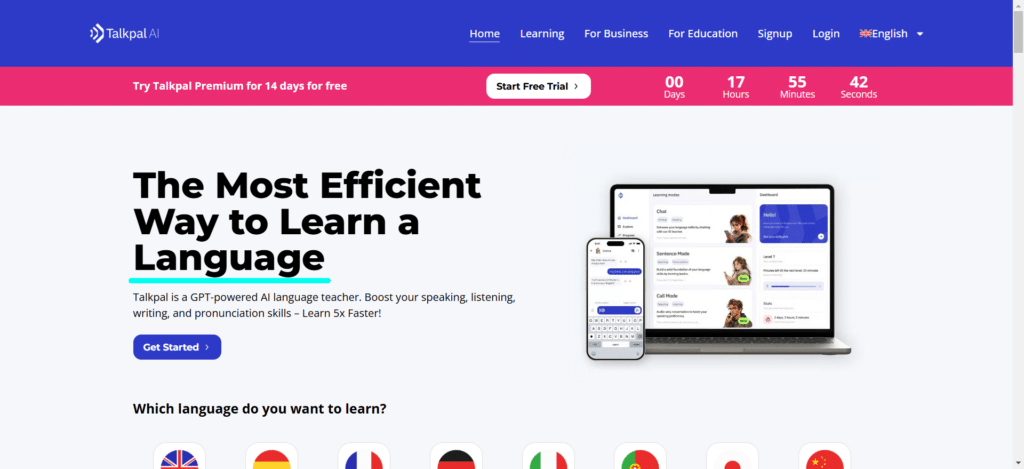
I stumbled across Talk Pal a few months ago when I was desperately looking to improve my Spanish speaking skills.
You know how textbooks and flashcards can only take you so far, right? What initially caught my eye was how it uses AI to create these incredibly natural conversations – way different from those robotic language exchanges I’d tried before.
Talk Pal is basically your personal AI language tutor that lives in your phone. The core idea is simple: you have real conversations with an AI that adapts to your level sophisticated language pattern recognition and helps you learn any of the 57+ languages they currently support.
It uses advanced speech recognition and natural language processing to understand user input and provide meaningful feedback contextual language learning
Key Benefits:
- Realistic AI conversations that adapt to your speaking level and pace
- pronunciation feedback with specific tips for improvement
- Personalized learning paths based on your goals (business, travel, or casual chat)
- Progress tracking dashboard that shows your improvement over time
Pros:
- Available 24/7 for practice whenever inspiration strikes
- Never gets tired of repeating phrases or explaining concepts
- More affordable than private tutoring with unlimited conversation practice
- Creates a judgment-free environment to build confidence
Cons:
- Needs a good internet connection for optimal conversation flow
- May take a moment to understand speech in very noisy environments
- Still developing its understanding of some regional expressions and slang
Personal experience using Talkpal
I remember when I first tried Talk Pal, I wasn’t sure if practising with AI would really work.
But after my first session, where I managed to have a basic conversation about my hobbies in Spanish without feeling embarrassed about my mistakes, I was hooked.
The app gave me specific feedback about my pronunciation of ‘r’ sounds and suggested exercises to improve.
For anyone serious about improving their language skills, Talk Pal is a fantastic tool to have in your learning arsenal.The best part? You can practice as much as you want without worrying about booking appointments or coordinating time zones with tutors.
Whether you’re an early bird who likes to practice at dawn or a night owl who gets motivated at midnight, TalkPal AI language partner is always ready to help.
7. Mondly.
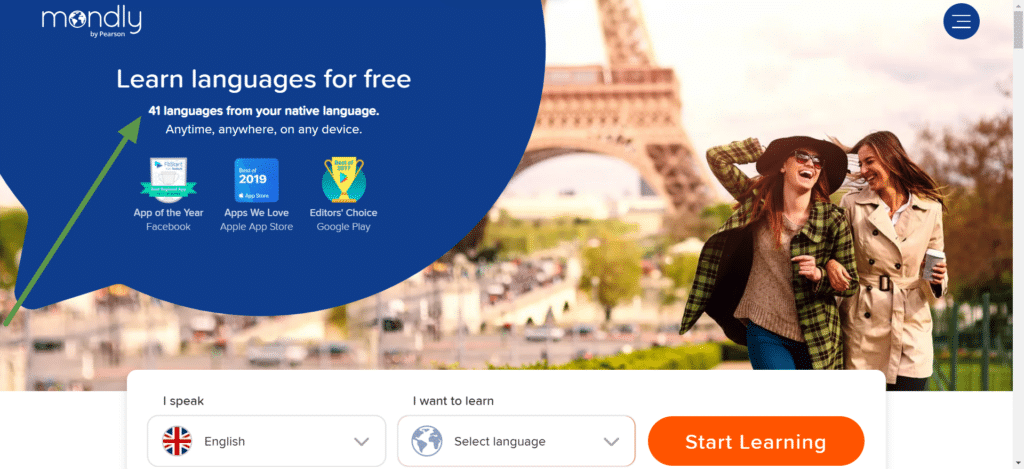
After exploring several language learning apps, I found Mondly’s AI features to be quite intriguing.
While the app offers traditional learning methods, what really caught my attention was its innovative AI-powered conversation practice and virtual reality experiences. These features take language learning beyond basic flashcards and into the realm of immersive practice.
The AR feature deserves special mention too. Being able to point your phone at objects and see their names in your target language, complete with pronunciation guidance from the AI, makes vocabulary learning feel more natural and intuitive.
It’s like having a knowledgeable friend walking around with you, helping you learn the names of everything you see.
Key Benefits:
- AI chatbot conversations with speech recognition
- Virtual Reality lessons for immersive learning (requires VR headset)
- Augmented Reality experience for visualizing objects while learning
- Daily AI-powered conversation scenarios
Pros:
- Combines AI technology with structured lessons for comprehensive learning
- VR/AR features make vocabulary learning more engaging and memorable
- Offers practice with real-world conversation scenarios
- Available in 41 languages with native speaker recordings
Cons:
- Some advanced AI features may require additional hardware
- Free version has limited access to AI conversation practice
- VR content library still growing and being expanded
Personal experience with Mondly
I remember practicing ordering food in Italian, and the AI actually corrected my pronunciation of “vorrei” (I would like) until I got it just right. The immediate feedback made a huge difference in my confidence.
The VR feature of Mondly was particularly eye-opening. Putting on the headset, I found myself in virtual environments where I could practice the language in context – like a virtual café in Paris or a train station in Berlin. It’s one thing to memorize phrases from a textbook, but it’s entirely different when you’re virtually “there” and need to use the language to navigate.
8. Lango Talk.
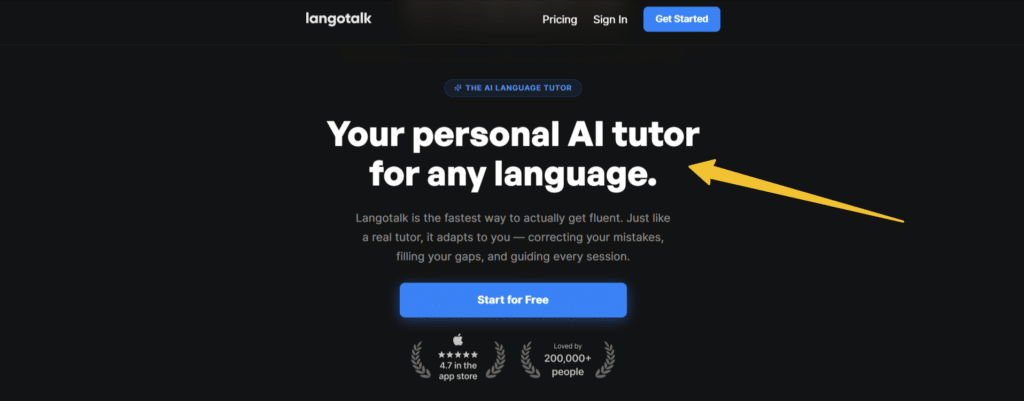
You know that feeling when you finally find an app that just clicks with how you learn? That’s exactly what happened when I discovered LangoTalk.
What really blew me away was how natural the conversations felt. It’s not just another AI chatbot spitting out pre-programmed responses – it actually understands context and remembers our previous chats.
The app uses some pretty sophisticated AI technology to create these dynamic conversations that deliver truly interactive language practice.
If you’re stumbling with a particular grammar point or pronunciation, it’ll slow down and give you more practice in that area. But once you’ve got something down, it moves on to keep things challenging and interesting.
Key Benefits:
- AI-powered conversation practice with natural dialogue flow
- Real-time pronunciation feedback and correction
- Role-play scenarios for practical language use
Pros:
- Creates customized review sessions
- Available 24/7 for practice
Cons:
- Newer app with growing language selection
- Requires stable internet for best performance
- May take time to adjust to your speaking style
Personal experience with Lango talk:
I remember practicing a restaurant scenario in LangoTalk where the AI actually remembered my food preferences from a previous session – that kind of continuity makes the learning experience feel more personal and engaging.
Those little touches make it feel like you’re chatting with a thoughtful language partner rather than a computer program.
9.Talkio AI.
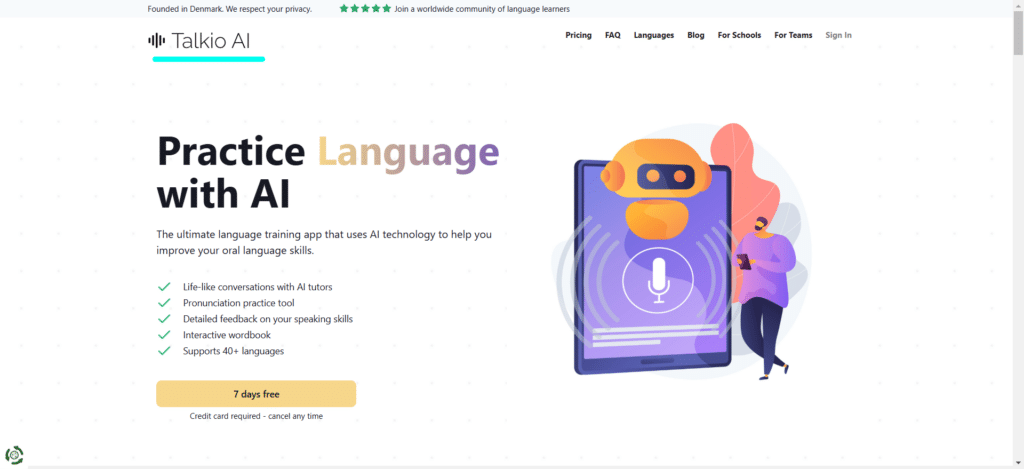
Let me break down what Talkio AI is all about. Think of it as your personal AI language tutor that lives in your phone, but way more sophisticated than your typical language learning app.
At its core, it’s a conversational AI platform designed specifically for language learners who want to move beyond basic phrases and into real, flowing conversations.
The app uses advanced natural language processing and machine learning to create interactive conversations that actually make sense.
It can handle everything from basic “How are you?” exchanges to complex discussions about current events or your favorite Netflix shows.
The AI is constantly analyzing your speech patterns, grammar usage, and pronunciation to provide targeted help where you need it most.
Key Benefits:
- Advanced AI conversation engine with contextual understanding
- Voice recognition with detailed pronunciation scoring
- Customizable conversation topics and scenarios
- Cultural context integration in dialogues
Pros:
- Offers culturally relevant speaking practice
- Adapts difficulty in real-time
Cons:
- Monthly subscription required for full features
- languages still in development
- Occasional AI response delays
Personal experience with Talkio AI
With Talkio AI, I was particularly impressed by how it handled complex conversations. When I stumbled over a difficult phrase, it didn’t just correct me – it provided examples of how that phrase is used in different contexts, helping me understand not just the what, but the why of language usage.
Final thoughts.
All of these apps use AI to help you learn faster and speak with more confidence. But the best pick depends on where you’re starting from and what you want out of it.
If you’re a complete beginner who wants a clear, structured path from day one, choose Babbel. It builds your foundation the right way and eases you into speaking without overwhelming you.
If you want to jump straight into talking and build confidence fast, choose Speak. It gets you speaking from your very first session and keeps the conversation flowing naturally.
If you want to build real-world vocabulary through native speaker videos, choose Memrise. It makes new words stick by showing you how people actually use them.
No matter which one you pick, you can’t go wrong — we only chose apps with real free trials or fair refund policies, so you can try before you fully commit.
Ready to start speaking a new language with confidence? Pick the app that matches your goals from the list above, and take your first lesson. The sooner you start, the sooner you’ll be having real conversations.
The best time to start was six months ago. The second best time is RIGHT NOW.
FAQs about the Best AI language learning apps
How effective are AI language learning apps compared to traditional methods?
AI language apps excel at providing consistent, on-demand practice and personalized feedback that traditional methods often can’t match.
When examining success rate statistics, modern AI apps can significantly accelerate learning through their adaptive technology and unlimited practice opportunities.
Can AI apps really help with pronunciation?
Yes, today’s AI apps use advanced speech recognition technology that can detect subtle pronunciation errors and provide specific feedback on how to improve. Many apps even break down sounds and provide visual guides for tongue and mouth positioning.
Are AI language learning apps worth the investment?
When you compare the cost of AI apps to private tutoring or language classes, they offer exceptional value for daily practice and improvement. The subscription fees are typically reasonable for the amount of practice time and personalized feedback you receive.
How long does it take to learn a language using AI apps?
With consistent daily practice of 15-30 minutes, most users see a noticeable improvement in basic conversation skills within just 1 month …. yes you read it right , just 1 month. I did it so you can too.
