

Picture yourself hiking through a forest, watching a sunset from the beach, or talking about the weather with a Spanish-speaking friend—you suddenly need more than hola and gracias!
I’ve found that nature vocabulary is especially useful because it appears everywhere: travel conversations, school lessons, outdoor activities, documentaries, and everyday small talk — the kind of real-world vocab that separates casual language learning apps from ones that actually build usable fluency.
In this guide, you’ll learn practical Spanish nature vocabulary for landscapes, plants, animals, weather, and outdoor experiences, along with pronunciation help, example sentences, and cultural notes so you can actually use the words with confidence.
Hearing these words used naturally is where AI language apps shine, and Babbel also has themed vocabulary lessons that touch on nature and outdoor topics.
60 Spanish Nature Vocabulary Words: Quick List
Spanish nature words make outdoor conversations easier, especially when learning nature words in Spanish. These Spanish nature terms build Spanish vocabulary about nature quickly.
| Spanish | English |
|---|---|
| la naturaleza | nature |
| el paisaje | landscape |
| la tierra | land/earth |
| el campo | countryside |
| la montaña | mountain |
| la colina | hill |
| el valle | valley |
| el bosque | forest |
| la selva | jungle/rainforest |
| el desierto | desert |
| la isla | island |
| la cueva | cave |
| la roca | rock |
| el acantilado | cliff |
| el volcán | volcano |
| el río | river |
| el lago | lake |
| el arroyo | stream |
| la cascada | waterfall |
| el mar | sea |
| el océano | ocean |
| la playa | beach |
| la costa | coast |
| la ola | wave |
| el cielo | sky |
| la nube | cloud |
| el sol | sun |
| la luna | moon |
| la estrella | star |
| el árbol | tree |
| la hoja | leaf |
| la rama | branch |
| la raíz | root |
| la flor | flower |
| la hierba | grass/herb |
| el césped | lawn/grass |
| el musgo | moss |
| la semilla | seed |
| el cactus | cactus |
| la palmera | palm-tree |
| el animal | animal |
| el pájaro | bird |
| el pez | fish |
| la mariposa | butterfly |
| la abeja | bee |
| el insecto | insect |
| el ciervo | deer |
| el zorro | fox |
| el lobo | wolf |
| la lluvia | rain |
| la nieve | snow |
| el viento | wind |
| la tormenta | storm |
| el trueno | thunder |
| el relámpago | lightning-flash |
| la niebla | fog |
| húmedo | humid/damp |
| seco | dry |
| verde | green |
| florecer | to-bloom |
Keep this nature vocabulary Spanish English list handy; these Spanish words for nature show up everywhere.
Spanish Words for Mountains, Forests, and Landscapes
Spanish landscape vocabulary gets much easier when you picture a real place: a rocky trail, pine trees, a deep valley, maybe a volcano in the distance. I learned these Spanish geography vocabulary words faster once I connected each one to an actual scene.
- la montaña — mountain — “lah mon-TAHN-yah.” La montaña es muy alta. “The mountain is very high.”
- la colina — hill — “lah koh-LEE-nah.”
- el valle — valley — “el VAH-yeh.”
- el bosque — forest — “el BOS-keh.”
- la selva — jungle/rainforest — “lah SEL-vah.”
- el desierto — desert — “el deh-see-EHR-toh.”
- la cueva — cave — “lah KWEH-vah.”
- el acantilado — cliff — “el ah-kan-tee-LAH-doh.”
- el volcán — volcano — “el bol-KAHN.”
- el paisaje — landscape — “el pie-SAH-heh.”
If you’re wondering how to say mountain in Spanish, montaña is the everyday word. For forest in Spanish, bosque usually means a wooded forest, while selva suggests dense tropical jungle or rainforest. That distinction really helps, especially across Spain and Latin America.
Also watch noun gender: el bosque, but la montaña. English speakers often drop the article, which sounds awkward in Spanish.
Memory trick: imagine a montaña towering over a valle. Grouping landforms in Spanish visually makes them stick really well. Next, we’ll move from solid ground to water.
Spanish Nature Words for Rivers, Beaches, and Water
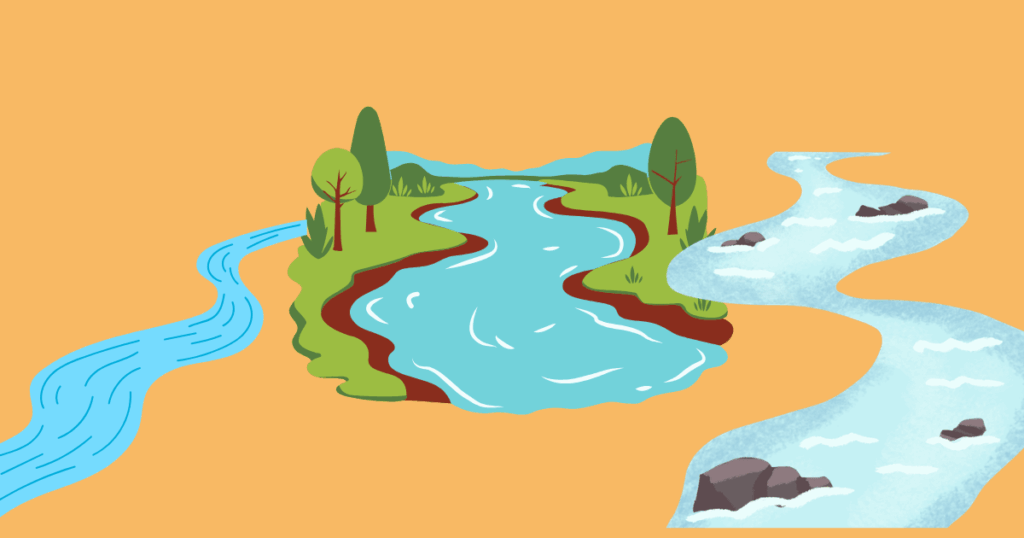
Water vocabulary in Spanish becomes much easier when you picture yourself beside a river, crossing a coast, or ordering lunch near the beach. These are words travelers genuinely hear, so they are worth learning early.
- el río — river — “el REE-oh”
- el lago — lake — “el LAH-goh”
- el arroyo — stream — “el ah-ROY-oh”
- la cascada — waterfall — “lah kas-KAH-dah”
- el mar — sea — “el mar”
- el océano — ocean — “el oh-SEH-ah-noh”
- la playa — beach — “lah PLAH-yah”
- la costa — coast — “lah KOS-tah”
- la ola — wave — “lah OH-lah”
- la isla — island — “lah EES-lah”
El río pasa por el valle. “The river runs through the valley.”
For travelers, playa, mar, río, and costa appear constantly on maps, signs, tours, and hotel descriptions. The Real Academia Española defines río as a continuous watercourse. If river in Spanish or ocean in Spanish ever slips your mind, picture a map: río flows inland, océano stretches beyond the coast. Next, we head skyward.
Spanish Vocabulary for Trees, Flowers, and Plants
Spanish plant vocabulary becomes easier when you imagine a garden after rain: wet leaves, dark soil, and flowers opening in the sun. These Spanish words for plants are practical for parks, hikes, gardens, and conversations.
- el árbol — tree — “el AR-bol”
- la hoja — leaf — “lah OH-hah”
- la rama — branch — “lah RAH-mah”
- la raíz — root — “lah rah-EES”
- la flor — flower — “lah flor”
- la hierba — grass/herb — “lah YER-bah”
- el césped — lawn/grass — “el SES-ped”
- el musgo — moss — “el MOOS-goh”
- la semilla — seed — “lah seh-MEE-yah”
- el cactus — cactus — “el KAK-toos”
- la palmera — palm tree — “lah pal-MEH-rah”
- florecer — to bloom — “flo-reh-SER”
Las flores florecen en primavera. “The flowers bloom in spring.”
My teacher drilled this into me: learn the article with the noun. Memorize el árbol, not árbol, and la flor, not flor. It makes gender feel natural. If tree in Spanish or flower in Spanish seems tricky, repetition fixes it fast.
Spanish Words for Animals and Wildlife in Nature

Spanish wildlife vocabulary is useful when hiking, traveling, watching documentaries, or describing places. I heard pájaros, and the word felt real.
- el animal — animal — “el ah-nee-MAHL”
- el pájaro — bird — “el PAH-hah-roh”
- el pez — fish — “el pehs”
- la mariposa — butterfly — “lah mah-ree-POH-sah”
- la abeja — bee — “lah ah-BEH-hah”
- el insecto — insect — “el een-SEK-toh”
- el ciervo — deer — “el see-EHR-boh”
- el zorro — fox — “el SOH-rroh”
- el lobo — wolf — “el LOH-boh”
Hay muchos pájaros en el bosque. “There are many birds in the forest.”
Remember: pez means fish, while pescado means fish as food. That distinction tripped me up. When learning animals in Spanish or wild animals in Spanish, picture where you might see them. If bird in Spanish slips your mind, imagine pájaros singing above a trail.
Spanish Weather and Sky Vocabulary for Talking About Nature
Spanish weather vocabulary is easier with a cloudy hike or stormy evening. These weather words in Spanish describe nature.
- el cielo — sky
- el sol — sun
- la luna — moon
- la estrella — star
- la nube — cloud
- la lluvia — rain
- la nieve — snow
- el viento — wind
- la tormenta — storm
- el trueno — thunder
- el relámpago — lightning
- la niebla — fog
Hay mucha niebla. “It’s very foggy.” Hace viento. “It’s windy.” Está lloviendo. “It’s raining.”
For sky in Spanish, remember cielo by picturing sky.
How to Pronounce Spanish Nature Vocabulary Correctly
A Spanish pronunciation guide helps fix sounds English speakers struggle with most. For Spanish vocabulary pronunciation, focus on rhythm instead of forcing English sounds.
The r in río is light and quick. A rolled rr is stronger when it appears. Spanish j has a breathy, throatier sound, while ll in lluvia often sounds like “y.” Spanish b and v are closer than in English, so avoid an English “v.”
Accent marks show stress: árbol, océano, pájaro. Practice mon-TA-ña, cas-CA-da, and na-tu-ra-LE-za.
Learning how to pronounce Spanish words gets easier with audio practice.
10 Example Sentences Using Spanish Nature Words
Spanish nature sentences stick when they sound useful. These Spanish nature phrases are reusable.
- Me encanta la naturaleza. — I love nature.
- El bosque es muy tranquilo. — The forest is very peaceful.
- Hay una montaña detrás del pueblo. — There is a mountain behind the town.
- El río pasa por el valle. — The river runs through the valley.
- Las flores son muy bonitas. — The flowers are very pretty.
- Hoy hace mucho viento. — It’s very windy today.
- El cielo está lleno de estrellas. — The sky is full of stars.
- Vimos una cascada enorme. — We saw a huge waterfall.
- Hay muchos pájaros en los árboles. — There are many birds in the trees.
- Me gusta caminar por la playa. — I like walking along the beach.
Practice these nature sentences in Spanish aloud, then swap nouns.
Spanish Nature Words in Spain vs Latin America
Spanish changes naturally across countries, so regional Spanish words are worth recognizing without stressing over every variation. Latin American Spanish vocabulary often reflects local landscapes, while Spain Spanish vocabulary can favor different everyday terms.
For grass, you may hear césped, pasto, or grama depending on the country. Colina and cerro can both describe raised land, though usage varies. Bosque usually means forest, while selva points more toward jungle or rainforest. Arroyo can mean a stream, but its everyday sense may shift by region.
My advice: learn the common term first, then notice local alternatives while traveling, reading, or listening naturally.
Common Spanish Nature Vocabulary Mistakes English Speakers Make
A few Spanish vocabulary mistakes show up constantly in Spanish vocabulary for beginners. Learn articles with nouns: la montaña, el río, and la playa, because Spanish noun gender matters.
Don’t pronounce lluvia with a strong English “L.” Also, pez means a living fish, while pescado usually refers to fish as food.
Avoid translating weather literally: say Hace viento, not “It is windy.” And don’t skip accent marks in árbol, océano, or pájaro.
7 Easy Ways to Memorize Spanish Nature Words Faster
Want to learn Spanish vocabulary faster? Connect words to things you actually see.
- Learn vocabulary by scene, not alphabetically.
- Label nature photos in Spanish.
- Memorize nouns with el/la.
- Make Spanish nature flashcards using pictures.
- Group words: árbol → hoja → rama → raíz → flor.
- Say each word aloud during Spanish vocabulary practice.
- Write one nature sentence daily.
During walks, think el árbol or el cielo. Review everything after one day, three days, and one week.
Conclusion
You’ve now learned essential Spanish nature vocabulary for landscapes, water, plants, wildlife, weather, and outdoor experiences, plus pronunciation tips and practical sentences.
Don’t try to memorize every word in one sitting! Pick 10 words today, say them aloud, and use each one in a short Spanish sentence. Once those feel natural, move on to the next group. The more you connect Spanish words with things you actually see around you, the easier they’ll be to remember.
