

I still remember how different Spanish songs sounded once I started recognizing words like ritmo, letra, and estribillo! Instead of hearing one long stream of Spanish, I could suddenly understand what singers, musicians, and even my Spanish-speaking friends were talking about.
Music is especially useful for language learners because repeated melodies make new vocabulary easier to remember.
And Spanish-language music is incredibly diverse—from flamenco in Spain to salsa, reggaetón, bachata, cumbia, and regional Mexican music across Latin America.
Whether you want to understand your favorite songs, talk about music with native speakers, or build everyday Spanish vocabulary, these 50 Spanish music words will give you a practical starting point. AI language apps can help with pronunciation, and Babbel also covers music and culture-based vocabulary.
Quick List of 50 Spanish Music Vocabulary Words
Spanish music words make music vocabulary in Spanish memorable. Spanish vocabulary for music: tocar, not jugar; Spain: auriculares. Spanish music terms build basic Spanish music vocabulary. Scroll.
| Spanish | English | Quick pronunciation |
|---|---|---|
| música | music | MOO-see-kah |
| canción | song | kahn-SYON |
| cantante | singer | kahn-TAHN-teh |
| músico / música | musician | MOO-see-koh/kah |
| banda | band | BAHN-dah |
| grupo | group | GROO-poh |
| artista | artist | ar-TEES-tah |
| concierto | concert | kohn-SYEHR-toh |
| álbum | album | AHL-boom |
| disco | record/album | DEES-koh |
| letra | lyrics | LEH-trah |
| melodía | melody | meh-loh-DEE-ah |
| ritmo | rhythm | REET-moh |
| armonía | harmony | ar-moh-NEE-ah |
| nota | note | NOH-tah |
| acorde | chord | ah-KOR-deh |
| tono | tone/key | TOH-noh |
| voz | voice | bohs |
| coro | chorus/choir | KOH-roh |
| estribillo | chorus/refrain | es-tree-BEE-yoh |
| verso | verse | BEHR-soh |
| estrofa | stanza/verse | es-TROH-fah |
| guitarra | guitar | gee-TAH-rrah |
| piano | piano | pee-AH-noh |
| batería | drums | bah-teh-REE-ah |
| violín | violin | byoh-LEEN |
| trompeta | trumpet | trohm-PEH-tah |
| flauta | flute | FLAO-tah |
| bajo | bass | BAH-hoh |
| micrófono | microphone | mee-KROH-foh-noh |
| altavoz | speaker | ahl-tah-BOHS |
| auriculares | headphones | ao-ree-koo-LAH-rehs |
| escenario | stage | eh-seh-NAH-ree-oh |
| grabación | recording | grah-bah-SYON |
| estudio | studio | es-TOO-dee-oh |
| escuchar | to listen | es-koo-CHAR |
| cantar | to sing | kahn-TAR |
| tocar | to play an instrument | toh-KAR |
| bailar | to dance | bye-LAR |
| grabar | to record | grah-BAR |
| componer | to compose | kohm-poh-NEHR |
| ensayar | to rehearse | en-sah-YAR |
| actuar | to perform | ahk-too-AR |
| afinar | to tune | ah-fee-NAR |
| género | genre | HEH-neh-roh |
| flamenco | flamenco | flah-MEHN-koh |
| salsa | salsa | SAHL-sah |
| bachata | bachata | bah-CHAH-tah |
| cumbia | cumbia | KOOM-bee-ah |
| reggaetón | reggaeton | reh-gueh-TON |
Spanish Words for Songs, Lyrics, and Musical Structure
Songs make Spanish feel real fast.
- canción — song — kahn-SYON. Esta canción me encanta. — I love this song.
- letra — lyrics — LEH-trah. Me sé la letra de memoria. — I know the lyrics by heart. Letra can mean “letter” or handwriting.
- melodía — melody — meh-loh-DEE-ah. The Spanish word for melody is melodía.
- ritmo — rhythm — REET-moh. Me gusta el ritmo de esta canción.
- armonía — harmony — ar-moh-NEE-ah.
- nota — musical note — NOH-tah.
- acorde — chord — ah-KOR-deh.
- tono — tone/key — TOH-noh.
- estribillo — chorus/refrain — es-tree-BEE-yoh.
- coro — chorus/choir — KOH-roh.
- verso — verse — BEHR-soh.
- estrofa — stanza/verse — es-TROH-fah.
For lyrics in Spanish, estribillo means the repeated chorus; coro can mean a choir.
Memory trick: ritmo resembles rhythm. Common mistake: using jugar for instruments; Spanish uses tocar.
Spain, Mexico, and Argentina use these terms. Rhythm in Spanish: ritmo; harmony in Spanish: armonía; musical notes in Spanish: notas musicales; chord in Spanish: acorde; chorus in Spanish: estribillo.
Tiene un ritmo muy pegadizo means “It has a catchy rhythm.” Keep scrolling.
Spanish Vocabulary for Singers, Bands, and Live Music
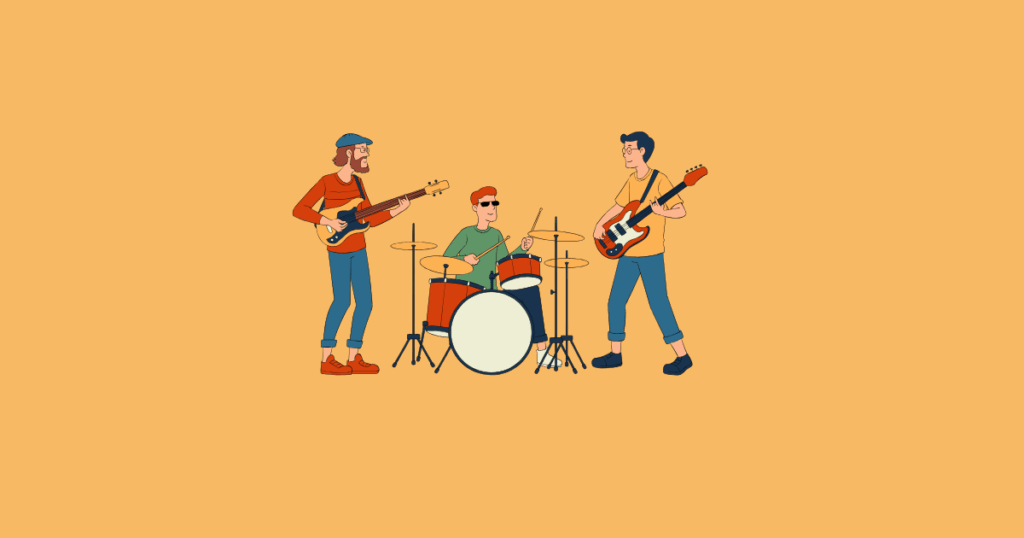
Live music is where these words really stick. Picture a crowded venue, lights hitting the escenario, and someone asking about your favorite singer in Spanish.
- cantante — singer — kahn-TAHN-teh
- músico / música — musician — MOO-see-koh/kah
- artista — artist — ar-TEES-tah
- banda — band — BAHN-dah
- grupo — group — GROO-poh
- concierto — concert — kohn-SYEHR-toh
- escenario — stage — eh-seh-NAH-ree-oh
- micrófono — microphone — mee-KROH-foh-noh
- actuar — to perform — ahk-too-AR
- ensayar — to rehearse — en-sah-YAR
Useful phrases:
¿Quién es tu cantante favorito? — Who is your favorite singer?
Voy a un concierto este sábado. — I’m going to a concert this Saturday.
La banda está ensayando. — The band is rehearsing.
For musician in Spanish, use músico or música; artist in Spanish is artista. Band in Spanish can be banda or grupo, depending on region and genre. Concert in Spanish is concierto. Honestly, grupo is one you’ll hear constantly too. Keep going—you’re building useful listening vocabulary fast with every new phrase.
Spanish Names for Musical Instruments and Equipment
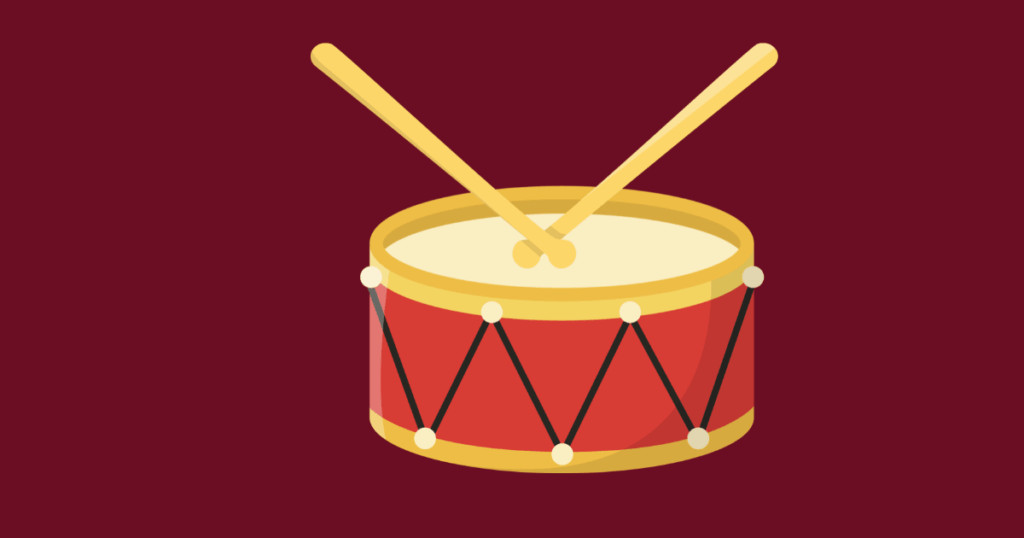
Learning musical instruments in Spanish gets easier when you group them by family. Honestly, picturing a rehearsal room helped me remember these way faster.
String instruments:
- guitarra — guitar — gee-TAH-rrah
- violín — violin — byoh-LEEN
- bajo — bass — BAH-hoh
Percussion:
- batería — drum kit/drums — bah-teh-REE-ah
Keyboard:
- piano — piano — pee-AH-noh
Wind and brass:
- trompeta — trumpet — trohm-PEH-tah
- flauta — flute — FLAO-tah
Music equipment:
- micrófono — microphone — mee-KROH-foh-noh
- altavoz — speaker — ahl-tah-BOHS
- auriculares — headphones — ao-ree-koo-LAH-rehs
If you’re searching for guitar in Spanish, it’s guitarra; piano in Spanish stays piano, drums in Spanish is batería, and violin in Spanish is violín.
Batería also means “battery,” so context matters. Ella toca la guitarra means “She plays the guitar.” Necesitamos un micrófono nuevo means “We need a new microphone.”
My teacher drilled this into me: use tocar, not jugar, for instruments. Keep scrolling—these words show up everywhere, at concerts, studios, and casual jam sessions too.
Essential Spanish Verbs for Talking About Music
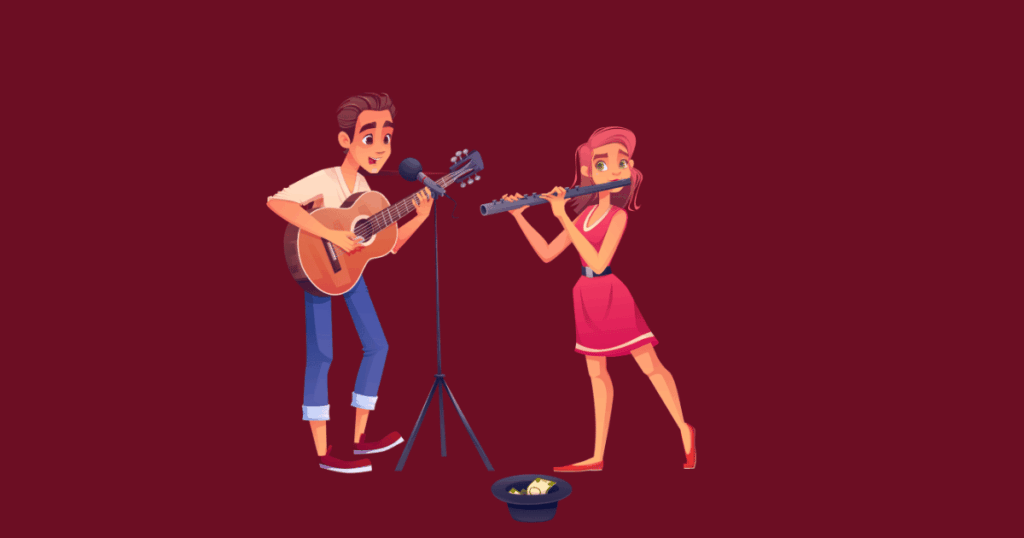
These are the verbs I use when talking about music with Spanish speakers. Once you know them, conversations about playlists, concerts, and instruments get easier.
- escuchar — to listen — es-koo-CHAR. Escucho música todos los días.
- cantar — to sing — kahn-TAR. Me gusta cantar en español.
- tocar — to play an instrument — toh-KAR.
- bailar — to dance — bye-LAR.
- grabar — to record — grah-BAR.
- componer — to compose — kohm-poh-NEHR.
- ensayar — to rehearse — en-sah-YAR.
- actuar — to perform — ahk-too-AR.
- afinar — to tune — ah-fee-NAR.
Spanish normally uses tocar, not jugar, when you play an instrument in Spanish. My teacher drilled that into me.
For reference, listen to music in Spanish is escuchar música, sing in Spanish is cantar, dance in Spanish is bailar, and record in Spanish is grabar. Cantar una canción means “sing a song,” while tocar la guitarra means “play the guitar.” Keep these verbs handy and music conversations start flowing naturally.
Spanish Words for Music Genres From Spain and Latin America
Spanish music genres make more sense when you connect them with the places and cultures behind them. That’s where Latin music vocabulary gets way more interesting.
- género — genre — HEH-neh-roh
- flamenco — flamenco — flah-MEHN-koh
- salsa — salsa — SAHL-sah
- bachata — bachata — bah-CHAH-tah
- cumbia — cumbia — KOOM-bee-ah
- reggaetón — reggaeton — reh-gueh-TON
- música pop — pop music
- música clásica — classical music
- rock — rock
- música urbana — urban music
Flamenco is strongly tied to Andalusia in southern Spain, so flamenco vocabulary often appears in cultural travel content too. Salsa music Spanish conversations usually connect with Caribbean and wider Latin American traditions.
Bachata comes from the Dominican Republic, while cumbia originated in Colombia and later developed many regional styles. Reggaetón is everywhere in contemporary Latin music, especially clubs and playlists.
Mi género favorito es la bachata means “My favorite genre is bachata.” Keep going, because genre words make real music conversations much easier.
How to Pronounce Spanish Music Vocabulary Correctly
Spanish music pronunciation gets easier once you notice stress and vowel patterns instead of memorizing every word separately. This Spanish pronunciation guide focuses on the patterns that actually repeat.
- música — MÚ-si-ca
- canción — can-CIÓN
- melodía — me-lo-DÍ-a
- batería — ba-te-RÍ-a
- músico — MÚ-si-co
- género — GÉ-ne-ro
- micrófono — mi-CRÓ-fo-no
- reggaetón — reg-gue-TÓN
Accent marks are your best clue. In canción, música, melodía, batería, género, micrófono, and reggaetón, the accent tells you exactly where the stressed syllable lands. Honestly, this shortcut saved me loads of guessing.
If you’re learning how to pronounce canción, make the final syllable strongest: can-CIÓN. Spanish vowels are also far more consistent than English ones, so pronounce each vowel clearly.
A common mistake is swallowing unstressed syllables like we do in English. Don’t. Say every syllable, keep vowels clean, and your Spanish immediately sounds more natural. Keep practicing aloud; rhythm makes these words stick fast.
Example Sentences Using Spanish Music Vocabulary Naturally
Use these Spanish music sentences when sharing playlists or leaving a concert.
- Me gusta escuchar música española. — I like listening to Spanish music.
- ¿Cuál es tu canción favorita? — What’s your favorite song?
- La letra de esta canción es muy bonita. — The lyrics of this song are beautiful.
- Él toca la guitarra en una banda. — He plays guitar in a band.
- Fuimos a un concierto anoche. — We went to a concert last night.
- Esta canción tiene un ritmo increíble. — This song has an incredible rhythm.
- Quiero aprender a tocar el piano. — I want to learn to play the piano.
- La cantante tiene una voz preciosa. — The singer has a beautiful voice.
- No entiendo toda la letra. — I don’t understand all the lyrics.
- Esta canción me hace bailar. — This song makes me dance.
Honestly, learn a few first. They’ll help you talk about music in Spanish and keep Spanish music conversation moving.
Common Spanish Music Vocabulary Mistakes English Speakers Make
Spanish learner music mistakes are usually small, but fixing them makes you sound more natural.
- Say tocar la guitarra, not jugar la guitarra. Tocar vs jugar Spanish confuses many beginners.
- Escuchar means actively listen; oír simply means hear.
- Letra can mean “letter,” but la letra means lyrics in music.
- Band can be banda or grupo, depending on context.
- Batería can mean drums or battery.
- Keep accent marks: música, not musica.
- Pronounce canción with clear Spanish vowels.
- Say música española, not española música.
The Real Academia Española defines tocar as making a musical instrument sound, which is why it’s the natural verb for playing instruments.
Honestly, these tiny corrections make real conversations smoother and easier.
Easy Ways to Memorize Spanish Music Vocabulary Faster
The easiest way to learn Spanish with music is to turn listening into practice. Spanish songs for learning vocabulary work best when you notice words instead of letting songs play in the background. Research also suggests that singing can support foreign-language phrase memory.
- Build a Spanish playlist and choose one song.
- Highlight five words.
- Read lyrics while listening and sing along when you can.
- Make flashcards with examples.
- Group words by instruments, verbs, musicians, genres, and structure.
- Practice tocar la guitarra, escuchar música, and cantar una canción.
- Repeat choruses aloud for pronunciation.
- Describe your favorite song with new words.
- Follow Spanish-speaking artists.
- Review vocabulary using spaced repetition.
Do this often, and words start feeling familiar fast.st.
Conclusion: Start Using Your Spanish Music Vocabulary
By learning these 50 Spanish music vocabulary words, you’ll be better prepared to talk about songs, singers, instruments, concerts, genres, lyrics, and your own musical tastes. More importantly, you’ve learned how these words appear in real sentences, how to pronounce difficult terms, and how vocabulary can change between Spain and Latin America.
Don’t try to memorize everything at once! Pick five words today, listen to a Spanish-language song, and see how many you can recognize. Then use at least one new word in your own Spanish sentence. The more you connect vocabulary with music you already enjoy, the easier it will be to remember.
