
Have you ever sat at a sun-drenched café, listening to locals talk and thought — I want to speak like that? You’re not alone. Over 1.5 billion people worldwide are actively learning a second language, and Mediterranean languages are surging in popularity among lifestyle enthusiasts who crave culture, travel, and connection. Greek and Italian are two of the most enchanting languages on the planet — both steeped in history, romance, and incredible food culture. But which one is actually worth your time?
I’ve dug deep into both languages — their sounds, their quirks, their lifestyle perks — and I’m here to help you make the right call. Whether you dream of wandering through Athens or getting lost in the streets of Florence, this guide will break it all down for you!
Not sure where to start? Exploring some of the best language learning apps like babbel— especially modern AI language learning apps — can help you test both and see which one clicks.
If you’re comparing apps for other popular languages like Spanish, it’s worth checking those out as well.
A Brief History — Why These Two Languages Have Captivated the World
I still remember the first time I held a copy of Homer’s Iliad in its original Greek. I couldn’t read a single word of it, obviously. But something about those strange, beautiful characters on the page made me feel like I was touching something ancient and alive at the same time. That feeling? That’s exactly why people fall in love with these two languages before they even speak a single word of them.
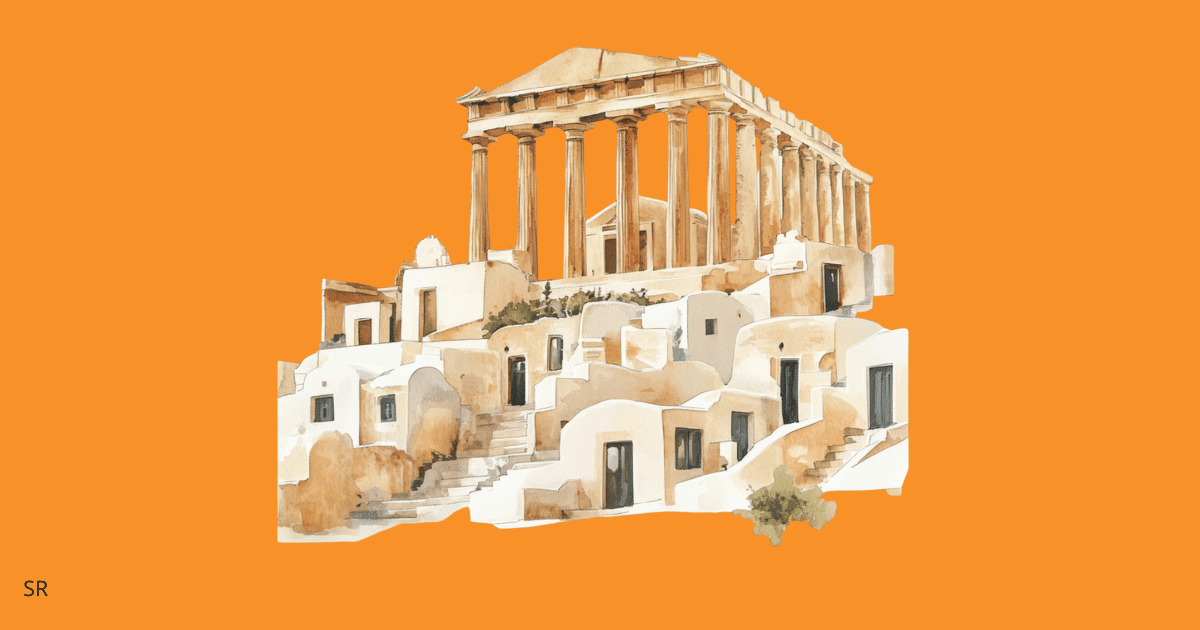
Greek is, quite simply, one of the oldest recorded languages still spoken today. We’re talking about a language with a documented history stretching back over 3,000 years — ancient Mycenaean Greek dates to around 1,400 BCE, and Classical Greek, the language of Plato and Socrates, was being written down around 500 BCE — a history the British Museum traces beautifully in its Greek collection if you ever want a rabbit hole to fall into.” That’s not just old. That’s mind-bending old. The philosophy, the mathematics, the early foundations of Western medicine — all of it was first articulated in Greek. Words like “democracy,” “philosophy,” and “biology” aren’t just borrowed from Greek. They were born there.
Italian has a different kind of magic, though. It didn’t exist as its own language until Latin — the tongue of the Roman Empire — slowly evolved and fractured over centuries. By the 13th and 14th centuries, writers like Dante Alighieri were crafting masterpieces in what we now recognize as early Italian. And then came the Renaissance. Florence, Venice, Rome — this is where art, science, and human thought exploded into something the world had never seen. Leonardo da Vinci’s notebooks, Galileo’s astronomical writings, Michelangelo’s letters — all written in Italian. The language literally carried the rebirth of Western civilization on its back.
What gets me is how deeply both of these languages are woven into everyday English. An estimated 30% of English vocabulary has Greek roots, particularly in science and medicine. Meanwhile, Italian gave us so much of our musical language — tempo, soprano, forte, piano. You’re already speaking pieces of both languages and probably don’t even realize it.
There’s also this cultural prestige thing that’s hard to explain but very real. Speaking Greek or Italian at a dinner party hits different than, say, announcing you’re learning a language for a business trip. It signals something — a love of history, of beauty, of the kind of slow, intentional living that the Mediterranean seems to embody. And honestly, I think that’s a big reason why lifestyle bloggers, travel lovers, and food enthusiasts are increasingly drawn to Mediterranean languages. They’re not just learning to communicate. They’re buying into an entire way of seeing the world. A slower pace. Better food. More wine. I mean, who could blame them?
Greek vs. Italian — How Difficult Are They to Learn?
Okay, let me be upfront here: I made a huge mistake when I started learning Greek. I assumed that because I’d picked up some Spanish fairly quickly, Greek would follow a similar timeline. It did not. Not even close. And if I’d just looked at the FSI data beforehand, I could have saved myself a lot of frustration.
“The Foreign Service Institute — which trains U.S. diplomats in foreign languages — publishes its language difficulty rankings publicly, and you can check the full FSI language difficulty chart here — it’s one of the most reliable benchmarks we have for setting realistic expectations.”
They categorize languages into groups. Italian sits in Category I, meaning it takes roughly 600–750 class hours to reach professional working proficiency. That’s on the easier end of the spectrum.
Greek, on the other hand, is Category III — around 1,100 class hours. That’s nearly double. So yeah, they’re not created equal when it comes to the learning curve.
Italian is genuinely considered one of the most accessible languages for native English speakers, and it shows. The pronunciation is almost perfectly phonetic — what you see is what you say, which is a gift when you’re a beginner drowning in new vocabulary. The alphabet is the same one you already use. The grammar has its quirks (gendered nouns, verb conjugations), but nothing that’ll make your brain short-circuit. Most people with consistent study habits — like 30 minutes a day — can hold a basic conversation in Italian within 3 to 6 months. Intermediate fluency usually comes around the 12–18 month mark.
Greek is a different beast, and I say that with love. First, there’s the alphabet. The Greek alphabet has 24 letters, and while you can learn to read it in about two weeks of focused practice, it adds a mental layer that slows everything down in the beginning. Then there’s the grammar. Greek uses a case system — nominative, accusative, genitive, dative — which means the endings of words change depending on their role in the sentence. It messed with my head for months. Reaching basic conversational ability in Greek typically takes closer to 8 to 12 months of consistent work, and true intermediate fluency is more of an 18–24 month journey.
Now, here’s the thing nobody talks about enough: most lifestyle learners aren’t trying to become diplomats. They want to order food confidently in Athens, or chat with a grandma in Palermo, or just feel connected to the culture they love. For that kind of goal, both languages are absolutely achievable without a rigid academic structure.
For Italian, Duolingo is actually not a bad starting point — better than people give it credit for, as long as you pair it with something meatier. I’d recommend combining it with Coffee Break Italian (a fantastic podcast) and the Pimsleur Italian audio program for building real spoken fluency. Watching Italian TV with subtitles, like the show Suburra on Netflix, can accelerate your ear training dramatically.
For Greek, you’ll want to front-load the alphabet work. Spend your first two weeks doing nothing but drilling those 24 characters using a tool like Anki (a free flashcard app with spaced repetition). After that, GreekPod101 is one of the better structured resources available. The Assimil Greek course is also well-loved by serious learners. And honestly? Finding a tutor on iTalki — even for just two sessions a month — can make a huge difference in keeping your pronunciation on track before bad habits solidify.
Neither language requires you to suffer through textbooks if that’s not your thing. But Greek will ask more of you upfront. Italian will reward you faster. Know which one you’re signing up for, and you’ll save yourself a lot of second-guessing down the road.
Sound, Style & Soul — The Personality of Each Language

There’s a moment in Italian language learning that nobody really warns you about. It’s the moment you stop trying to translate in your head and you just… listen. And what hits you is that Italian doesn’t just sound like a language. It sounds like a song. I had this realization sitting in a little café in Bologna, eavesdropping on two older men arguing about football. I had no idea what they were saying. But I didn’t want them to stop.
Italian earned its reputation as the language of music for a reason that goes beyond romance. The structure of the language itself is almost entirely vowel-ending — roughly 80% of Italian words end in a vowel. That creates a natural open-mouth resonance that singers have been exploiting for centuries. Opera was literally invented to be performed in Italian. The language gave the world bel canto — “beautiful singing” — and most classical musical terminology we still use today: allegro, forte, pianissimo. When people call Italian the easiest language to learn in terms of enjoyment, part of that is just the sheer pleasure of how it feels coming out of your mouth.
Modern Greek is a completely different sonic experience, and I mean that in the best possible way. Where Italian floats, Greek lands. There’s a rhythmic, percussive quality to spoken Greek that feels almost physical. The stress patterns are more emphatic, the consonant clusters are chunkier, and the emotional range feels enormous — Greeks famously use their whole bodies when they speak, and the language seems to invite that. Modern Greek dropped a lot of the tonal complexity of ancient Greek, but it kept this incredible expressiveness that makes it genuinely fun to imitate, even as a beginner.
Phonetically, the comparison is stark. Italian phonetics are forgiving — there are only 7 vowel sounds and the rules are consistent. It’s one of the big reasons Italian for beginners gets recommended so often by language coaches. Greek, on the other hand, has sounds that just don’t exist in English — the guttural “ch” sound in words like χάρη (grace), or the way “γ” softens before certain vowels. It takes real repetition to get your mouth around it. But here’s the thing: that challenge is actually part of the motivation for a lot of Mediterranean language learners. There’s a satisfaction to finally nailing a sound that felt impossible at first.
Motivation is underrated in language learning, and the sound of a language plays a bigger role in it than most people admit. “It lines up with broader research on motivation and language acquisition — the American Council on the Teaching of Foreign Languages has published extensively on how affective factors like enjoyment and phonetic appeal directly impact long-term learner retention.”
As for cultural icons — Italian has Sophia Loren, Pavarotti, and pretty much every fashion designer you’ve ever heard of. Greek has Maria Callas (okay, she sang in Italian, but she was Greek, which feels on-brand), Nikos Kazantzakis, and a modern wave of Greek diaspora artists reclaiming the language in poetry and film. Celebrity language learners associated with Italian include Audrey Hepburn, who was famously fluent, and more recently, a string of Hollywood actors who’ve taken up Italian for film roles. The language has cultural cachet that’s hard to manufacture.
Lifestyle Perks — Travel, Food, and Cultural Immersion

I want to be honest about something. Before I started taking Italian language learning seriously, I thought I was already having a pretty good time in Italy. Gelato, beautiful piazzas, bad sunburn — the usual. Then I went back with maybe 60% conversational ability, and it was like someone turned the lights on. Places that were “nice” became meaningful. People who were “friendly” became actual characters in my trip. That’s not an exaggeration. Italian culture and language are so deeply intertwined that knowing even a little of the language functions like a VIP pass to the real version of the country.
Italian for travel specifically unlocks things that no tour guide can give you. The fashion industry centered in Milan has entire subcultures that exist in Italian and Italian only — talking to a small leather goods maker in Florence about his craft, in his language, is a fundamentally different experience than pointing at price tags. Opera at La Scala hits different when you understand what’s being sung. And don’t even get me started on food. Ordering in Italian in a trattoria that doesn’t have an English menu, understanding the regional dialect of a dish name, asking the nonna behind the counter what’s good today — that is the whole point of travel. That is the trip.
Greek for travel operates differently, but the payoff might actually be bigger — precisely because fewer tourists bother. Most visitors to Greece get by on English, especially in tourist-heavy spots like Santorini or Mykonos. Which means the moment you drop even basic Greek on a local, the reaction is almost always immediate and warm. I’ve heard this described by dozens of learners as one of the most gratifying travel experiences in any language. Greeks are fiercely proud of their language and Greek culture and lifestyle, and the respect you show by attempting it is returned tenfold. You get invited to things. You hear stories. You stop being a tourist.
Now, the food question. Ordering in Italian vs ordering in Greek — which is more life-changing? Look, Italy has the more globally recognized cuisine, and there’s no question that navigating a menu in Italian opens up layers of specificity that are genuinely thrilling. But Greek food culture has this communal, slow-paced, share-everything ethos that the language perfectly complements. Saying “ti symvoulévete?” (what do you recommend?) to a taverna owner in Crete and then just trusting whatever shows up — that’s a different kind of magic than the Italian experience. Neither is better. They’re just different flavors of the same beautiful thing, which is connection through food and language.
For those thinking about longer stays, both countries have growing expat and digital nomad communities worth knowing about. In Italy, cities like Bologna, Palermo, and Bari attract long-term learners and remote workers as more affordable alternatives to Rome or Milan. Greece has seen a surge in digital nomads heading to Athens (particularly the Koukaki and Exarchia neighborhoods), as well as islands like Crete and Rhodes for slower-paced immersive living. If the language learning lifestyle is something you’re genuinely building — not just dabbling in — both countries offer visa programs that make extended stays possible. Italy launched a digital nomad visa in 2024. Greece introduced its own remote work visa back in 2021.
Career and Social Value — Which Language Opens More Doors?
Here’s where I have to pump the brakes a little on the pure romance of language learning and talk about something practical. Because one of the questions I get asked constantly is: which language is actually more useful? And the honest answer is — it depends almost entirely on what field you’re in and what you want your life to look like.
Italian is one of 24 official languages of the European Union, which gives it real institutional weight. But beyond the bureaucratic stuff, the industries where Italian genuinely opens doors are specific and significant: fashion and luxury goods (Italy accounts for a massive share of global luxury exports), industrial design (Italian design firms are globally respected), gastronomy and the culinary arts, and classical music. If you’re working in any of those fields and you’re not at least dabbling in Italian language learning, you’re leaving something on the table. Speaking the language doesn’t just help you communicate — it signals cultural fluency, and in those industries, that matters enormously.
Greek’s career value is more niche but surprisingly deep in specific sectors. Classical and Biblical Greek are still requirements in theology, philosophy, and classics programs at universities worldwide. Medical and scientific terminology — the stuff you memorize in pre-med — is something like 60% Greek in origin, so there’s an argument that learn Greek for beginners content is actually underrated for science students. The global shipping industry is also worth mentioning: Greece controls approximately 20% of the world’s shipping capacity, and Greek shipping families are a significant economic force. If maritime business or international logistics is your world, Modern Greek is a genuinely strategic second language.
The second language benefits beyond career stuff are well-documented at this point. Bilingualism has been linked in multiple studies to delayed onset of dementia symptoms — some research suggests by as much as 4 to 5 years. There’s also the well-established “cognitive reserve” argument: switching between languages exercises executive function, attention, and mental flexibility in ways that monolingualism simply doesn’t. But honestly, the benefit I hear described most often by people in the language learning lifestyle community isn’t cognitive — it’s social. There’s a confidence that comes from being able to operate in another language, a sense of expanded identity, that’s hard to quantify but very real.
In terms of raw speaker numbers: Italian has around 85 million native speakers globally, with a significant diaspora in the United States, Argentina, Brazil, and Australia. Greek culture and lifestyle communities exist in large diaspora pockets too — particularly in Australia, the US, Canada, and Germany — but Modern Greek has around 13 million native speakers, making it a smaller language by global standards. If breadth of communication opportunity is your primary metric, Italian wins on numbers alone.
For content creators specifically, both languages represent underserved niches. There’s a growing appetite for Greek language learning content on YouTube and TikTok, and the existing creators in that space have passionate, loyal audiences. Italian content is more saturated, but the audience is also much larger. Either way, building a presence around Mediterranean languages as a content creator is a legitimately interesting opportunity right now — one that didn’t really exist five years ago in the same way.
The second language benefits are real whether you pick Greek or Italian. The question is just which version of yourself — the one sipping espresso in a Milan design studio, or the one arguing passionately about olive oil on a Greek island — feels more like home.
Greek vs. Italian for Romance and Relationships
I want to tell you about a woman I know — let’s call her Maria, because honestly, that name works for both cultures — who started learning Italian for a trip she was planning to the Amalfi Coast. She downloaded a few Italian language apps, worked through some basics for about three months, and went on her trip. She came back engaged. To an Italian man she met at a cooking class in Positano. Now, I’m not saying the Duolingo did that. But I’m also not saying it didn’t.
There’s something about the language and culture connection in Mediterranean societies that runs deeper than in most places I’ve encountered. Mediterranean culture isn’t just a backdrop — it’s an active, lived philosophy. Family is central. Meals are long and intentional. Conversation is an art form. And when you show up speaking even broken Italian or halting Greek, you’re not just communicating — you’re signaling that you’ve taken the culture seriously enough to learn its language. That is, in Mediterranean dating culture specifically, a very significant thing.
Italian has long been called one of the romantic languages — and while that term technically refers to languages descended from Latin (which Italian is, and Greek is not), the cultural connotation is undeniable. Italian has a musicality and expressiveness that seems almost engineered for romantic communication. There’s a reason Italian endearments — tesoro (treasure), amore mio (my love), cuore mio (my heart) — have been borrowed wholesale into English-language romantic culture. The language wears its emotions on the outside.
Greek is different, but no less powerful in this regard. Modern Greek has a whole vocabulary for love that English simply doesn’t. The ancient Greeks famously identified eight distinct types of love — eros (romantic desire), philia (deep friendship), storge (familial affection), agape (unconditional love) — and Modern Greek still carries traces of that emotional specificity. Greeks tend to be direct, expressive, and physically warm in ways that can feel overwhelming if you’re not used to it, and completely intoxicating once you are. Greek culture and lifestyle places enormous value on philoxenia — the love of strangers — which is both a cultural trait and, I’d argue, a romantic one.
Language immersion travel is honestly one of the most underrated relationship tools in existence, and I don’t just mean romantically. Traveling with the specific goal of improving your language forces a kind of vulnerability that breaks down social walls fast. When you’re fumbling through Italian travel phrases at a market in Naples, or nervously deploying Greek travel phrases at a ferry dock in Piraeus, you’re exposed. You’re not performing competence. And people — especially locals — respond to that authenticity in ways that purely transactional tourist interactions never produce.
I’ve spoken to dozens of learners over the years who describe the moment they made their first real local friend through language as a turning point — not just in their language journey but in how they understood themselves. A guy named Thomas told me he started using a Greek language app mostly out of boredom during lockdown, ended up in a language exchange with someone from Thessaloniki, and now visits Greece every summer to see people he genuinely considers family. That’s not unusual. Language exchange programs — apps like Tandem, HelloTalk, and the community forums on iTalki — are quietly responsible for thousands of genuine cross-cultural friendships and relationships every year.
On the practical side: if you’re heading to Italy with romantic intentions (or just romantic hopes), a few phrases go an extraordinarily long way. Beyond the basics, things like “sei bellissima/o” (you are beautiful), “mi piace stare con te” (I like being with you), and “possiamo rivederci?” (can we see each other again?) land very differently in person than they do on a translation app screen. Similarly, Greek phrases like “eisai poli omorfi/os” (you are very beautiful) or simply “mou aresei i paréa sou” (I enjoy your company) — delivered with the right amount of hesitation and sincerity — are the kind of thing people remember.
Learning a new language as an adult for relationship and lifestyle reasons is, I’d argue, one of the most legitimate and sustainable motivations there is. Pure academic discipline fades. The desire to connect with a specific culture, a specific person, or a specific version of yourself — that doesn’t fade. It compounds. And whether it’s Italian or Greek, both languages are deeply, fundamentally human in ways that will reward every hour you put into them.
Resources and Tools to Start Your Journey Today
Let me save you the six months of trial and error I went through trying to figure out which resources were actually worth my time. Because here’s the truth — there are a lot of language learning tools out there, and most of them are fine. A small handful of them are genuinely great. And the difference between fine and great matters a lot more than people realize, especially in those first few months when motivation is fragile and progress feels invisible.
Let’s start with apps, because that’s usually where people begin. For Italian, Babbel is genuinely one of the better structured starting points — it’s lesson-based, it moves at a sensible pace, and the grammar explanations are actually coherent, which not all apps bother with. Duolingo is fine for Italian too, better than its reputation suggests, as long as you treat it as a warm-up tool rather than a complete curriculum. Where I’d really push Italian learners is toward Clozemaster once they hit the intermediate stage — it’s essentially fill-in-the-blank sentences in context, and it builds vocabulary retention faster than flashcards ever did for me. For building a solid language learning routine around Italian, the combination of Babbel in the morning and Clozemaster in the evening is surprisingly powerful.
For Greek, the app landscape is a little thinner, which is frustrating but manageable. Duolingo does have a Greek course and it’s decent for absolute beginners — good enough to get the Greek alphabet for beginners drilled in, which should honestly be your first goal before anything else. Pimsleur Greek is excellent for spoken fluency and audio-based learning, especially if you commute or spend time in the car. Glossika is the one I’d recommend for intermediate Greek learners specifically — it uses a spaced repetition system built around full sentences, which trains your ear and your mouth simultaneously in a way that isolated vocabulary drills never quite manage.
Now, YouTube and podcasts. This is where I’d actually spend most of my time if I were starting over, because immersive audio and video content does something that apps simply can’t — it builds your ear for natural, native-speed speech. For Italian, Coffee Break Italian remains one of the best podcasts for language learning in any language, full stop. It’s been running since 2006, the pacing is excellent for beginners, and the hosts are genuinely engaging. ItalianPod101 is worth bookmarking for its sheer volume of material. On YouTube, channels like Italiano Automatico and Italy Made Easy are well-structured and free.
For Greek podcasts, GreekPod101 is the most comprehensive option available, with content ranging from absolute beginner to advanced. Dreaming Spanish doesn’t do Greek, obviously, but the methodology — comprehensible input at near-native speed — is worth understanding and applying to whatever Greek YouTube content you can find. The channel Learn Greek with Lina on YouTube is warm, well-paced, and genuinely helpful for beginners finding their footing.
On the Netflix front — this is the fun part. Netflix shows to learn Italian that are actually worth your time include Suburra (crime drama, gritty and fast-paced, great for hearing real conversational Italian), My Brilliant Friend (slower, more lyrical, based on Elena Ferrante’s novels — incredible for intermediate learners), and Zero (contemporary, modern slang, very good for younger register Italian). For Netflix shows to learn Greek, the options are smaller but Maestro in Blue is genuinely excellent — a Greek-produced drama that’s been quietly building an international audience, and the dialogue is natural and clear enough for intermediate learners to follow.
For books and phrasebooks — don’t overlook physical resources just because apps exist. The Lonely Planet Italian Phrasebook is legitimately useful for travel-focused learners, and there’s a Greek equivalent that I’ve dog-eared to pieces. If you want something more lifestyle-oriented, “Italian Ways” by Tim Parks is a beautiful read that weaves language and culture together in a way that’s more motivating than any textbook. For Greek cultural context, “The Colossus of Maroussi” by Henry Miller is old but remarkable — it’ll make you want to learn Greek just from the way it describes the country.
Now for the piece that actually matters most: online language tutors. I cannot overstate how much a real human tutor accelerates progress compared to going it alone. iTalki Italian tutors are widely available at price points ranging from around $10 to $40 per hour depending on whether you book a community tutor or a professional teacher. For iTalki Greek, the pool is smaller but the tutors tend to be incredibly passionate — in my experience, Greek tutors on iTalki are some of the most enthusiastic language teachers on the platform, probably because they genuinely love seeing foreigners attempt their language. Even two sessions a month — used specifically to fix pronunciation and get feedback on your speaking — can change your trajectory completely.
Language exchange programs are the free alternative and honestly, for the right person, they’re even better. Apps like Tandem and HelloTalk connect you with native speakers who want to learn your language in exchange for helping you with theirs. I’ve seen people build genuine long-term friendships through these platforms. The key is showing up consistently and treating it like a real commitment, not just a novelty you try once.
If you’re a digital nomad Mediterranean lifestyle person — or aspiring to be — the resources above take on a different shape. You’re not learning for a test. You’re learning for a life. In that case, I’d structure things around immersion first: find a tutor on iTalki, build a language learning routine that involves at least one live conversation per week, use a podcast during your morning walk, and watch one episode of a native-language show per evening with subtitles in the target language (not English — that’s a trap). That’s genuinely a complete system. It fits in about 45 minutes a day and it works.
The 15-minute version, for people who are truly swamped: Clozemaster or Pimsleur for 10 minutes in the morning, and one episode of a language-specific podcast at half-speed during a commute or workout. That’s it. It’s not glamorous. It won’t make you fluent in six months. But it will keep the language alive in your brain, build a foundation slowly and steadily, and — most importantly — keep the habit unbroken. Because an unbroken habit, even a tiny one, beats an ambitious plan you abandon every single time.
Comparison Table — Greek vs Italian at a Glance
| Feature | Greek 🇬🇷 | Italian 🇮🇹 |
|---|---|---|
| Alphabet | Greek script | Latin alphabet |
| FSI Hours (English speakers) | ~1,100+ | ~600–750 |
| Global Reach | Limited (mainly Greece, Cyprus) | Widely spoken in Europe & global diaspora |
| Cultural Strengths | History, philosophy, Orthodox traditions | Art, fashion, cinema, cuisine |
| Career Value | Niche, specialized fields | Broad, business, tourism, fashion |
| Travel Benefits | Greece & Cyprus | Italy, Switzerland, global Italian communities |
Conclusion
So — Greek or Italian? Here’s the truth: there’s no wrong answer. If you crave quick wins, a globally recognized language, and an entry point into one of the world’s richest cultures, Italian is your best bet. But if you’re drawn to something more rare, intellectually rewarding, and deeply rooted in the foundations of human thought, Greek will reward you like few languages can.
Both languages are gateways — to people, places, flavors, and versions of yourself you haven’t met yet. The best language to learn is always the one that excites you most. So pick up that phrasebook, download that app, and book that flight. Your Mediterranean life is waiting!
FAQ — Greek vs Italian
Q1: Is Greek harder than Italian?
Yes. Greek has a new alphabet and more complex grammar, while Italian is closer to English.
Q2: Which language is more useful for travel?
Italian — since it’s spoken in multiple countries and tourist hubs.
Q3: Can learning Greek help me understand ancient texts?
Yes, modern Greek provides a foundation, though ancient Greek differs in grammar and vocabulary.
Q4: Is Italian a good career language?
Yes. Italian is valuable in fashion, design, tourism, and EU careers.
Q5: How many people speak Greek vs Italian?
Greek: ~13 million native speakers. Italian: ~70+ million native speakers.
Q6: Which language has more learning resources online?
Italian — apps, podcasts, and online courses are far more abundant.
