

We’ve all been there—you want to greet someone in Spanish, so you confidently say what you learned in class. Then a native speaker responds with something completely different! If you’ve searched for good morning in Spanish, you’re probably wondering whether buenos días is always the right answer or if there are more natural ways to greet people depending on the country and situation.
The good news is that you’re about to learn not just the textbook translation, but how native Spanish speakers actually use morning greetings in everyday conversations — the kind of real-world nuance that good language learning apps focus on but textbooks usually skip.
By the end of this guide, you’ll know which expression to use, when to use it, and how to sound much more natural — and if you want to actually hear native pronunciation instead of just reading it, AI language apps like babbel are great for that kind of listening practice.
How to say Good morning in spanish?
If you want to say good morning in spanish, the standard phrase is Buenos días. The literal translation is “Good days,” but the natural meaning is simply “Good morning.” It’s the safest recommendation if you’re learning the spanish language because this greeting in spanish is widely used across every spanish-speaking country.
Buenos días
- Literal: Good days
- Natural: Good morning
- Pronunciation: BWEH-nos DEE-ahs
- Context: Universal; appropriate in formal and casual situations
Example:
A: Buenos días.
B: Buenos días. ¿Cómo está?
I remember saying this during my first morning at a host family’s house, and everyone smiled because it sounded completely natural. Honestly, most apps overcomplicate spanish greetings, but this is the phrase you’ll actually hear every day.
Use buenos días to greet someone at work, in a café, at school, or when you greet someone in the morning anywhere español is spoken. Whether you want to say good morning in spanish to a friend, a stranger, or customer service, this morning greeting works. Keep reading to discover when it changes later in the day and how native speakers naturally switch between greetings. You’ll sound polite, confident, and less like a tourist from your first conversation onward naturally.s later in the day and how native speakers naturally switch between greetings. You’ll sound polite, confident, and less like a tourist from your first conversation onward naturally.
Formal vs. Casual Ways to Say Good Morning in Spanish

Choosing the right greeting depends on who you’re talking to and where you are. Spanish people naturally adjust greetings based on the relationship, the time of the day, and the situation. I learned this after greeting a professor exactly like a close friend and getting a polite smile.
Buenos días
Buenos días is the safest formal and polite way to greet someone in the morning. Literal translation: Good days. Natural: Good morning. Pronunciation: BWEH-nos DEE-ahs. It’s used to greet a group of people or one speaker just as easily. Example: Buenos días, profesor.
Buen día
Buen día literally means good day and feels completely natural in Argentina and Uruguay. It’s a common variation there, but in Spain it can sound a little unusual. I said it in Madrid once and people understood, but Buenos días sounded more local.
¡Hola! Buenos días
¡Hola! Buenos días adds extra warmth when you first greet someone during a conversation. It’s common in customer service, phone calls, and first meetings.
¡Muy buenos!
¡Muy buenos! literally means “Very good,” but natives understand it as “Morning!” It’s informal, friendly, and surprisingly common. Most textbooks skip this one, honestly.
¡Buenas!
¡Buenas! doesn’t literally mean good morning, yet it’s often used to say hello during the morning. You’ll hear it among friends, in small shops, and as casual slang. A handshake or kiss on the cheek usually depends on the relationship, not the greeting itself. These different ways to say good morning help you sound more natural, so let’s look at regional differences next. Pay attention to the time of day, copy the other speaker, and don’t overthink it. Listening first usually beats memorizing rules. Soon you’ll switch between greetings without even noticing, and every conversation will flow naturally.
Regional Variations: Spain vs. Mexico vs. Latin America
The good news is that Buenos días works almost everywhere in the spanish-speaking world. Still, local language habits change from country to country, and knowing a small variation makes you sound much more natural than simply memorizing one phrase.
🇪🇸 Spain
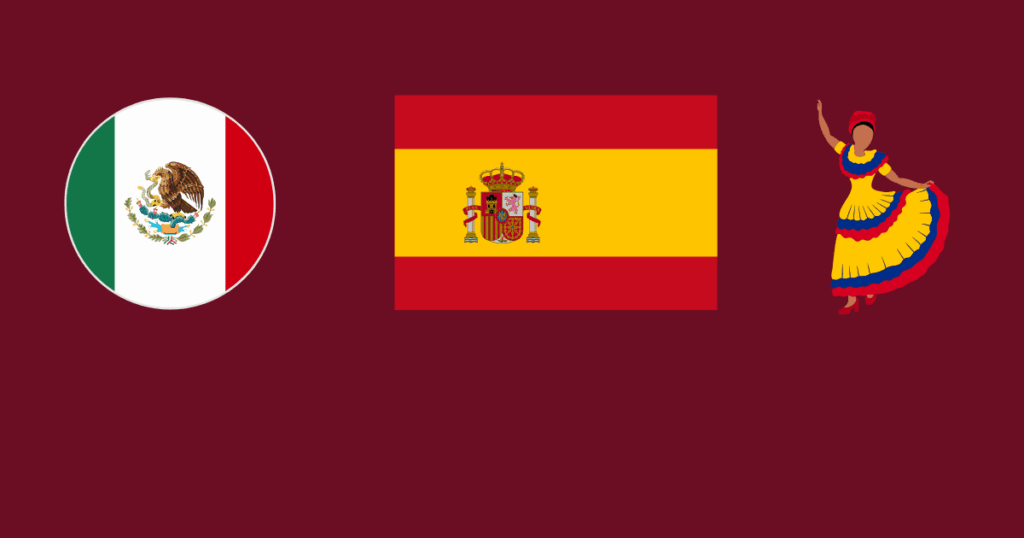
You’ll hear Buenos días, ¡Muy buenas!, and ¡Buenas! every day. Literal translations are “Good days,” “Very good…,” and simply “Good…” but the natural meaning is just “Good morning” or “Hi.” Pronunciation is often quick: BWEH-nos DEE-ahs, MOO-ee BWEH-nas, and BWEH-nas. Example: “¡Buenas! ¿Qué tal?” Casual greetings are incredibly common, especially before noon, and spanish people rarely think twice about them.
Mexico
Buenos días, Buenos días, joven, and Buenos días, señora are all widely used. The natural translation stays “Good morning,” while adding a title sounds respectful. Pronunciation is clear and unhurried. Example: “Buenos días, señora. ¿Cómo está?” Politeness matters, so this variation leaves a great first impression.
Argentina
In argentina, Buen día is often more common than many learners expect. Literal translation: “Good day.” Natural translation: “Good morning.” Pronunciation: BWEHN DEE-ah. Example: “Buen día, ¿todo bien?” You’ll still hear Buenos días, but Buen día feels especially local.
Colombia
A favorite greeting is ¿Cómo amaneció? Literally, “How did you wake up?” Naturally, it means “How are you this morning?” Pronunciation: KOH-moh ah-mah-neh-see-OH. Example: “¡Buenos días! ¿Cómo amaneció?”
Caribbean Spanish
Across many Caribbean regions, Buenos días is pronounced much faster, sometimes sounding almost like “buenodía.” Don’t worry about copying that speed immediately. Start clearly, then let your pronunciation become more relaxed as you listen to native speakers.
How to Pronounce “Buenos Días” Like a Native
Getting the pronunciation right makes a huge difference when you speak Spanish. Even if your grammar isn’t perfect, saying Buenos días naturally leaves a great first impression. I had a tutor tell me that native rhythm matters more than sounding perfect, and honestly, that advice stuck.
Spanish phrase: Buenos días
Literal meaning: Good days
Natural meaning: Good morning
IPA: /bwe.nos ˈdi.as/
Pronunciation cue: BWEH-nos DEE-ahs
Break it into two parts:
- Bue-nos → BWEH-nos
- Dí-as → DEE-ahs
Notice the accent mark on días. It tells you the stress falls on the first syllable: DEE-ahs, not dee-AHS. That strong first syllable gives the greeting its natural rhythm.
A couple of mistakes almost every language learner makes:
❌ Boo-en-os
✅ BWEH-nos
❌ Day-as
✅ DEE-ahs
Try to keep the flow smooth instead of pausing between the words. Native speakers usually say the entire phrase as one friendly greeting rather than emphasizing each syllable separately.
For more pronunciation guidance, the Royal Spanish Academy (RAE) is the official authority on Spanish spelling and pronunciation, while the Cambridge Spanish Pronunciation Guide provides clear audio examples that are especially helpful for language learners.
Practice these aloud:
- Buenos días. — Good days → Good morning. Pronunciation cue: smooth, even rhythm.
- Buenos días, ¿cómo estás? — Good days, how are you? Pronunciation cue: pause briefly after días.
- Buenos días, mucho gusto. — Good days, nice to meet you. Pronunciation cue: keep the greeting warm and connected.
Repeat them slowly first, then speed up a little. That’s one of the fastest ways to master pronunciation and sound more confident as you learn Spanish.
Real Examples: How Native Speakers Use “Good Morning”
Dialogue 1 introduces a customer interaction. A: “Buenos días.” B: “Buenos días. ¿En qué puedo ayudarle?” This greeting sounds natural because polite service almost always begins with a friendly morning welcome. The formality is high, making it ideal for stores, hotels, or banks throughout most Spanish-speaking countries.

Dialogue 2 fits an office conversation. A: “Buenos días.” B: “¡Buenos días! ¿Cómo amaneciste?” It feels cheerful because coworkers often personalize greetings before discussing work. The formality is medium, while ¿Cómo amaneciste? is especially common in Colombia, although many people elsewhere simply ask cómo estás.
Dialogue 3 shows neighbors meeting outside. A: “¡Buenas!” B: “¡Buenos días!” This exchange sounds relaxed because both speakers recognize each other already. The formality is low, and ¡Buenas! works as an informal hi or hello in several regions, especially Spain.
Listening to these words and phrases helps you understand real conversation instead of memorizing isolated vocabulary. I like copying native speakers during short exchanges because it makes every greeting feel more natural. Notice the smile, tone, and rhythm as much as the vocabulary. Those small details make every speaker sound warmer and help you communicate confidently.
Common Mistakes English Speakers Make
Mistake 1: Wrong: Buena mañana. Correct: Buenos días. Literal: Good morning. Natural: Good morning. Pronunciation tip: say BWEH-nos DEE-ahs. Example: Buenos días, Ana. This phrase sounds unnatural because Spanish speakers do not use Buena mañana as a greeting.
Mistake 2: Wrong: Thinking Buenos días ends at noon. Correct: Follow local habits. Literal: Good days. Natural: Good morning. Pronunciation tip: keep smooth rhythm. Example: Many regions still use Buenos días after noon in some situations.
Mistake 3: Wrong: Hola only. Correct: Hola, Buenos días. Literal: Hello, good days. Natural: Hello, good morning. Pronunciation tip: connect both phrases. Example: Hola, Buenos días, Carlos. Adding the greeting feels warmer and friendlier during conversation.
Mistake 4: Wrong: Buen día everywhere. Correct: Use Buenos días outside countries where Buen día is common. Literal: Good day. Natural: Good morning. Pronunciation tip: stress día. Example: Learn country preferences before you speak Spanish.
Mistake 5: Wrong: Flat tone. Correct: Enthusiastic Buenos días. Literal: Good days. Natural: Good morning. Pronunciation tip: smile while speaking. Example: A friendly voice sounds welcoming. Check a dictionary for accurate translation, expand your Spanish vocabulary with useful Spanish words, and practice every phrase daily until confidence becomes completely natural.
Related Spanish Morning Phrases You’ll Actually Use
Learning a few extra words and phrases makes your morning greetings sound much more natural. These expressions fit real conversations and pair perfectly with Buenos días, whether you’re saying hello, hi, or continuing a friendly chat.
Good morning, how are you?
Spanish: Buenos días, ¿cómo estás?
Literal translation: Good days, how are you?
Natural translation: Good morning, how are you?
Context: Friends and coworkers.
Pronunciation tip: Stress DEE in días.
Example: Buenos días, ¿cómo estás?
Have a nice day
Spanish: Que tengas un buen día.
Literal translation: May you have a good day.
Natural translation: Have a nice day.
Context: Ending a conversation before saying hasta luego.
Pronunciation tip: Keep buen día connected.
Example: ¡Que tengas un buen día!
Did you sleep well?
Spanish: ¿Dormiste bien?
Literal translation: Did you sleep well?
Natural translation: Did you sleep well?
Context: Family or close friends.
Pronunciation tip: Roll smoothly into bien.
Example: ¿Dormiste bien anoche?
Good morning, everyone
Spanish: Buenos días a todos.
Literal translation: Good days to everyone.
Natural translation: Good morning, everyone.
Context: Meetings or classrooms.
Pronunciation tip: Pause slightly before a todos.
Example: Buenos días a todos.
Morning!
Spanish: ¡Buenas!
Literal translation: Good…
Natural translation: Morning! / Hi!
Context: Informal greeting.
Pronunciation tip: Say it with energy.
Example: ¡Buenas, vecino!
Nice to see you
Spanish: Qué gusto verte.
Literal translation: What pleasure to see you.
Natural translation: Nice to see you.
Context: Warm reunions or terms of endearment.
Pronunciation tip: Stress GUS in gusto.
Example: ¡Qué gusto verte!
How did you sleep?
Spanish: ¿Cómo amaneciste?
Literal translation: How did you wake up?
Natural translation: How are you this morning?
Context: Common in Colombia.
Pronunciation tip: Emphasize seh.
Example: ¿Cómo amaneciste hoy? After morning, remember buenas tardes means good afternoon, while buenas noches is used at night.
Conclusion
If you’re ever unsure how to say good morning in Spanish, simply use Buenos días. It’s polite, natural, and understood across every Spanish-speaking country. As you become more confident, you can start using regional expressions like Buen día, ¡Muy buenas!, or ¡Buenas! to sound even more like a native speaker. Practice these greetings out loud, pay attention to how native speakers use them in real conversations, and don’t be afraid to experiment with different levels of formality. Ready to expand your Spanish? Explore our related phrase guides to keep building natural, everyday conversation skills.
