

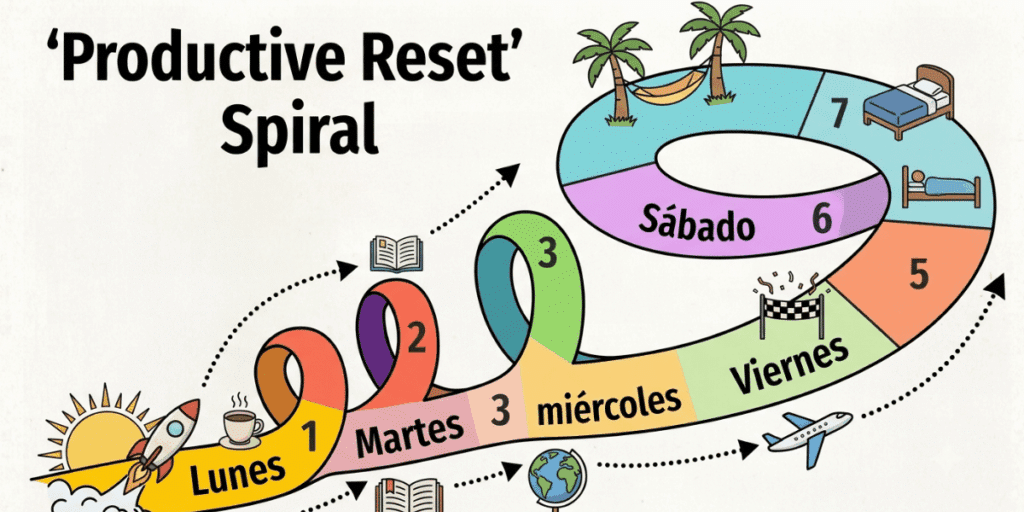
Have you ever tried making plans in Spanish and suddenly forgotten how to say “Wednesday” or “Saturday”?
I’ve been there!
Learning the days of the week in Spanish is one of the first milestones that makes everyday conversations feel much more natural.
Whether you’re booking a hotel, arranging a meeting, discussing your travel itinerary, or simply talking about your weekly routine, these seven words appear everywhere.
In this guide, you’ll learn every Spanish weekday, discover pronunciation tips, understand the grammar behind them, see practical examples, avoid common mistakes, and practice memory techniques that help you remember the entire sequence confidently — the same kind of AI-powered practice that makes these things stick faster than flashcards.
If you want a guided course to lock in the basics, Babbel covers this in its early lessons too.
Days of the Week in Spanish Quick Reference
If you want to learn the days of the week in Spanish, this quick reference gives the answer immediately. I wish someone had shown me this table first because remembering los días de la semana became much easier once I saw everything together.
| Spanish | English | Pronunciation | Abbreviation | Example | Usage Note |
|---|---|---|---|---|---|
| lunes | Monday | LOO-nes | lun. | Trabajo el lunes. (I work on Monday.) | First weekday. |
| martes | Tuesday | MAR-tes | mar. | Tengo clase el martes. (I have class Tuesday.) | Easy to remember with Mars. |
| miércoles | Wednesday | mee-AIR-koh-les | mié. | Viajamos el miércoles. (We travel Wednesday.) | Accent mark matters. |
| jueves | Thursday | HWEH-bes | jue. | Llegan el jueves. (They arrive Thursday.) | Starts with silent J sound. |
| viernes | Friday | bee-AIR-nes | vie. | Salimos el viernes. (We go out Friday.) | Favorite workday for many. |
| sábado | Saturday | SAH-bah-doh | sáb. | Descanso el sábado. (I rest Saturday.) | Weekend begins. |
| domingo | Sunday | doh-MEEN-goh | dom. | Comemos juntos el domingo. (We eat together Sunday.) | Family day in many places. |
The week in Spanish is semana, while a day in Spanish is día. Together they form días de la semana, meaning the 7 days of the week.
My Spanish teacher drilled the names of the days into me by saying them aloud every morning. Honestly, repeating Spanish days of the week in order helped me naturally say days of the week without translating.
Keep scrolling, because next you’ll learn how native speakers actually use these words daily.
Understanding the Order of the Week in Spanish
If you already know the vocabulary, the next step is understanding the structure of the week in Spanish.
Unlike many English calendars, Spanish calendars usually begin on Monday, making learning the days feel surprisingly logical.
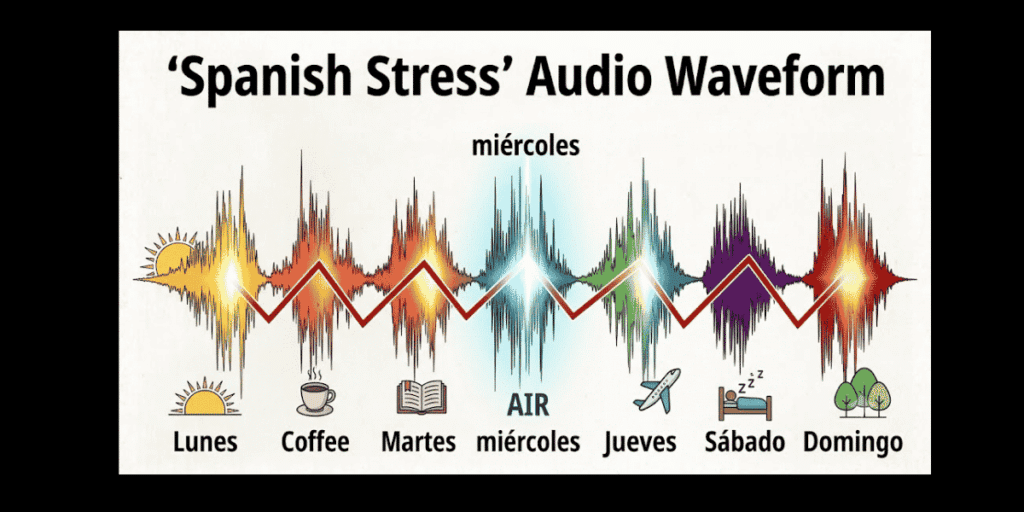
Mastering the days becomes easier once you see the pattern instead of memorizing random names. This order also appears on schedules, planners, and school timetables.
- lunes – Monday – 1st – Trabajo el lunes. Spain and most Spanish-speaking countries start here.
- martes – Tuesday – 2nd – Estudio el martes.
- miércoles – Wednesday – 3rd – Descanso el miércoles.
- jueves – Thursday – 4th – Viajamos el jueves.
- viernes – Friday – 5th – Salgo el viernes. Marks the end of the workweek.
- sábado and domingo – Saturday and Sunday – Weekend – Descansamos el sábado y domingo.
In Spain and much of Latin America, official calendars follow the ISO convention, so Monday appears first.
That can surprise learners used to the English days of the week beginning with Sunday.
Notice that weekdays run from lunes through viernes, while sábado and domingo are generally reserved for family, rest, sports, or travel.
When I visited Mexico City, friends planned almost everything around the weekend, not just work meetings or classes alone anymore either.
To remember the Spanish days, connect them with their English counterparts while practicing aloud every morning.
Honestly, this tiny habit helped me more than any app.
The week in Spanish is semana, and it fits naturally with months of the year and even the year in Spanish when writing dates.
Keep reading because using these words in real conversations is even easier than remembering them.
Pronunciation Guide for Spanish Weekdays
Good pronunciation makes conversations feel natural, even if your grammar is still basic. When I first started learning español, I could remember every weekday, but my spanish pronunciation definitely gave me away.
A few simple rules changed everything.

Spanish words are usually pronounced exactly as they are written. Most weekdays naturally stress the second-to-last syllable unless an accent mark tells you otherwise.
The letter h is silent, r is lightly tapped, and the d between vowels often sounds softer than English.
| Weekday | Easy Pronunciation | Stress | Difficult Sound | Practice Sentence | Pronunciation Tip |
|---|---|---|---|---|---|
| lunes | LOO-nes | LOO | None | Hoy es lunes. | Keep both syllables short. |
| martes | MAR-tes | MAR | Light rolled r | Mañana es martes. | Tap the r once. |
| miércoles | mee-AIR-koh-les | AIR | Accent mark | Hoy es miércoles. | Stress “AIR,” not “mee.” |
| jueves | HWEH-bes | HWEH | Spanish j | Trabajo el jueves. | Breathe gently for the j sound. |
| viernes | bee-AIR-nes | AIR | Soft v/b | Nos vemos el viernes. | Spanish v sounds close to b. |
| sábado | SAH-bah-doh | SAH | Soft d | Descanso el sábado. | Let the d sound relaxed. |
| domingo | doh-MEEN-goh | MEEN | Soft g | Es domingo hoy. | Keep the final go smooth. |
One common mistake is pronouncing every letter with an English accent. Your spanish teacher or spanish classes will often remind you that rhythm matters just as much as individual sounds.
For extra practice, say all seven days together without pausing. This trick helped me more than any online spanish app, spanish course, or spanish lesson. Keep practicing, because the next section shows how native speakers naturally use these weekdays in everyday conversations.
Using Spanish Days of the Week in Everyday Conversations
Memorizing vocabulary is helpful, but actually using it is where everything starts to stick. Once I began hearing weekdays in cafés, airports, and classrooms, the spanish language felt much more natural than any flashcard ever could.
| Situation | Spanish Sentence | English Translation | Grammar Explanation | Vocabulary Note | Real-Life Context |
|---|---|---|---|---|---|
| Making an appointment | ¿Podemos reunirnos el martes? | Can we meet on Tuesday? | El is used before weekdays. | Reunirnos comes from the verb reunir. | Booking a meeting. |
| School schedule | Tengo matemáticas el miércoles. | I have math on Wednesday. | Present tense describes regular schedules. | Tengo means “I have.” | Talking about classes. |
| Work meeting | La reunión es el jueves por la mañana. | The meeting is Thursday morning. | Por la mañana means “in the morning.” | Mañana can mean morning or tomorrow depending on context. | Office conversations. |
| Travel plans | Viajamos el viernes. | We travel on Friday. | The verb agrees with the subject. | Viajamos means “we travel.” | Planning a trip. |
| Restaurant reservation | Tenemos una reserva para el sábado. | We have a reservation for Saturday. | Weekdays are not capitalized. | Reserva is a common phrase. | Calling a restaurant. |
| Birthday | Mi cumpleaños es el domingo. | My birthday is on Sunday. | Es is the correct form of the verb ser. | Useful for introductions. | Celebrations. |
| Weekly routine | Corro todos los lunes. | I run every Monday. | Todos los means “every.” | Great for daily habits. | Talking with friends. |
| Exercise schedule | Voy al gimnasio los martes y jueves. | I go to the gym on Tuesdays and Thursdays. | Plural weekdays describe recurring actions. | Common in spanish-speaking countries. | Fitness planning. |
If you’re an english speaking learner, avoid translating word for word. Read the spanish translation, notice the grammar, and repeat each sentence aloud. Honestly, these examples taught me more than any textbook because they sound like real conversations you’ll hear every day.
Grammar Rules for Days of the Week in Spanish
The vocabulary is easy, but the grammar behind the days of the week is where many learners slip up. Honestly, these small rules confused me more than verb conjugations at first, especially because they work differently unlike English.
| Grammar Rule | Wrong Example | Correct Example | Why It Works | Memory Trick |
|---|---|---|---|---|
| Days are not capitalized | Lunes es ocupado. | lunes es ocupado. | Weekday names are common nouns, so they do not use capital letters. | Think of weekdays like “table,” not “John.” |
| Use el for “on” | Voy lunes. | Voy el lunes. | The definite article el means “on” before a specific day. | Say “el” before one day. |
| Use los for repeated events | Voy al gimnasio el lunes. (every Monday) | Voy al gimnasio los lunes. | Los shows something happens every Monday. | “Los” = repeated routine. |
| Este lunes vs el lunes | Este lunes pasado. | Este lunes or el lunes | Este lunes means this coming Monday, while el lunes usually refers to a specific Monday based on context. | “Este” points to the nearest day. |
| Singular vs plural | Los lunes es divertido. | Los lunes son divertidos. | Use plural forms when talking about recurring weekdays. | Plural subject, plural verb. |
| No possessive forms | Mi lunes es ocupado. | El lunes estoy ocupado. | Spanish avoids possessives with weekdays. | Describe the day instead of owning it. |
| Date expressions | Hoy es el lunes. | Hoy es lunes. | Skip the article after es when stating today’s date. | “Hoy es” stands alone. |
| Articles with weekdays | Nos vemos viernes. | Nos vemos el viernes. | Most expressions require the definite article. | If in doubt, include el. |
One extra tip: every weekday is one of the masculine nouns, even though most end in -s. Their abbreviation follows the same lowercase rule.
This lowercase rule isn’t just a style preference — it’s confirmed directly by the Real Academia Española’s official guidance on capitalization, the institution that sets the standards for the Spanish language.
Spain vs Latin America: How Weekdays Are Used
The good news is that the names of the days of the week stay the same across spanish speaking countries. What changes is how people write schedules, mention dates, or casually talk about plans. Honestly, these differences are small, but noticing them makes you sound much more natural.
| Situation | Usage Example | English Translation | Regional Note | Cultural Explanation |
|---|---|---|---|---|
| Monday as first day | La semana empieza el lunes. | The week starts on Monday. | Common in Spain and most of Latin America. | Calendars usually follow the international Monday-first layout. |
| Calendar layouts | Nos vemos el viernes. | See you on Friday. | Printed calendars almost always begin with Monday. | Schools and offices organize the week this way. |
| Date formats | Lunes, 12 de mayo. | Monday, May 12. | Day usually comes before the month. | This format is standard in everyday writing. |
| Spoken dates | Es lunes, doce de mayo. | It is Monday, May 12. | Natural in conversations everywhere. | The weekday is often mentioned before the date. |
| Casual scheduling | ¿Quedamos el jueves? | Shall we meet on Thursday? | Very common with friends. | Simple, direct, and friendly. |
| Business communication | La reunión será el martes a las nueve. | The meeting will be Tuesday at nine. | Frequently used in emails and offices. | Clear scheduling avoids confusion. |
| School timetables | Tengo historia los miércoles. | I have history on Wednesdays. | Used throughout the Spanish-speaking world. | Los shows a recurring class. |
| Everyday conversation | Nos vemos el sábado. | See you on Saturday. | Natural everywhere. | Weekend plans often center on sábado and domingo. |
A fun cultural fact is that several weekday names come from the Roman god tradition and other celestial bodies. For example, viernes is linked to the goddess of love, Venus. Once you notice these historical connections, remembering the weekdays becomes much easier, and the language feels even more interesting.
Common Mistakes English Speakers Make
The days of the week may look simple, but English speakers often carry English grammar, capitalization, and pronunciation habits into Spanish. Learning these common mistakes early will help you write and speak more naturally.

1. Capitalizing Weekday Names
Wrong example: Hoy es Lunes.
Correct version: Hoy es lunes.
Explanation: Unlike English, Spanish weekday names are not normally written with capital letters. You should only capitalize a weekday when it appears at the beginning of a sentence or in a title that requires capitalization.
Memory trick: Treat weekday names like ordinary Spanish nouns, not names of people.
2. Forgetting the Article
Wrong example: La reunión es martes.
Correct version: La reunión es el martes.
Explanation: Spanish usually places the definite article el before a weekday when referring to a particular day. English does not use “the” in this situation, so learners often leave it out.
Memory trick: One specific day usually needs el.
3. Translating “On Monday” Literally
Wrong example: La cita es en lunes.
Correct version: La cita es el lunes.
Explanation: Spanish does not normally use en as a direct translation of “on” before the days of the week. The article el performs that function.
Memory trick: Do not translate the English preposition. Replace “on” with el.
4. Confusing Martes and Miércoles
Wrong example: Tengo clase el martes when you mean Wednesday.
Correct version: Tengo clase el miércoles.
Explanation: Martes means Tuesday, while miércoles means Wednesday. Learners sometimes confuse them because both appear together in vocabulary lists.
Memory trick: Connect martes with Mars and miércoles with the middle of the workweek.
5. Using Incorrect Spanish Pronunciation
Wrong example: Pronouncing jueves like “joo-ves.”
Correct version: Pronounce it approximately as “HWEH-bes.”
Explanation: Spanish pronunciation does not follow English sound patterns. The Spanish j has a breathy sound, and the letters v and b are often pronounced similarly.
Memory trick: Before saying a weekday, read it using Spanish sounds rather than English ones.
6. Using the Wrong Word Order
Wrong example: El lunes reunión tenemos.
Correct version: Tenemos una reunión el lunes.
Explanation: Although Spanish word order can be flexible, the usual pattern places the subject or verb first and the time expression later.
Memory trick: Say what is happening first, then mention when.
7. Copying English Sentence Structure
Wrong example: En lunes yo trabajo.
Correct version: Trabajo el lunes.
Explanation: Directly copying the structure of the English days of the week creates unnatural Spanish. Spanish often allows the subject pronoun to be omitted because the verb already identifies the subject.
Memory trick: Build the sentence in Spanish instead of translating it word for word.
8. Mixing Singular and Plural Articles
Wrong example: Voy al gimnasio el lunes y miércoles when describing a weekly routine.
Correct version: Voy al gimnasio los lunes y miércoles.
Explanation: Use el for one particular day and los for recurring activities. The plural forms of lunes, martes, miércoles, jueves, and viernes do not change because they already end in -s.
This exact rule on invariable plurals is documented in the RAE’s Diccionario panhispánico de dudas entry on días de la semana, the authoritative reference for resolving doubts about Spanish usage.
Memory trick: Use el for one occasion and los for a repeated schedule.
These errors are common because Spanish weekday grammar works differently from English. Focus on lowercase spelling, the correct definite article, natural word order, and accurate Spanish pronunciation. With regular practice, using the days of the week correctly will soon feel automatic.
Tips to Memorize the Days of the Week Faster
Learning the weekdays doesn’t have to feel like memorizing a long vocabulary list. The best approach is to use the words every day in small, practical ways. These techniques helped me remember the Spanish days naturally instead of constantly checking my notes.
| Tip | Why It Works | Mini Exercise | Practice Sentence | Learning Tip |
|---|---|---|---|---|
| Learn in sequence | Your brain remembers patterns better than random words. | Say the days from Monday to Sunday three times. | Hoy es lunes y mañana es martes. | Always practice the full sequence instead of isolated words. |
| Daily repetition | Frequent review moves vocabulary into long-term memory. | Read today’s weekday aloud every morning. | Hoy es jueves. | Spend just one minute each day. |
| Calendar practice | Seeing words in context improves recall. | Change your phone or paper calendar to Spanish. | La reunión es el viernes. | Read your schedule aloud every day. |
| Flashcards | Active recall strengthens memory faster than rereading. | Write English on one side and Spanish on the other. | El sábado descanso. | Shuffle the cards each practice session. |
| Weekly planner exercises | Connecting weekdays to your own routine makes them meaningful. | Write your weekly schedule in Spanish. | Voy al gimnasio los martes. | Use real activities instead of imaginary ones. |
| Speaking drills | Speaking builds confidence and improves pronunciation. | Say every weekday without looking at your notes. | Trabajo el miércoles. | Speak slowly before increasing speed. |
| Writing exercises | Writing reinforces spelling and grammar together. | Write one sentence for each weekday. | Estudio español el lunes. | Keep a small learning notebook. |
| Association techniques | Linking words with familiar ideas improves memory. | Connect viernes with Friday movie night or another routine. | Salgo con amigos el viernes. | Create personal connections that are easy to remember. |
| Story method | A simple story gives each day a place in your memory. | Create a short story that uses all seven weekdays. | El lunes estudio y el domingo descanso. | Funny stories are often remembered longer. |
| Spaced repetition | Reviewing just before forgetting strengthens long-term retention. | Review after one day, three days, one week, and two weeks. | Hoy repaso los días de la semana. | Many apps make spaced repetition automatic. |
If you enjoy music, try using rhymes or songs to review the weekdays while driving or walking.
They naturally improve rhythm and pronunciation. The more you connect the words with your everyday life, the easier remembering the Spanish days becomes.
Over time, mastering the days feels effortless because you’re using them instead of simply memorizing them.
That’s one of the most effective strategies for learning the days and continuing your learn Spanish journey through consistent spanish learning.
Conclusion
Wrap up by emphasizing that mastering the days of the week in Spanish is about understanding the pattern rather than memorizing isolated words.
Remind readers that once they know the order, pronunciation, grammar rules, and everyday usage, they’ll naturally recognize and use weekdays in conversations, calendars, travel plans, and schedules.
Encourage them to recite the seven days aloud each day, write a weekly routine in Spanish, and practice using one new weekday in conversation until the sequence becomes second nature.
