

Have you ever wanted to talk about your birthday, book a trip, or mention a holiday in Spanish but suddenly forgot the month?
It happens more often than you’d think! I remember learning the months and realizing they’re much easier than English because they never change for singular or plural and follow predictable spelling patterns.
Once you know them, you’ll use them constantly when writing dates, making travel plans, discussing the weather, or chatting about important events — the kind of everyday vocab that makes the biggest difference in your language learning progress.
In this guide, you’ll learn all months in Spanish, discover how to pronounce each one naturally, avoid common grammar mistakes, and understand how native speakers use them across Spain and Latin America. By the end, you’ll be able to recognize, pronounce, and use every month with confidence — and if you want to practice with instant feedback instead of just reading a list, some AI language apps like babbel are great for drilling exactly this kind of vocab.
Months in Spanish Quick Reference
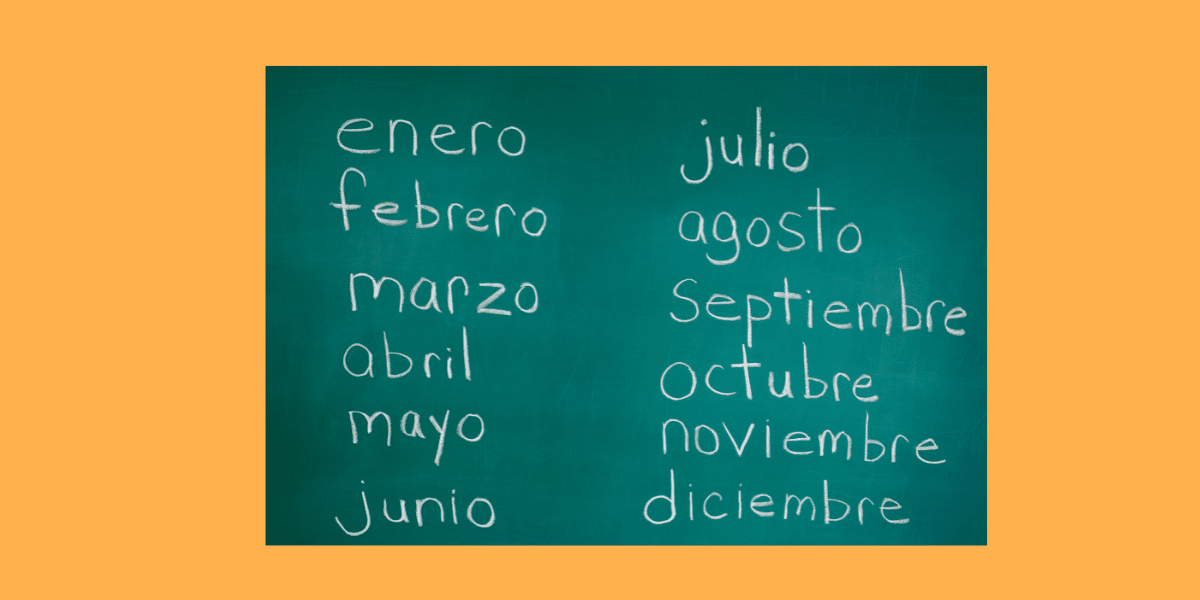
Okay so if you’re just here for the 12 months in spanish, you’re in the right spot — no fluff, just the list. Mes means month, meses is months, and honestly most of these are basically English with a Spanish accent slapped on. Whether you need one month of the year or the whole set, this table has you covered.
| # | Spanish Month | English | Pronunciation | Quick Note |
|---|---|---|---|---|
| 1 | enero | January | eh-NEH-roh | No “j” sound, unlike English |
| 2 | febrero | February | feh-BREH-roh | Extra “r” — say it slow |
| 3 | marzo | March | MAR-soh | Sounds like “Mars-oh” |
| 4 | abril | April | ah-BREEL | Basically “April” backwards-ish |
| 5 | mayo | May | MAH-yoh | Yes, like the condiment |
| 6 | junio | June | HOO-nee-oh | The “j” is an “h” sound |
| 7 | julio | July | HOO-lee-oh | Same “h” rule as junio |
| 8 | agosto | August | ah-GOHS-toh | Close to English |
| 9 | septiembre | September | sep-tee-EHM-breh | Longest word, worth it |
| 10 | octubre | October | ohk-TOO-breh | “Octo” = eight, ironic but whatever |
| 11 | noviembre | November | noh-vee-EHM-breh | “Nueve” hides in there (nine) |
| 12 | diciembre | December | dee-see-EHM-breh | “Diez” = ten, another number clue |
Quick regional note: Spain and Latin America use these identically — no calendar dialect drama here, unlike some vocab.
My memory trick? September through December literally contain the Spanish numbers 7, 8, 9, 10 buried inside (septiembre = seven, etc). Common mistake: capitalizing months like English does — in Spanish, they stay lowercase. Now let’s dig into why each one trips people up.
Understanding the Pattern Behind Spanish Months
Here’s the thing that made learning spanish so much less scary for me once I figured it out: months are basically a freebie.
Most spanish vocabulary requires memorization, but months? They’re already halfway in your brain.
Why they look and sound similar to their english counterparts: both languages stole these words from Latin.

English and spanish both pulled from the old roman calendar, so enero/January, junio/June, and the rest share the same DNA. Pronunciation note — the sounds shift (that rolled “r,” the silent “h” energy on the j’s) but the skeleton of the word stays recognizable. My shortcut: say the English month first, then just “Spanish-ify” the ending.
No gender, no plural changes — huge relief. Unlike most spanish words, months don’t need “el” or “la” fuss, and they never pluralize. You’ll never say “eneros.” One form, done. That’s rare in this language learning journey, so enjoy it.
Spelling stays locked. Once you learn diciembre, it’s diciembre every single time — no surprise irregular versions like some verbs pull.
How they fit into dates: months act as a plain noun, usually paired with del año (of the year) — like “el mes de marzo del año.” This connects straight into months and seasons, since both follow the same steady, no-drama grammar rules in Spanish.
Once this pattern clicks, the whole spanish calendar stops feeling like extra homework — and honestly, once you know one year in spanish, you basically know them all since the structure never changes.
Next up — let’s actually use these in real sentences.
How to Pronounce Months in Spanish Like a Native
Okay, spanish pronunciation honestly comes down to like five rules once you get them — way easier than English, where nothing follows rules ever. Spanish vowels are always the same sound (a-e-i-o-u = ah-eh-ee-oh-oo), no exceptions, which changes everything.
Stress rule: words ending in a vowel stress the second-to-last syllable — so it’s eneRO, marZO, maYO. Words ending in consonants (like abril) stress the last syllable: abRIL. That one rule fixes like 80% of your pronunciation tips struggles right there.

The letter J in junio and julio is NOT a “j” sound — it’s a breathy “h,” almost like clearing your throat gently. Say “HOO-nee-oh,” not “JOO-nee-oh.” This one tripped me up for months, no joke.
Rolling R shows up softly in febrero and marzo — a quick tongue-tap, not the dramatic trilled r from words like “perro.” Don’t overdo it.
Silent letters: there really aren’t many here, which is refreshing — Spanish spelling matches sound closely.
Try saying these words aloud: “En marzo, hace frío” (In March, it’s cold) or “Julio es mi mes favorito” (July is my favorite month). Practice out loud, not in your head — native speakers notice rhythm way more than perfect accent. Record yourself if you’re brave enough.
Once you can confidently say any month of the year out loud, the rest of the sentence tends to fall into place naturally. Next, let’s put these months into real conversations you’ll actually use.
Using Months in Spanish in Real Conversations
Alright, time to actually use this stuff — because knowing the list is nothing if you freeze up when someone asks your birthday. This is where months come alive.
Birthdays: “Mi cumpleaños es en marzo” (My birthday is in March). Grammar note — you use en before the month, not “in” like a direct translation. Easy mistake to make early on.
Writing a full date in spanish: it’s day-month-year, opposite of American style. “Nací el 12 de mayo de 1994” (I was born May 12, 1994).
This date format trips up so many English speakers — double check flight bookings for this reason, seriously.
Holidays: Mexico’s Independence Day — de independencia — falls on september 16, not the 5th like people assume (that’s a common myth, even among some Spanish speakers oddly enough). In Spain,, Los Reyes Magos on January 6 is a bigger deal than Christmas morning for kids.
Weather + seasons: “En verano hace mucho calor” (In summer it’s very hot) pairs naturally with months — “Hace calor en julio.”
School year: across the spanish-speaking world, school often starts in September (Spain) or late August (Mexico) — different from the June start some countries use.
Planning: “Nos vemos en octubre” (See you in October) — casual, useful, said constantly.
Notice día (day) pairs with months constantly — que día, what day. And once you’re comfortable talking about a full year in spanish, planning trips or scheduling calls gets so much less stressful. Next section: let’s talk regional quirks you’ll actually hear on the street.
Grammar Rules You Must Know When Using Spanish Months
Let’s talk grammar rules, because this is where most learners mess up even after memorizing the whole list perfectly. Small stuff, big impact.

Rule 1 — months are not capitalized. In Spanish, unlike English, months never get a capital letter. ✅ “Nací en marzo.” ❌ “Nací en Marzo.” Learners capitalize out of habit since English does it everywhere — totally understandable mistake, I did it constantly at first.
Rule 2 — use “en” with months. ✅ “La fiesta es en abril.” ❌ “La fiesta es a abril.” English speakers default to “a” because it feels closer to “at,” but it’s wrong here.
Rule 3 — date format is day + de + month + de + year. ✅ “el 5 de julio de 2025.” ❌ “julio 5, 2025” (that’s the English pattern, doesn’t translate).
Rule 4 — birthdays use “es en” + month, not “es.” ✅ “Mi cumpleaños es en octubre.” ❌ “Mi cumpleaños es octubre” — missing “en” is super common.
Rule 5 — years don’t need “de” before them in casual speech, but formal writing usually includes it.
Abbreviating dates: abbreviations typically use numbers only (05/07/2025) rather than shortened month names like English “Jul.” Spanish doesn’t really abbreviate months the way we abbreviate Jan, Feb, Mar.
Written vs spoken dates stay basically identical in Spanish — no weird contractions like English “the 5th of July” becoming casual mush. These rules apply the same way no matter which month of the year you’re talking about, which honestly makes life easier once it clicks. Next up: regional differences you’ll actually hear in real life.
Months in Spain vs Latin America
Here’s something most textbooks skip completely: the spanish calendar isn’t identical everywhere. Once you travel, you notice it fast.
Date format: both Spain and Latin America generally use day-month-year (05/07/2025 = July 5th), unlike the American month-first system. Usage note — this trips up travelers booking hotels or reading receipts constantly, so double-check before you panic about a “wrong” date.
Speaking dates aloud: Spain tends to say “el cinco de julio” pretty formally in writing and speech. In Mexico and much of Latin America, it’s the same structure but honestly said a bit faster and more casually — “el cinco de julio” kind of blurs together in conversation, especially in Mexico City where I heard this constantly.
School calendars: Spain’s school year usually starts in September.
Many Latin American countries — especially in the Southern Hemisphere like Argentina and Chile — start their school year in March, because seasons flip below the equator. This one genuinely confused me for a while.
Seasonal differences: summer in Spain (June-August) is winter in Argentina. So “verano” doesn’t mean the same months depending where you are — context matters more than the word itself.
Holidays: Spain celebrates Los Reyes Magos hugely in January; Mexico leans into Día de los Muertos in late October/November instead.
Abbreviations stay pretty consistent across the spanish-speaking world — mostly numeric, rarely letter-based.
Bottom line: spanish speakers share the vocab, but what a specific month of the year actually feels like — hot, cold, back-to-school — shifts a ton depending on where you are. Let’s wrap up with quick practice next.
Common Mistakes English Speakers Make
Alright, let’s talk about the mistakes basically everyone makes, myself included — no shame here, just fixes.
1. Capitalizing months. ❌ “Nací en Enero.” ✅ “Nací en enero.” Months are not capitalized in Spanish, ever. Memory trick: if you wouldn’t capitalize “winter,” don’t capitalize “enero” either — treat it like a regular word.
2. Wrong prepositions. ❌ “La boda es a junio.” ✅ “La boda es en junio.” English brains want “at” or “on,” but Spanish sticks with “en” for months. Just memorize: month = en, always.
3. Forgetting “de.” ❌ “el 5 julio.” ✅ “el 5 de julio.” That little “de” glues the date together — skip it and it sounds off immediately to native ears.
4. Translating word-for-word. ❌ “Julio 5, 2025” (English order). ✅ “5 de julio de 2025.” Direct translation habits are honestly the sneakiest mistake because they feel right.
- Pronunciation mix-ups, especially junio vs julio — they sound almost identical! Trick: junio has that “n” sound in the middle (JOO-nee-oh), julio doesn’t (HOO-lee-oh). Say them side by side slowly a few times, it helps way more than you’d think.
- Spelling slip-ups — swapping v/b, like writing “noviembre” as “noviembre” wrong with a b. Since english and spanish share roots, your brain autocorrects wrong sometimes.
Honestly, these mistakes fade fast with practice, and they tend to show up less the more comfortable you get naming any random month of the year on the spot. Let’s finish with a quick recap you can bookmark.
Tips to Memorize the Months Faster
Okay, final stretch — here’s how to actually memorize this stuff instead of just reading it once and forgetting by Tuesday. These are tricks that genuinely worked for me on my own language learning journey.
Learn in chronological order first. Your brain loves sequences — it’s way easier than random order. Mini exercise: count 1 to 12 while saying enero, febrero, marzo out loud daily for a week.
Calendar practice. Grab an actual calendar (paper or phone) and label each month in Spanish. Visual repetition sticks way better than flashcards alone, honestly.
Daily repetition beats cramming, always. Five minutes a day for two weeks beats one long study session. Practice sentence: “Hoy es [month]. Mañana es [next month].”
Flashcards — old school but effective. Spanish side, English side, pronunciation note scribbled in the corner. Quiz yourself on the bus, whatever.
Birthday association trick — attach each month to someone you know’s birthday. “Marzo = mom’s birthday” sticks harder than the word alone ever will.
The song method actually works shockingly well — there are simple “meses del año” songs online, and melody just glues vocab into memory better than reading.
Writing exercises: write out your own timeline — “En enero empiezo… en julio viajo…” — connects months to real life.
Speaking drills + weekly review seal it in. Say them aloud, review Sundays, adjust what’s shaky.
This easy guide should have you confident fast — and honestly, that’s the whole goal of learning spanish: small wins that stack up.
Conclusion
Summarize how Spanish month names follow simple spelling and pronunciation patterns, making them much easier to learn than many beginners expect. Remind readers that mastering the 12 months isn’t just about memorization—it also means understanding pronunciation, grammar rules, date formatting, and real-life usage. Encourage them to practice saying the months in order, write today’s date in Spanish, and use the month names in everyday conversations to build confidence and long-term retention.
