

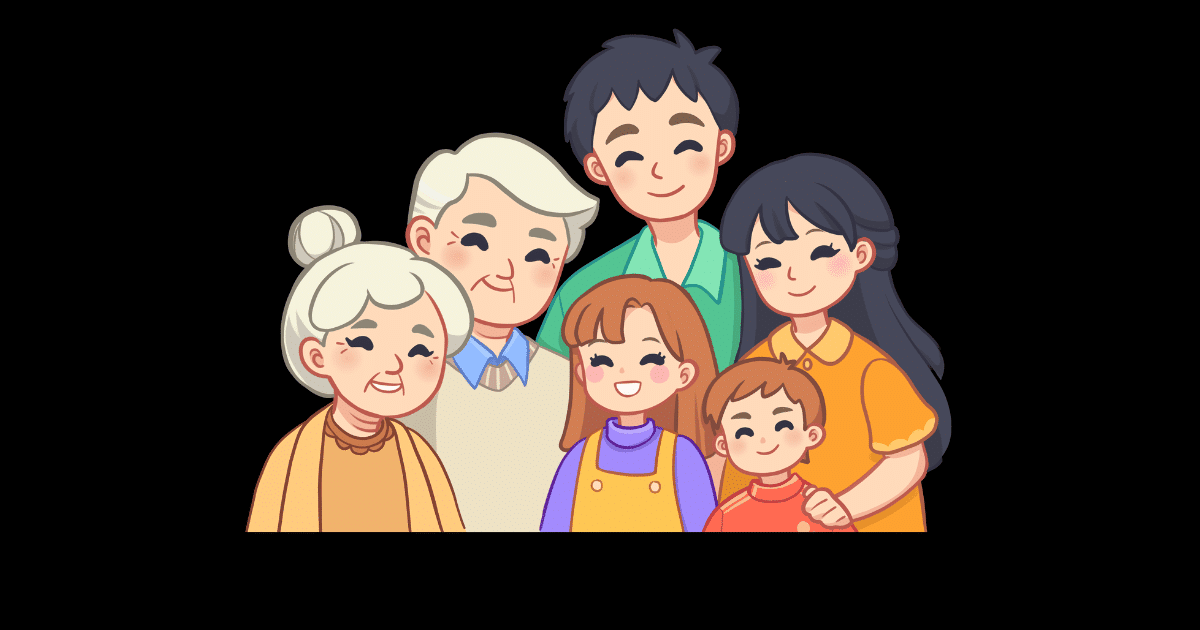
Ever met your partner’s Spanish-speaking family and frozen when someone asked “¿Y tu cuñada?” — no idea if that meant sister-in-law or second cousin?
You’re not alone!
If you’re starting to learn Spanish, family vocabulary is one of the first real conversation skills you’ll need, because talking about la familia comes up constantly — at dinners, in small talk, in nearly every Spanish lesson you’ll ever take.
Here’s something fun: Spanish has terms English doesn’t even have, like consuegros, which refers to the relationship between two sets of in-laws once their kids marry.
In this guide, you’ll get the full list of family members in Spanish, plus pronunciation, grammar, and real cultural context — everything you need to describe your family in Spanish with confidence. For extra practice hearing these terms used naturally, AI language apps are worth trying, and Babbel covers family and relationship vocabulary in its core lessons too.
| Spanish | English | Pronunciation |
|---|---|---|
| Padre / Papá | Father / Dad | PAH-dreh / pah-PAH |
| Madre / Mamá | Mother / Mom | MAH-dreh / mah-MAH |
| Hijo / Hija | Son / Daughter | EE-ho / EE-hah |
| Hermano / Hermana | Brother / Sister | er-MAH-no / er-MAH-nah |
| Abuelo / Abuela | Grandfather / Grandmother | ah-BWEH-lo / ah-BWEH-lah |
| Nieto / Nieta | Grandson / Granddaughter | nee-EH-toh / nee-EH-tah |
| Tío / Tía | Uncle / Aunt | TEE-oh / TEE-ah |
| Primo / Prima | Cousin (male/female) | PREE-moh / PREE-mah |
| Sobrino / Sobrina | Nephew / Niece | soh-BREE-noh / soh-BREE-nah |
| Esposo / Esposa (Marido / Mujer) | Husband / Wife | es-POH-soh / es-POH-sah (mah-REE-doh / moo-HAIR) |
| Suegro / Suegra | Father-in-law / Mother-in-law | SWEH-groh / SWEH-grah |
| Cuñado / Cuñada | Brother-in-law / Sister-in-law | koon-YAH-doh / koon-YAH-dah |
| Yerno / Nuera | Son-in-law / Daughter-in-law | YAIR-noh / NWEH-rah |
| Padrastro / Madrastra | Stepfather / Stepmother | pah-DRAH-stroh / mah-DRAH-strah |
| Hermanastro / Hermanastra | Stepbrother / Stepsister | er-mah-NAH-stroh / er-mah-NAH-strah |
Immediate Family Words (Parents, Siblings, Children)
This is the nuclear family vocab you’ll actually use every day, so let’s get into it. Once you’ve got parent, son, daughter, and sibling down, you can describe basically anyone’s household in Spanish — my Spanish teacher drilled these into me before anything else.
- Padres (PAH-drehs) — Parents — Mis padres viven en Chicago. (My parents live in Chicago.)
- Hijos (EE-hos) — Children/kids — Tienen tres hijos. (They have three kids.)
- Hijo / Hija (EE-ho / EE-hah) — Son / Daughter
- Hermano / Hermana (er-MAH-no / er-MAH-nah) — Brother / Sister — Tengo dos hermanos y una hermana. (I have two brothers and one sister.)
- Papá / Mamá (pah-PAH / mah-MAH) — Dad / Mom
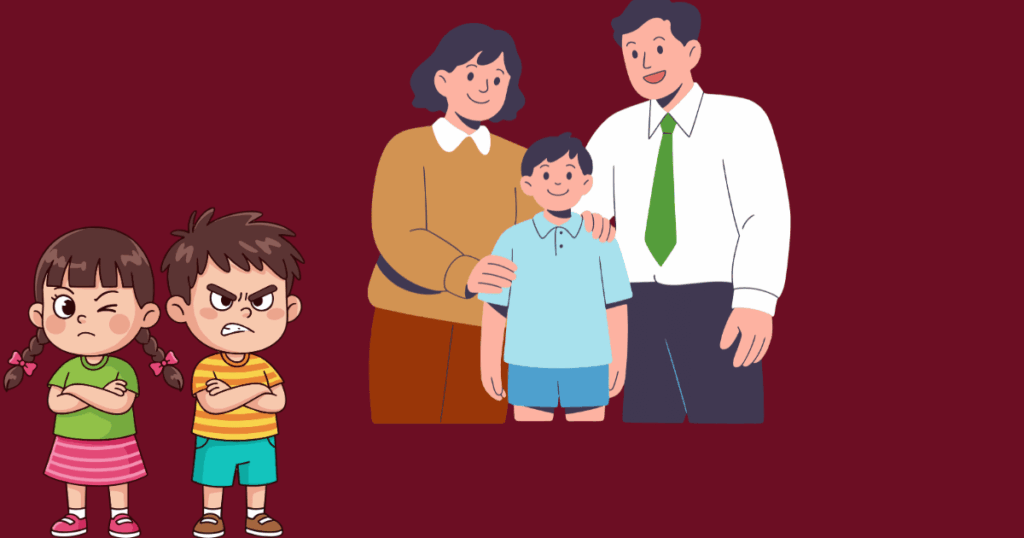
Honestly the trickiest meaning to grasp here is hijos — it’s the plural, mixed-gender default. One daughter and five sons? Still hijos. Same deal with hermanos, which is why that example sentence up there separates hermanos from hermana specifically.
Cultural note: adults calling their mom mamá or dad papá isn’t babyish here, it’s totally normal — even at 40.
Common mistake: forgetting these english equivalents don’t map 1:1 gender-wise. Up next, let’s zoom out to grandparents and extended family.
Extended Family members in spanish (Grandparents, Aunts, Uncles, Cousins, In-Laws)
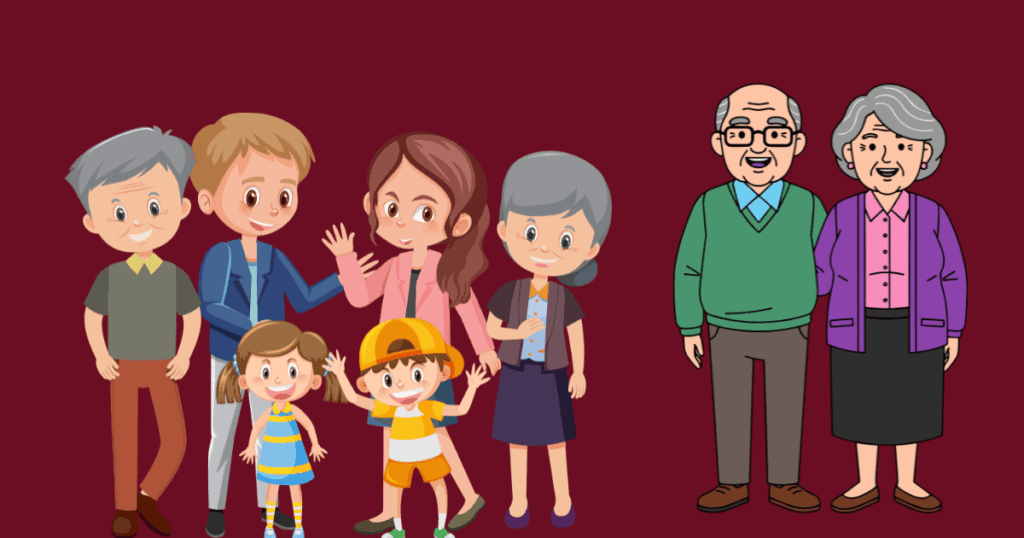
Extended family members in Spanish get way more specific than English, which honestly makes total sense once you’re actually inside a big Hispanic family gathering. Let’s cover grandparent terms, cousin words, and a few in-law gems that don’t even exist in English.
- Abuelos (ah-BWEH-lohs) — Grandparents (collective) — Mis abuelos son de Puebla. (My grandparents are from Puebla.)
- Primo / Prima (PREE-moh/mah) — Cousin
- Primo hermano (PREE-moh er-MAH-no) — First cousin, specifically — used when someone wants to clarify it’s not a distant cousin
- Consuegros (kohn-SWEH-grohs) — the relationship between two sets of in-laws once their kids marry — there’s genuinely no English word for this
- Padrino / Madrina (pah-DREE-noh / mah-DREE-nah) — Godfather/Godmother — a huge deal in religious and family relationship culture, not just a Baptism formality
This bond, known as compadrazgo, runs deep: research published by the American Anthropological Association describes it as a form of spiritual kinship that ties godparents to a child’s family through mutual obligation, respect, and even formal address — some compadres switch to the polite usted with each other for life, even if they were close friends before.
This word consuegros is honestly so satisfying to say once you get it. Common mistake: assuming every cousin relationship uses “primo” — some families get specific fast, especially older relatives.
Fun tangent: none of this vocab is romantic-relationship related, but “marriage” and family ties are deeply tangled in Spanish culture — up next, let’s cover the words for your actual romantic and marital family.
How to Pronounce Spanish Family Words Correctly
Let’s talk pronunciation for a second, because this genuinely trips up beginners more than grammar does. I used to say “her-MAY-no” instead of the correct sound and nobody corrected me for like a year — so let’s fix that now.
- Hermano — say er-MAH-no, not “her-MAY-no.” The H is silent, always.
- Abuela — the “u” basically disappears into the sound, so it comes out as ah-BWAY-la, almost one smooth syllable.
- Primo — rolling the R isn’t required when you’re starting out. A soft tap works fine, don’t stress over it.
- Tío / Tía — stress falls right where you’d guess, on the “TEE” part.
Here’s the shortcut that changed everything for me: most of these words put stress on the second-to-last syllable, not an accent on the final syllable. Spanish is actually pretty predictable once you notice the pattern — words ending in a vowel, n, or s usually stress that second-to-last beat.
Quick sample to practice out loud: mi abuela y mi hermano — say it slow, then speed up.
Also remember the -o/-a gender swap applies to sound too, not just spelling. Next, let’s put this pronunciation into real conversations.
Example Sentences Using Spanish Family Vocabulary
Vocab lists are great, but you actually need full sentences to describe your family in spanish with any confidence. This is where it clicks — when words stop being flashcards and start being real conversation. Let’s practice with a few natural ones.
- “Mi hermana mayor vive en Madrid.” — My older sister lives in Madrid.
- “¿Cómo se llama tu abuelo?” — What’s your grandfather’s name?
- “Mis primos vienen de visita este verano.” — My cousins are visiting this summer.
- “Ella es mi cuñada, la esposa de mi hermano.” — She’s my sister-in-law, my brother’s wife.
Notice something in every single example? Possessives — mi, tu, su — show up constantly. Honestly you can’t describe anyone’s family without them, so practice these alongside your vocab, not after it.
Here’s a quick drill: pick three relatives and build a sentence for each, out loud, right now. It feels silly, but it’s how you’ll actually engage in real conversations instead of freezing up.
Whenever locals discuss family, they layer in opinions and details too — not just names. Next section, let’s express more personality with descriptive words for relatives, so you sound less like a textbook and more like yourself.
Family Words in Spain vs. Latin America — What’s Different?
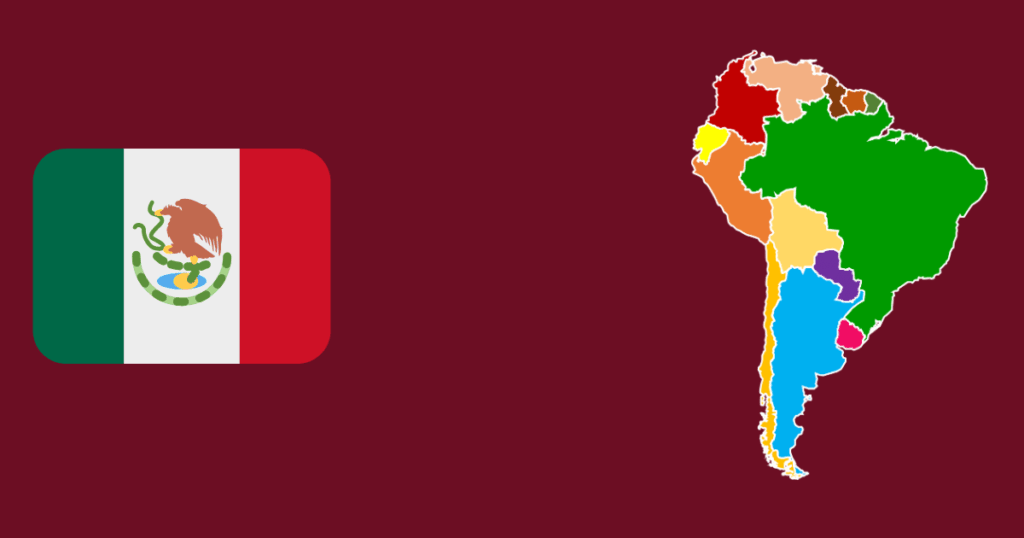
Here’s something most apps skip but it’s actually important: the concept of family shifts depending on which country you’re in. Spain and Latin America are both full of native Spanish speakers, but the vibe and vocab around someone’s family genuinely differ.
- Vosotros vs. ustedes — Spain uses vosotros for informal plural “you,” including talking to family as a group. Most Spanish-speaking countries in Latin America skip it entirely and just use ustedes.
- Jefe / Jefa (boss) — slang for parents in Mexico and parts of Central America. Weird at first, but it clicked for me once I heard a friend say it about his dad.
- M’ijo / M’ija — a contraction of “mi hijo/hija,” used affectionately across Latin America, rarely in Spain.
- Compadrazgo — the tradition behind padrino/madrina that runs deeper culturally in Latin America than in Spain.
- Diminutives like abuelita and hermanito pop up constantly in Latin America — way less common in Spain.
Any native Spanish speaker will pick up on these regional cues instantly. When you speak, matching local phrases and idioms makes you sound way less like a textbook.
This kind of cultural nuance is honestly the fun part — let’s wrap up with some final tips next.
Tips to Memorize Spanish Family Vocabulary Faster
Alright, you’ve made it through the basics — now let’s talk about how to actually make this vocab stick, because cramming a list once isn’t going to cut it. I learn best by making things personal, so here’s what’s genuinely worked for me and for people I’ve coached through their first few months of Spanish.
Build your own family tree. Grab a piece of paper and write out your actual relatives using the Spanish words — your mom becomes mamá, your cousin becomes primo or prima. This single exercise beats any generic worksheet because your brain already has an emotional connection to these people. It’s not abstract anymore.
Use spaced repetition apps. Anki and Quizlet are great, but don’t just use text — add audio. Hearing the word alongside seeing it trains your ear and your eye together, which matters if you want real language skills, not just reading comprehension.
Talk about your own family out loud, daily. Even one sentence a day. “Mi hermano vive en Texas.” Say it in the shower, say it while you cook. This is the fastest way to move from beginner to feeling confident with these words.
Watch telenovelas or Spanish-language shows. Family drama is basically the entire plot of every telenovela, so this vocab shows up constantly, in real context, with real emotion behind it. It’s honestly one of the more fun ways to learn Spanish vocabulary without it feeling like a lesson.
Listen to a Spanish podcast episode focused on family or daily life — bonus points if there’s a transcript you can follow along with. I do this on walks, and it’s a great low-effort boost to comprehension.
Pair new words with the -o/-a gender-swap pattern instead of memorizing each term separately — learn the pattern once, and you basically double your vocabulary for free.
One last tip: don’t wait until you feel ready to advance. Mixing beginner and slightly harder vocab together actually helps you retain more, and it pushes your language skill to the next level faster than sticking to one lesson at a time. Every bit of practice adds up — and family vocab is honestly one of the most rewarding corners of the Spanish language to master, since you’ll use it in real conversations almost immediately.
Common Mistakes English Speakers Make with Spanish Family Words
Alright, let’s talk mistakes, because I made basically all of these when I was learning about family in spanish for the first time. Knowing these ahead of time will save you some awkward moments — trust me.
- Hijo/hija vs. niño/niña — these are NOT interchangeable. Hijo/hija means son/daughter specifically (your relationship to them), while niño/niña just means boy/girl generally. Calling your own kid “mi niño” is fine casually, but don’t swap them when talking about someone’s actual children.
- Forgetting gender agreement — this one’s sneaky. English speakers often say something like “tío bonita” without thinking, but adjectives have to match — it’s tío guapo, not tío bonita. Small slip, but native ears catch it instantly.
- Cuñado vs. primo — brother-in-law and cousin are totally different people, but they blur together fast when you’re speaking quickly. Slow down here.
If you want to double-check a relationship word before you use it, SpanishDict — the most widely used Spanish-English dictionary online — is a fast, reliable way to confirm you’ve got the right term, complete with audio pronunciation and example sentences. - Overusing familia — sometimes parientes (relatives) is the more natural, specific word. Saying “familia” for everything sounds a little vague, kind of like always saying “people” in English.
- “Step-” isn’t “paso-“ — a super common literal-translation trap. The real suffix is -astro/-astra, so it’s padrastro, not “paso-padre.”
This kind of family-related spanish vocab is exactly where English speakers slip into direct translation habits — and it’s an easy fix once you know the pattern.
Conclusion
You’ve now got the complete list of family members in Spanish — from padre to consuegros — along with the grammar, pronunciation, and cultural context to actually use them. Learning spanish vocabulary like this sticks best when you practice out loud, so try describing your own family in Spanish today. ¡Tu familia te está esperando — a practicar!
