


Hey and welcome to our Best apps to learn Spanish in 2026 review!
I’ve personally tested and compared over a dozen of the most popular Spanish language learning apps —everything from quick daily quiz-style apps to full immersion platforms.
After testing each platform for at least 30 DAYS and tracking my progress with native speakers, I ranked them based on lesson quality, user experience, pricing structure, and most importantly – how quickly they get you speaking real Spanish, with REAL people
Out of all the ones I tried, these 5 stood out as the absolute best.
The last thing you want is to spend $300 on a subscription that leaves you stuck at “hola” and “gracias.”
By choosing one of the apps in this list, you’ll not only save time and money, but also avoid the trial-and-error I went through when testing them.
Let’s dive in.
What are the Best apps to learn Spanish?
If you’re short on time and just want the quick picks, here are the best apps to learn Spanish and who they’re best suited for:
- Rocket Languages – Best overall
- Babbel – Best for Beginners
- Pimsleur – Best for Learning While You’re Busy
- Rosetta Stone – Best for Immersive Practice
- Lingopie – Best for Learning Through TV & Movies
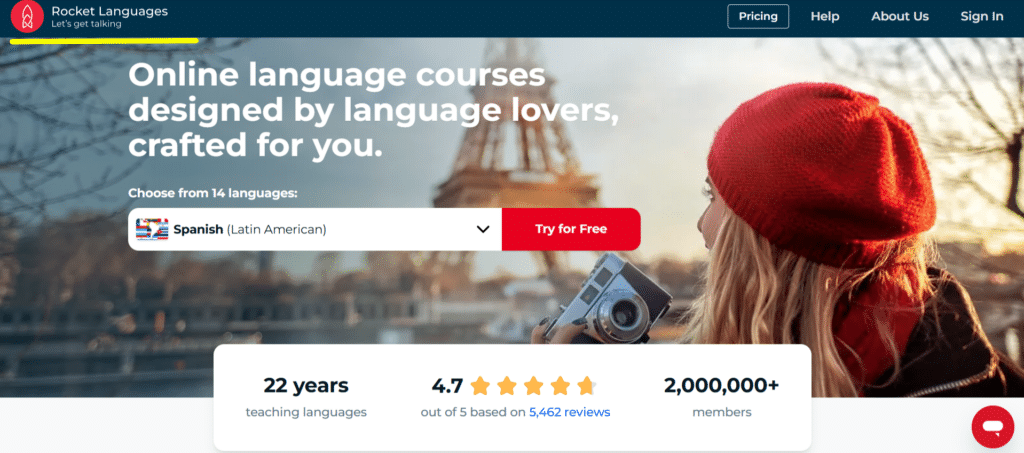
1. Rocket Languages.
Best overall app to learn spanish
Key Features:
- Comprehensive 30–40 minute audio lessons
- Speech recognition for pronunciation feedback
- Lifetime access (one-time payment, no subscription trap)
- Covers grammar, writing, and culture in depth
- Spaced repetition flashcards built in
Pros:
- Builds a rock-solid foundation step by step
- You pay once and keep access forever
- Cultural notes make conversations sound natural
- Works great for commuters with audio focus
Cons:
- Interface feels a bit old-school
- Lessons are longer and in depth, not ideal for quick five-minute practice
Overview:
In my experience Rocket spanish is by far the best app to learn spanish. It is like that no-nonsense teacher you hated in school but secretly thank later in life. It’s built for learners who want a structured, serious path to Spanish—not just a few travel phrases. Unlike flashy gamified apps, Rocket focuses on real fluency with a balance of speaking, listening, grammar, and cultural context.
This makes it perfect for people who actually want to learn to speak Spanish confidently, not just “collect points.” And since it’s a one-time payment with a lifetime plan plan for access, you don’t get stuck paying $15 every month for years.As a complete Spanish program, it delivers everything you need from beginner to advanced levels.
Review:
When I first used Rocket spanish, I thought the 30-minute audio lessons would be hard to get through. But they pulled me right into real conversations—ordering tapas, asking directions, making small talk. I remember completely butchering cerveza and Rocket’s voice recognition caught it instantly. After a few retries, I could order a drink in Mexico without embarrassing myself.
Compared to other spanish learning apps , Rocket spanish goes deeper into grammar, which means you don’t just “guess” at sentences—you know why they’re structured the way they are. The lessons teach you essential words and phrases while also adding writing practice and cultural notes, so it feels more complete. After just a month of daily lessons, I was holding basic café conversations.
What I like and dislike about the Rocket spanish:
Rocket Languages shines for a few key reasons:
- Lifetime ownership: buy once, keep it forever. No nagging monthly bills.
- Deep learning: audio, reading, grammar, and culture all in one.
- Confidence booster: pronunciation feedback means you won’t sound awkward.
- Perfect for busy schedules: lessons slot into your commute or daily walk.
And the downsides?
Well, it’s not a flashy game. The design looks like it belongs in 2015, and the 30-minute lessons might test your attention span. But honestly, those are small trade-offs for a spanish course that actually gets you speaking Spanish instead of spinning your wheels.
If you’re ready to take Spanish seriously and want a course that grows with you for life, Rocket spanish is the smartest pick. It skips the fluff, builds real fluency, and saves you money in the long run. Don’t waste months bouncing between free apps—start with Rocket and you’ll finally feel like you’re learning for real.
2. Babbel.
Best app to learn spanish for beginners
Key Features:
- Bite-sized lessons (10–15 minutes)
- Speech recognition for pronunciation practice
- Subscription-based (monthly/annual plans)
- Covers reading, writing, listening, and speaking
- Beginner-friendly structure with clear grammar tips
Pros:
- Short lessons fit easily into a busy schedule
- Great starter for absolute beginners
- Practical vocabulary for real-life situations
- Affordable compared to some premium apps
Cons:
- Limited depth for advanced learners
- Subscription can add up over time if you keep it long-term
Overview:
Babbel is hands-down the best app for beginners who want to learn Spanish without feeling overwhelmed. Its short, 10-minute lessons are easy to fit into coffee breaks or daily commutes, making it super approachable.
While other apps feel more “serious,” Babbel is like the friendly tutor that gets you started quickly. It’s affordable, fun, and structured enough to actually teach grammar—something most free apps skip.As an introductory Spanish course, it strikes the perfect balance between being simple and effective.Plus, each lesson includes a quiz to reinforce what you’ve learned.
Review:
When I first opened Babbel, I loved how fast it pulled me in. Within 15 minutes, I could introduce myself in Spanish with proper grammar (Me llamo…) instead of just memorizing random phrases. The lessons build logically, so you don’t get lost even if you’ve never studied Spanish before.
Compared to Duolingo, Babbel’s biggest edge is grammar explanations. Duolingo makes you guess until you magically figure it out, while Babbel actually teaches you the “why” behind the words. That’s a lifesaver when you’re trying to form sentences.
The downside?
Once you hit an intermediate level, it starts feeling light. That’s where something heavier like Rocket or Pimsleur comes in. But as a beginner, Babbel gave me the confidence to start speaking without second-guessing myself.
What I Like and Dislike about Babbel:
Here’s why Babbel is a great pick for beginners:
- Fast and easy start: lessons as short as 10 minutes.
- Grammar made simple: explains rules clearly instead of leaving you guessing.
- Real-world vocab: you’ll learn what to actually say in daily life.
- Budget-friendly: affordable compared to pricier options.
The flipside?
Babbel isn’t built for advanced fluency. Once you outgrow the basics, it feels limited. And since it’s subscription-based, the cost adds up if you stick with it for years. Still, for a beginner who wants a painless, affordable way to learn Spanish, it’s hard to beat.
If you’re brand-new to Spanish and want something simple, flexible, and affordable, Babbel is your best bet. It gives you quick wins, keeps you motivated, and teaches the basics the right way. Start here, and you’ll actually stick with learning Spanish instead of giving up in frustration.
3. Pimsleur.
Best for Learning While You’re Busy

Key Features:
- 30-minute daily audio lessons
- “Graduated interval recall” (spaced repetition for memory)
- Focus on speaking and listening first
- Hands-free learning (great while driving, walking, commuting)
- Subscription model with monthly or annual plans
Pros:
- Builds strong speaking and listening skills fast
- Perfect for multitaskers (learn while driving or working out)
- Teaches real conversational Spanish, not just vocab lists
- Great for pronunciation—forces you to repeat and recall
Cons:
- Little focus on reading/writing
- 30-minute lessons can feel long if you only want a quick practice
Overview:
Pimsleur spanish is the go-to app if you want to actually learn to speak Spanish confidently, especially when you don’t have time to sit in front of a screen. It’s 100% audio-based, so it turns your car, gym, or morning walk into a Spanish classroom.
Unlike other spanish learning apps, which mix in reading and writing, Pimsleur spanish doubles down on real-world conversations. That’s what makes it special—within days, you’re actually talking, not just memorizing.As an audio-focused Spanish program, it’s designed for people who need to maximize their busy schedules. Pimsleur’s podcast-style lessons are perfect when you’re on the go, and they even feature a special driving mode for hands-free learning.
Review:
I tested Pimsleur spanish during my daily commute, and it honestly changed how I used “dead time.” In one week, I went from fumbling over ¿Dónde está el baño? to holding short but real conversations with my Spanish-speaking coworker. The repetition system sticks phrases in your head because you’re forced to recall words under pressure—just like in a real conversation.
Pimsleur is laser-focused on speaking. You won’t get grammar charts or writing drills here, but you will get comfortable opening your mouth and using Spanish fast. For me, it was a game-changer because I finally felt like I could talk instead of just type.The audio lessons also help build strong language skills through consistent practice.
What I Like and Dislike about Pimsleur :
Here’s why Pimsleur shines:
- Learn anywhere: perfect for car rides, workouts, or chores.
- Real conversations: no fluff, just phrases you’ll actually use.
- Memory built-in: spaced repetition makes new vocab stick.
- Boosts confidence: gets you speaking from lesson one.
The downsides?
You won’t practice much reading or writing, so it’s not the most “complete” course. And the 30-minute lessons aren’t skippable—you either commit or you fall behind. But if speaking Spanish fast is your goal, nothing beats it.
If you’ve been frustrated with apps that keep you tapping on screens but never speaking out loud, Pimsleur is the fix. It’s the most practical option for busy people who want to learn Spanish while living life. Try it, and you’ll be shocked at how quickly you can hold a conversation.
4. Rosetta Stone.
Best for Immersive Practice

Key Features:
- Full immersion method (no translations, just Spanish)
- Speech recognition engine for pronunciation feedback
- Available on desktop and mobile
- Live tutoring sessions (optional add-on)
- Subscription pricing (monthly/annual)
Pros:
- Immersive approach helps you think in Spanish
- Great for pronunciation thanks to TruAccent technology
- Clean, easy-to-use design
- Long track record of success (trusted for decades)
Cons:
- Can feel repetitive for some learners
- Less grammar explanation compared to Rocket or Babbel
Overview:
Rosetta Stone spanish has been around forever, and there’s a reason it’s still one of the best Spanish apps today. Its immersive approach drops you straight into Spanish without leaning on English. Instead of translating, you learn by context—exactly how you learned your first language.
This makes Rosetta Stone Spanish a strong choice for visual learners and auditory learners who want to think in Spanish, not just translate in their heads. While newer apps have come and gone, Rosetta Stone still stands out for teaching pronunciation and long-term retention.For mastering the Spanish language through natural immersion, it remains a trusted method.The platform offers an immersive approach where nothing is written in your native language, forcing you to think entirely in Spanish.
Review:
When I first tried Rosetta Stone spanish , it felt strange—no English anywhere, just pictures, audio, and Spanish words. But after a week, something clicked. I found myself recognizing words like niña or caballo instantly, without translating back to English. That’s powerful, because it mirrors real-world situations where no one is waiting for you to “translate in your head.”
Most other language learning apps spoon-feeds grammar rules, but Rosetta Stone’s Spanish focuses more on intuition. You won’t get detailed explanations, but you will develop an instinct for Spanish patterns. Its speech recognition (TruAccent) is also excellent—I noticed it corrected my sloppy “r” rolls until I finally got them right.The app works seamlessly as a mobile app, making it convenient whether you’re at home or commuting.
Is it repetitive? Sure.
But that repetition is exactly why it sticks. I used it daily for a month, and later in Spain, I was surprised at how automatic simple conversations felt.
Good and bad things:
Rosetta Stone stands out for a few big reasons:
- Immersive learning: you start thinking in Spanish instead of translating.
- Pronunciation boost: TruAccent tech forces you to sound authentic.
- Trusted reputation: it’s been teaching languages for over 25 years.
- Flexible learning: works on desktop, phone, or tablet.
But the flip side? Lessons can feel repetitive, and if you crave grammar explanations, you might get frustrated. It’s not the fastest app, but it’s one of the most reliable for long-term retention.
If you want to go “all in” and learn Spanish the natural way, Rosetta Stone is a solid investment. It trains your brain to think in Spanish, sharpens your pronunciation, and has decades of proven success behind it. Start here if immersion sounds exciting and you want to avoid the trap of always translating in your head.
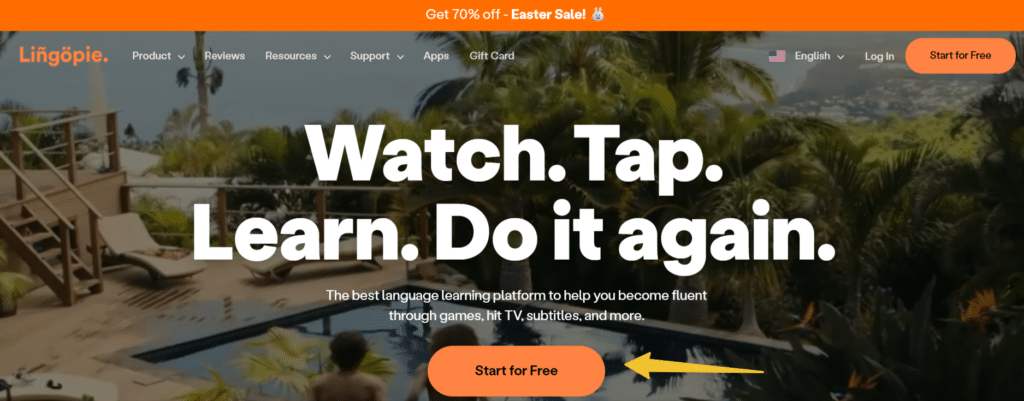
5. Lingopie.
Best for Learning Through TV & Movies
Key Features:
- Huge library of Spanish TV shows, movies, and documentaries
- Interactive subtitles (click a word to see translation/definition)
- Built-in flashcards and review tools
- Multiple dialects (Spain, Mexico, Argentina, etc.)
- Affordable monthly/annual subscription
Pros :
- Learn Spanish naturally through shows and movies you actually enjoy
- Subtitles double as vocab builders (click → learn instantly)
- Covers multiple Spanish dialects, not just “textbook” Spanish
- Fun format keeps motivation high (it doesn’t feel like studying)
Cons:
- Not ideal for absolute beginners with zero Spanish
- Requires self-discipline—you can binge-watch without learning if you’re not focused
Overview:
Lingopie flips the script on traditional language learning by turning Netflix-style binge-watching into a Spanish lesson. You watch shows, click words in the subtitles for instant translation, and then review them later as flashcards.
It’s perfect for learners who want to make Spanish fun and stick with it long-term. While Rocket or Babbel feel more like a classroom, Lingopie feels like a Friday movie night—but with vocab sneaking into your brain the whole time. For experiencing Spanish language in real-world contexts, nothing beats watching native content on this learning platform. You can pick any show or movie from their extensive library of TV shows and movies.
Review:
When I tried Lingopie, I picked a Mexican drama series and within the first episode I’d already learned half a dozen slang phrases I’d never seen in any textbook. Clicking a word in the subtitles instantly saved it to my flashcards, which I reviewed later on my phone. It felt effortless, like learning by accident.
Compared to competitors, Lingopie doesn’t force you into structured lessons. Instead, it gives you authentic input—the way spanish speakers really talk. That means you get slang, accents, and cultural nuance that most apps skip. I even noticed that after a few weeks of watching, my listening comprehension shot up. I could finally follow conversations without pausing every two seconds.
The catch? If you’re brand-new, it can feel overwhelming. But if you already know the basics, Lingopie is the most fun way to take your Spanish from “classroom” to “real life.”It includes content from several language regions, including Spanish from Spain, Mexico, and Latin America.
What I Like and Dislike about Lingopie:
Here’s why Lingopie is worth it:
- Fun and addictive: feels like Netflix, not school.
- Dialect variety: learn Latin American Spanish and European Spanish.
- Instant vocab builder: clickable subtitles turn into flashcards automatically.
- Boosts listening skills: real native speech, not slowed-down “learner audio.”
But the downsides?
Total beginners may feel lost without some foundation first, and it’s easy to get lazy and just watch without reviewing. Still, if you stick to the tools, Lingopie transforms your downtime into powerful Spanish practice.
If you want Spanish learning to feel less like homework and more like entertainment, Lingopie is the app for you. It’s the most enjoyable way to pick up real-world vocabulary, slang, and accents—all while watching shows you’d probably stream anyway. Start with Lingopie, and you’ll be shocked at how fast your listening and speaking improve.
Buying Guide: How to Choose the Best App to Learn Spanish
I’ve included this short buying guide to help you make a smart decision. Most people either chase the “flashiest” app or stick with a free one that doesn’t actually help them progress. That usually leads to wasting months (and sometimes a lot of money) with little to show for it.
Follow these steps to figure out which Spanish learning app fits your goals and lifestyle.
Step 1: Define Your Learning Style
Not everyone learns the same way. Some people need structure, others need entertainment.
- If you like structure and clear lessons → go with Rocket Languages or Babbel.
- If you learn best by listening and repeating → Pimsleur is your match.
- If you prefer immersion and visuals → Rosetta Stone is a classic.
- If you want fun and motivation through TV shows → Lingopie is unbeatable.
Ask yourself: Do I want a classroom-like structure, or do I want Spanish to feel like part of my daily life?
Step 2: Consider Lesson Length & Flexibility
Lesson time is a huge factor, especially if you’re busy.
- Babbel offers short 10-minute lessons (great for quick study sessions).
- Pimsleur requires a full 30 minutes daily (better if you can commit time).
- Rocket Languages has longer lessons but covers everything in depth.
- Lingopie lets you learn passively (but only works if you review vocab after).
Think honestly about your schedule. If you can’t commit half an hour daily, Pimsleur might frustrate you.
Step 3: Balance Speaking vs Reading
Different apps train different skills.
- Speaking first → rocket languages forces you to repeat and recall.
- Reading/writing + speaking → Babbel and Rocket Languages balance all four skills.
- Listening/comprehension → rocket languages and lingopie excel here.
If your main goal is to talk with natives, prioritize an app heavy on speaking. If you’re preparing for travel or work, go for one that balances everything.
Step 4: Look at Price Models
Money matters. Some apps are subscriptions, others are one-time investments.
- Rocket Languages → one-time payment, lifetime access.
- Babbel, Pimsleur, Rosetta Stone, Lingopie → subscription-based.
If you hate ongoing payments, Rocket is best. If you want to try something flexible without a big upfront cost, a monthly sub might make more sense.
Features That Impact Performance:
Here are a few features that can make or break your learning experience:
- Speech recognition → Helps polish pronunciation (Rocket, Babbel, Rosetta Stone).
- Cultural context → Prevents you from sounding like a textbook robot (Rocket, Lingopie).
- Dialect variety → Important if you’re aiming for a specific region (Lingopie offers multiple dialects).
- Gamification vs immersion → Choose between fun motivation (Babbel, Lingopie) and serious study (Rocket, Pimsleur).
Bottom Line:
The “best” Spanish app depends on you. If you’re a busy professional, 10-minute Babbel lessons might keep you consistent. And if you want to binge-watch and still learn, Lingopie keeps it fun.
Choosing the right app isn’t about what’s most popular—it’s about what you’ll actually stick with. Get this right, and you’ll avoid wasting money and finally see real progress in your Spanish.
Conclusion:
Alright, that was quite the language workout — let’s wrap it up with a quick recap.
For the most structured, all-in-one option,I have to recommend Rocket Languages as my number one option from this list of the best Spanish learning apps. Its step-by-step lessons, lifetime access, and solid balance of grammar + speaking make it the best long-term investment if you’re serious about fluency.
As a comprehensive Spanish course, it covers everything !
If you’re brand-new and want something light and easy, Babbel is perfect for beginners. The short lessons keep you consistent without feeling like homework.
On the other hand, if your goal is to learn spanish while driving the car or while walking, Pimsleur is unbeatable. This language-learning tool is ideal for people who are trying to learn during their daily travel.
Want the immersive route?
Rosetta Stone trains your brain to think in Spanish without constant translation. And if you want learning to feel like pure fun, Lingopie is the one to grab — Spanish Netflix with built-in learning tools.
Bottom line: each of these apps works, it just depends on what you need. The only mistake you can make is not picking one and actually starting your Spanish learning journey.
So here’s your next step: choose the app that fits your lifestyle, and commit to using it daily. A year from now, you’ll either be glad you started or wish you had. The choice is yours.
FAQs About the Best Apps to Learn Spanish
1. Which app is best for beginners learning Spanish?
Babbel is the best choice for beginners. Its short, 10-minute lessons make starting easy, and it explains grammar in simple terms so you don’t get stuck.
2. Can I really become fluent in Spanish with just an app?
Absolutely — you CAN. People underestimate how powerful modern language apps have become.
And the proof is everywhere:
Millions of learners have reached conversational fluency using nothing but these tools.
3. Which app helps most with speaking Spanish?
Both Rocket Languages and Babbel do a great job helping you speak Spanish
If you’re serious about speaking fluently, picking Rocket Languages or Babbel will give you a strong speaking foundation.
4. Which Spanish app is best for travel?
If you’re prepping for a trip, Babbel is the quickest for useful travel phrases, while Pimsleur gets you comfortable speaking to locals. Lingopie is also great for tuning your ear to accents and slang.
