
I’ve been learning Spanish on and off for years, and over the last 8 months I ran both Babbel and Duolingo side-by-side — same language, same time commitment, tracked week by week.
I’ve now logged over 200 hours combined across both platforms, tested everything from the free version to paid subscriptions, and even had my progress evaluated by a native Spanish speaker at the end.
In this article, I’ll show you exactly how these two popular language apps compare on the things that actually matter:
How fast you build real speaking skills, how the lesson structures hold up over time, what keeps you coming back, and the hidden differences in their teaching philosophies that most reviews completely miss.
Here’s the bottom line I’ll be building toward: Babbel is the better choice for anyone serious about actually speaking a language — and by the end, you’ll see exactly why.
But when it comes to language learning, Duolingo isn’t without its strengths, and for the right person, it can absolutely work.
Let’s get into it.
Babbel vs. Duolingo Overview
Babbel:
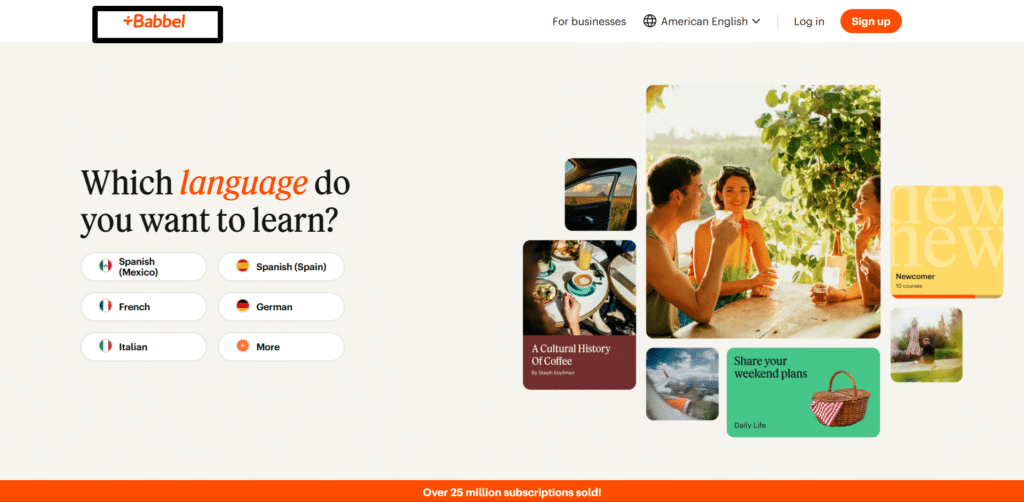
Babbel is a structured language learning platform built for people who actually want to speak.
Unlike apps that make learning a new language feel like a mobile game, Babbel offers structured, curriculum-driven lessons designed by real linguists that teach you how to hold a conversation from the very first session.
It covers 14 languages with a clear learning path from beginner to advanced.
- Real-world conversation practice from lesson one
- Curriculum designed by over 150 professional linguists
- Speech recognition technology to sharpen your speaking skills
- Better grammar explanations that help you construct sentences, not just memorize them
- Offline access so you can start learning anywhere, anytime
- Consistent 10–15 minute lesson length that fits any schedule
READ MY FULL BABBEL REVIEW:
Duolingo
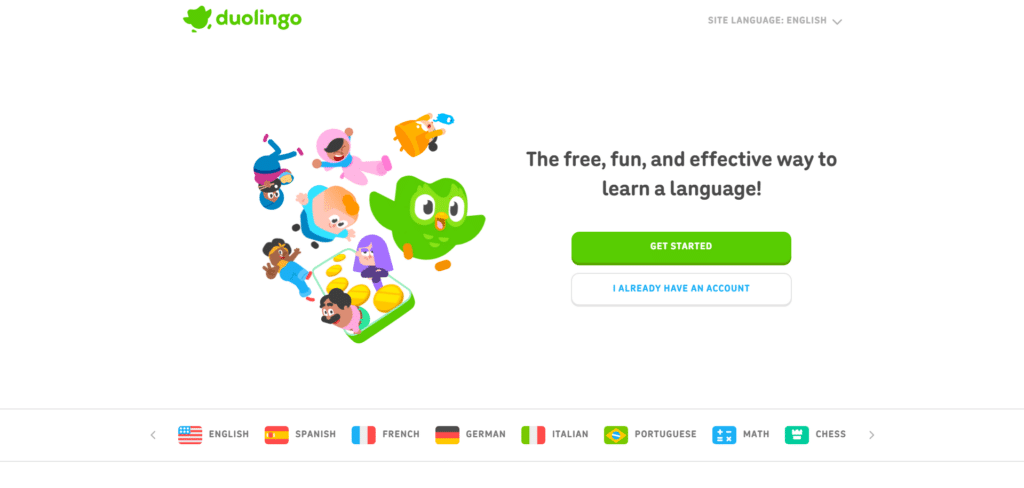
The world’s most downloaded language learning program — and it shows. Duolingo uses a gamified approach that makes learning a language feel like playing a mobile game: streaks, gems, leaderboards, and cheerful animations keep millions of casual learners coming back daily.
It covers 40+ languages and the app is free to start, making it the go-to for curious beginners dipping their toes in.
- The app is free with no paywall to get started
- Gamified experience with streaks, rewards, and leaderboards
- Massive language selection with 40+ options
- Bite-sized duolingo lessons ideal for total beginners
- Highly engaging, low-pressure daily habit builder
- Available on all devices with seamless cross-platform syncing
My Verdict (Babbel or duolingo)
Eight months. Two popular language apps. Same language. Here’s what I found: Babbel is clearly the better app, and it’s not particularly close.
After 200+ hours of testing, my Spanish with Babbel was functional — I could hold a real back-and-forth with a native speaker, order food, ask for directions, and recover when I got lost in a conversation.
Compared to Duolingo, my results were in a completely different league.
My Duolingo Spanish felt more like a performance: I could ace the exercises, keep my streak alive, and earn my XP — but the moment I stepped outside the app, I froze.
That’s the core difference between Babbel and Duolingo. Babbel does a better job of teaching you a language. Duolingo teaches you how to use Duolingo.
Babbel offers structured lessons with real grammar instruction and speech recognition that actually pushes your pronunciation.
It’s built to transfer — meaning the language skills you build inside the app work outside it too.
Whereas Duolingo is optimized for engagement, not fluency, every design decision is built around keeping you in the app longer, not getting you out of it faster because you can already speak a new language.
Duolingo also has its place.
If you’re a total beginner who needs a low-pressure, zero-cost way to build a daily habit and get a feel for a new language, it’s a perfectly fine starting point. There’s nothing wrong with that.
But if your goal is to actually speak — to travel confidently, connect with people, advance your career, or watch foreign films without subtitles — Babbel is the better choice.
It’s focused, serious, and structured in a way that Duolingo simply isn’t.
So ask yourself: do you want to keep a streak alive, or do you want to speak a new language? If it’s the latter, get Babbel.
Why Babbel Is Better Than Duolingo
After 8 months of testing both apps side by side, the difference between Babbel and Duolingo became impossible to ignore.
Babbel is clearly built differently — and those differences show up the moment you step outside the app and try to use the language that you’re learning in real life.
The biggest thing that makes Babbel better than Duolingo is how it teaches you the way language actually works, not just how to recognize patterns.
Babbel offers structured lessons built around real-world dialogues — ordering at a restaurant, asking for directions, making small talk — and then breaks down the grammar behind it so you develop a deeper understanding of the language.
During my trip to Mexico, I wasn’t just ordering food—I was joking with waiters and asking for recommendations. It only happened because of babbel.

By month two, I wasn’t just memorizing phrases. I was constructing new ones on my own.
Duolingo, by contrast, teaches you to match. Match the word to the picture. Match the translation to the sentence. It’s great for building recognition, but recognition and production are two very different language skills.
When a native Spanish speaker asked me something unexpected during my eight-month check-in, my Duolingo practice gave me almost nothing to work with. My Babbel practice gave me the tools to at least try.
Let me give you a specific example. At the 8 month mark, I sat down with a native Spanish speaker — a friend of a friend who had no idea I’d been studying.
Within the first five minutes, she asked me where I’d learned Spanish, because my sentence structure felt natural rather than translated.
That moment didn’t come from a language learning app that rewards you for tapping the right answer.
It came from 8 months of Babbel drilling real dialogue into my brain until constructing a sentence stopped feeling like a math problem and started feeling like thinking.
Duolingo and Babbel are two completely different philosophies dressed up as similar products — and that conversation proved it better than any test score ever could.”
Here’s what makes Babbel the better choice across the board:
- Babbel builds real speaking skills — lessons are structured around dialogue, not point-scoring, so you practice the actual mechanics of conversation and start developing your speaking skills from day one
- Babbel does a better job of making grammar transferable — you understand the rules of your target language, so you can apply them in situations you’ve never seen before
- Babbel’s speech recognition is genuinely challenging — it flags pronunciation errors that Duolingo doesn’t catch, which means faster, more accurate improvement
- Babbel also has no distracting game mechanics — no streaks to protect, no lives to lose. The focus stays entirely on the language
- Babbel offers structured progression — you always know where you are in your learning path and what comes next, making long-term progress feel tangible
- Babbel is the better choice per hour of study — every minute in a Babbel lesson is working toward fluency, whereas Duolingo also spends a significant portion of your time on animations, celebrations, and streak maintenance
Introducing babbel and duolingo
Babbel
Babbel is one of the most respected language learning platforms in the world — and the closest thing to a real language class you’ll find on your phone.
The Babbel app is built for anyone serious about reaching conversational fluency: adult learners returning to a language they studied in school, professionals who need a second language for work, travelers who want to do more than point at menus, and anyone who’s tried something like Duolingo and found themselves frustrated by the lack of real progress.
That said, Babbel also welcomes absolute beginners — it just respects your time more than other apps do.
What sets Babbel apart from a language learning program like Duolingo is its linguistic backbone. Babbel offers structured lessons built by over 150 language experts, and it shows in the design.
Rather than drilling vocabulary in isolation, Babbel does a better job of placing every new word and grammar concept inside a real conversation.
You learn to speak the way humans actually speak — with context, nuance, and enough understanding of the language to go off-script when the moment calls for it.
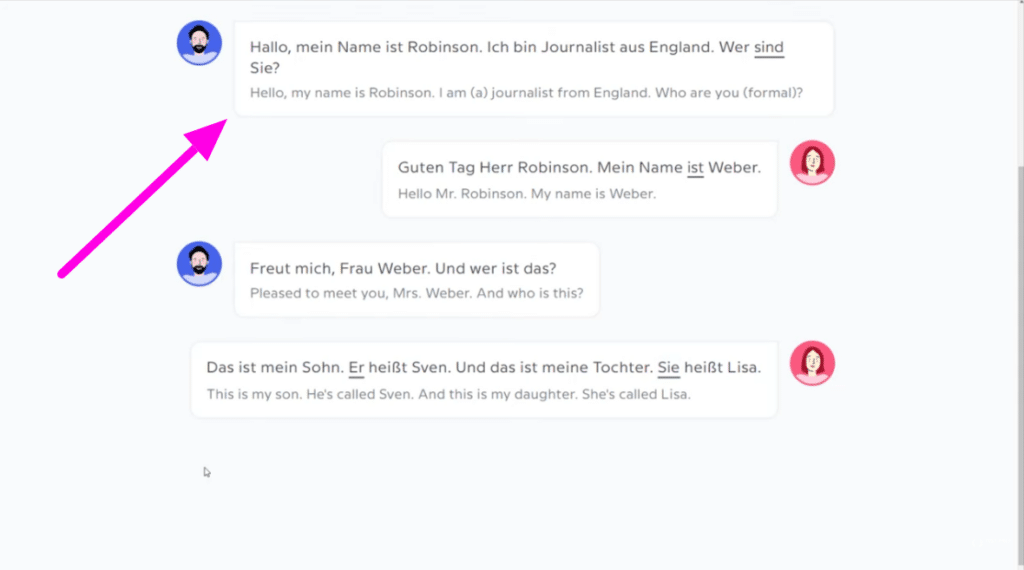
After eight months, I was having imperfect but functional conversations in Spanish. That’s what makes Babbel better than Duolingo in a single sentence.
Key features include:
- Dialogue-based lessons built around real-world scenarios
- Speech recognition for pronunciation and speaking skills feedback
- Better grammar explanations in plain language
- Review sessions that reinforce vocabulary over time
- Offline mode for learning without Wi-Fi
- 14 languages available
- Consistent 10–15 minute lesson format
- Clear learning path from beginner to advanced
Duolingo
Duolingo is the world’s most popular language learning program — a gamified, habit-building platform designed to make learning a new language feel less like studying and more like playing.
It’s best suited for total beginners exploring a new language with no pressure, casual learners who want a low-commitment daily habit, younger students who respond well to game mechanics, and anyone looking to learn a language for free before committing to a paid platform.
If you’ve never studied a language before and want to know whether you like it before spending money, Duolingo also serves as a reasonable starting point.
What makes Duolingo unique compared to Babbel is its engagement engine.
Duolingo uses a gamified system of streaks, XP points, animated characters, and competitive leaderboards to make the app genuinely fun to open every day.
Duolingo is fun — that’s a real strength, and that consistency has value in the early stages.
The problem is that Duolingo uses a gamified approach that optimizes for your return visit, not your fluency. Over time, the mechanics that keep you hooked also keep you in shallow water.
Super Duolingo (the paid tier, formerly Duolingo Plus) removes ads, adds offline access, and unlocks a few extra practice tools — but it doesn’t fundamentally change the learning experience.
It’s still Duolingo, just without interruptions.
Key features include:
- Free version with no paywall to start
- Gamified lessons with streaks, XP, and leaderboards
- Super Duolingo paid tier for an ad-free experience
- 40+ languages including less common options
- Short, bite-sized Duolingo lessons for beginners
- Listening, reading, speaking, and writing exercises
- Stories and podcast content for intermediate learners
- Cross-platform syncing across all devices
Babbel vs Duolingo — Head-to-Head Comparison
Lesson Quality & Structure
Winner: Babbel
Comparing Babbel’s lessons to a Duolingo lesson is like comparing a university lecture to a flashcard game — both have their place, but only one is going to get you to fluency.
When it comes to language learning, Babbel offers structured, dialogue-based lessons built around full conversations between real people in real situations.
You hear the exchange, break it down, understand the grammar, and practice it yourself. Every lesson feels like a deliberate step forward on your learning path.
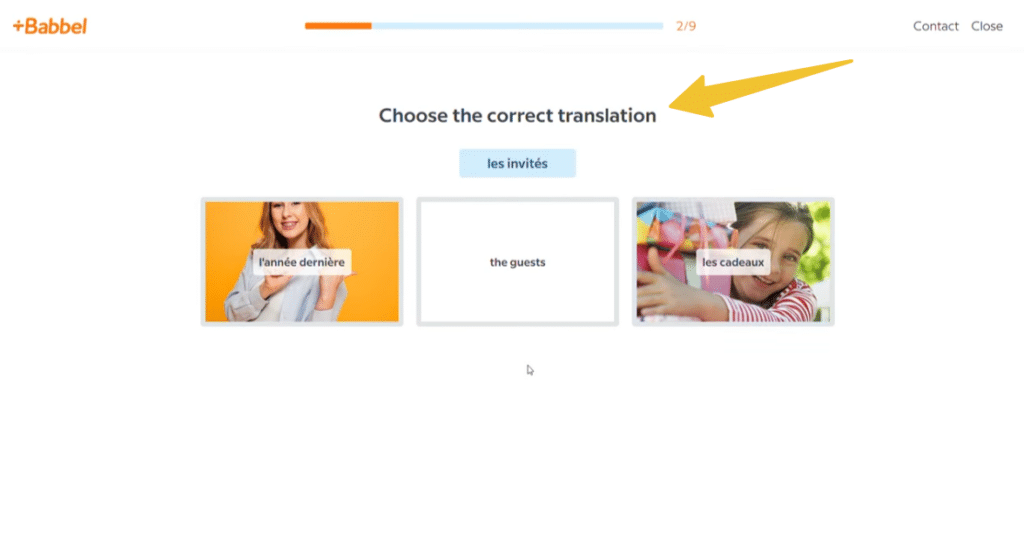
A Duolingo lesson, by contrast, is built around micro-exercises: translate this sentence, tap the missing word, match the pairs. Individually they feel satisfying — that green checkmark never gets old — but string a hundred of them together and you realize you’ve been circling the same shallow pool for weeks.
Duolingo doesn’t push you to construct language independently, and that gap becomes painfully obvious the moment you try to use your target language in the real world.
In my own experience, by the end of month one with Babbel I was constructing original sentences in Spanish.
By the end of month one with Duolingo, I was very good at tapping the right owl. Like Babbel, any good language learning platform should build real understanding of the language — and that’s exactly what separates these two.
Strong lesson structure is the single most important part of language learning, and Babbel is the better choice here by a wide margin.
Conversation & Speaking Skills
Winner: Babbel
This one isn’t close. Babbel is clearly built from the ground up with spoken conversation as the end goal, and developing your speaking skills is baked into every lesson.
The speech recognition tool actively pushes you to nail pronunciation — not just get close enough to pass.
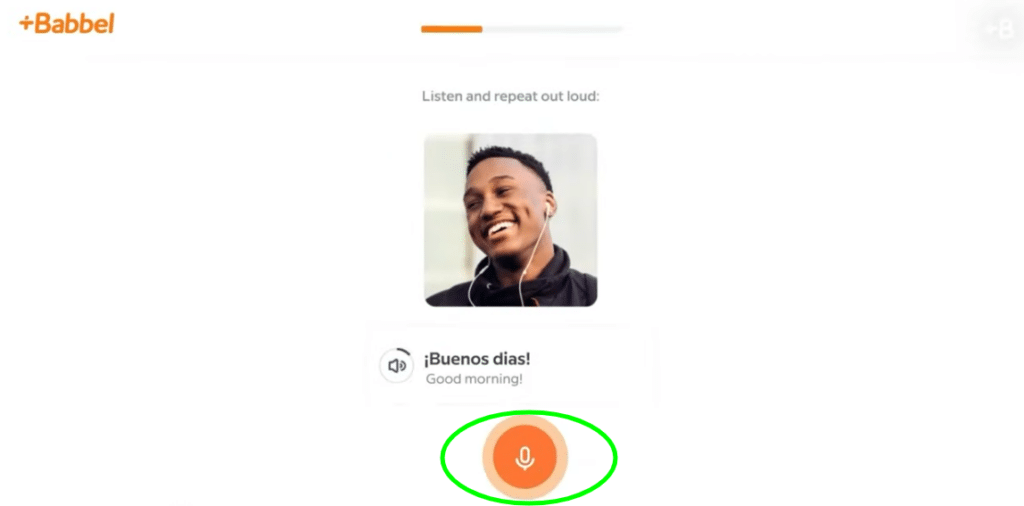
I had it reject my Spanish pronunciation four times before I got it right. That’s not frustrating; that’s exactly what learning sounds like.
Duolingo also has a speaking component, but it’s o
ptional, easy to skip, and far more forgiving than it should be. I once tested it by mumbling something vaguely similar to the correct answer — it accepted it.
That kind of leniency feels kind in the moment and costs you in the real world, because Duolingo doesn’t hold you accountable for actually developing your speaking skills.
When I sat down with a native Spanish speaker at the six-month mark, the contrast was stark. My Babbel-trained pronunciation was complimented.
My Duolingo-trained vocabulary was described, politely, as “a bit textbook.” If your goal is to speak a new language and be understood by another human being, Babbel does a better job — full stop.
Learning Methodology
Winner: Babbel
If you strip away the interfaces, the branding, and the price tags, Duolingo and Babbel are two fundamentally different answers to the same question: what is the best way to learn a language?
Duolingo’s answer is repetition through pattern recognition. Its methodology is built on behaviorist learning theory — repeat something enough times, reward the correct response, and the knowledge sticks.
For early vocabulary acquisition, this genuinely works.
The problem is that language isn’t a pattern — it’s a living system, and pattern recognition alone doesn’t teach you how to navigate it when something unexpected happens.
Babbel’s answer is comprehension through context.
Rather than drilling isolated words and phrases, the Babbel language learning app places every new concept inside a realistic scenario and explains the grammatical logic behind it.
This is closer to how immersive language courses work in academic settings, and it’s significantly more effective for language learners who want to go beyond surface-level recognition into genuine fluency.
I noticed the difference clearly around the eight-week mark.
My Duolingo sessions were still producing that satisfying hit of correct answers and XP points — but when I tried to journal in Spanish, I kept hitting walls.
I knew the words but not how to connect them.
My Babbel sessions, by contrast, had been quietly building a grammatical framework in the background that I hadn’t even noticed until I needed it.
The methodology difference between these two learning apps isn’t just academic — it shows up in real, measurable ways the longer you study.
For serious language learners chasing real fluency, Babbel’s approach wins this category and it isn’t particularly close.
Gamification & Habit Building
Winner: Duolingo
This is the one category where Duolingo is fun in a way that genuinely earns its crown. The streak system, XP leaderboards, and animated celebrations add up to an app that is almost impossible not to open every day.
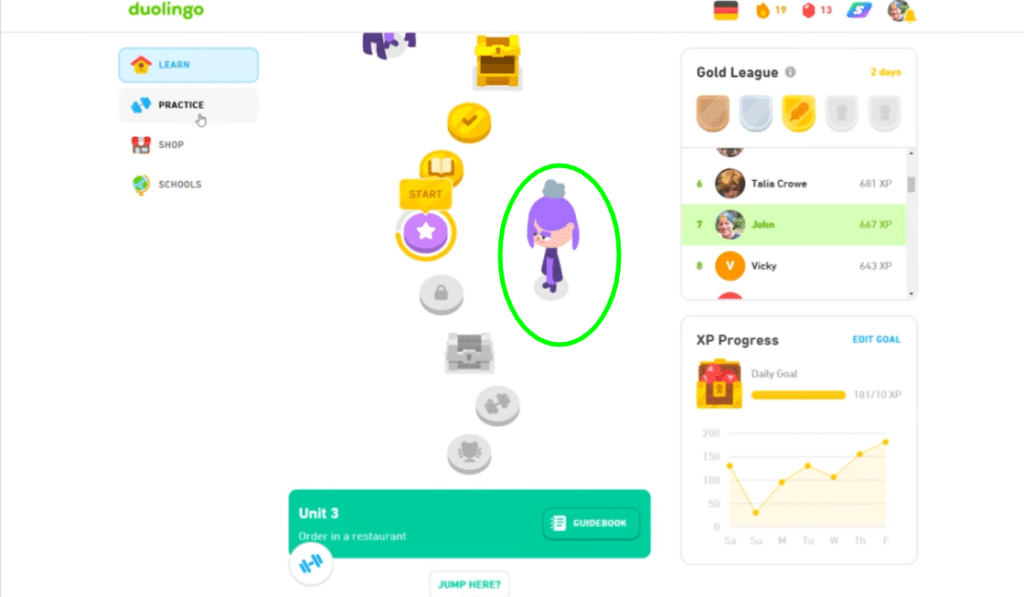
I maintained a 74-day streak during testing purely out of stubbornness.
That kind of pull is a real product achievement, and it makes language learning accessible to people who would otherwise quit after a week.
Babbel takes a more mature approach: it tracks your progress, shows your lesson completion, and lets the curriculum keep you engaged.
For self-directed learners, this works well. But for people who struggle with consistency, the lower-stimulation design of the Babbel app can make it easier to skip.
The honest caveat is that Duolingo uses a gamified system that can work against you.
I noticed myself choosing easier exercises to protect my streak rather than pushing into harder material.
The game mechanics are so well designed that they occasionally override the actual goal — which is making language learning accessible in a meaningful way, not just a daily way.
Still, when it comes to building a daily habit from scratch, Duolingo is fun enough to win this category. Just don’t confuse showing up with making progress.
Value for Money & Cost Comparison
Winner: Babbel
This cost comparison is more nuanced than it looks at first glance.
The Babbel app costs around $13 per month (or significantly less on an annual plan).
Duolingo’s free version costs nothing, and Super Duolingo runs around $7 per month. On price alone, the language app that’s free wins easily. In terms of actual value, it’s the opposite.
Value isn’t about price — it’s about what you get per dollar spent.
After eight months, my Babbel subscription delivered conversational ability I could actually use.
My free Duolingo time delivered gamified repetition that felt productive but largely wasn’t. Babbel is clearly the better investment if fluency is the goal.
Think of it this way: if you hired a personal trainer who spent half your session playing games with you instead of training you, you’d fire them regardless of how cheap they were. Like Babbel does with language, a real trainer builds real skills.
The Babbel app gives you a real trainer. Duolingo gives you a fun workout buddy. Both have value — but only one is worth paying for if you’re serious about your target language.
Language Selection
Winner: Duolingo
Duolingo offers 40+ languages, including niche options like Hawaiian, Navajo, and even High Valyrian. If you’re learning a language that falls outside the mainstream, Duolingo also covers options that Babbel simply doesn’t.
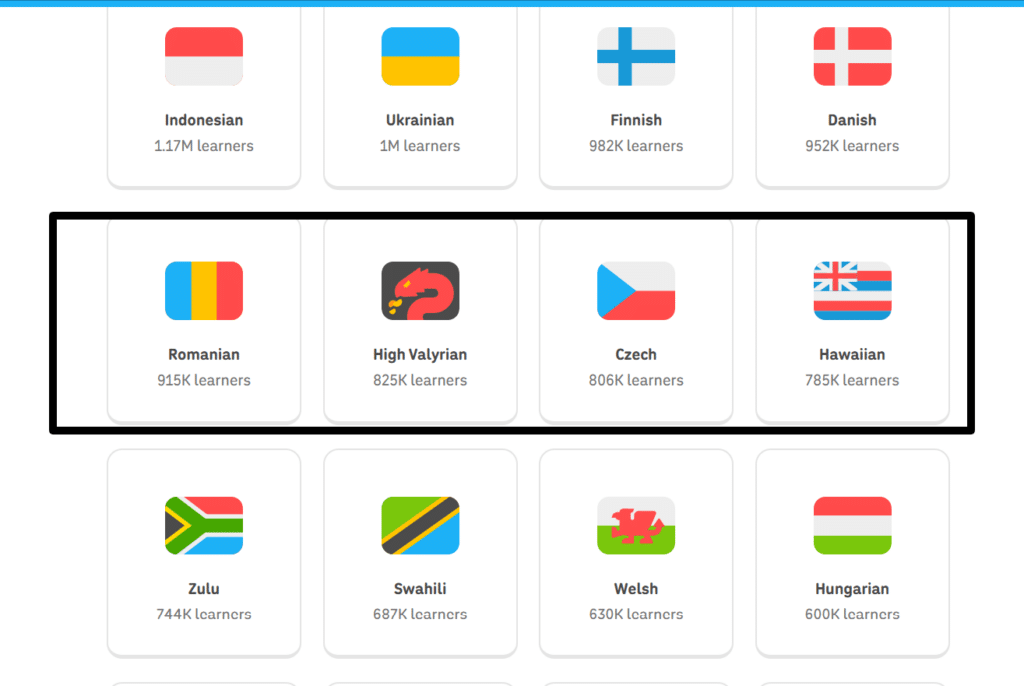
The Babbel app covers 14 languages — all major ones — but stops well short of Duolingo’s breadth.
For most learners targeting widely spoken languages, Babbel would cover everything they need.
But if you’re learning a less common language, Duolingo may be your only real app-based option.
Duolingo wins this category clearly — though for the vast majority of readers, it won’t change the overall verdict that Babbel is the better choice for serious learners.
My Final Thoughts
After eight months, 200+ hours, and one nerve-wracking conversation test with a native speaker, my conclusion is the same as it was at the 30-day mark: when it comes to language learning, Babbel is clearly the better app, and it isn’t particularly close.
Babbel and Duolingo are two very different products built for two very different learners.
Babbel offers structured lessons, rigorous speaking practice, better grammar explanations, and a learning path that was designed by people who understand how adults actually develop language skills.
The results — real conversational ability you can use outside the app — are simply in a different league.
Duolingo is free, fun, and genuinely great at one thing: making language learning accessible and getting you to show up every day.
If you’re a complete beginner, if you’re learning a niche language the Babbel app doesn’t offer, or if you genuinely just want to explore a new language without any commitment, Duolingo is a legitimate starting point. There’s no shame in it.
But the moment you get serious — the moment you want to travel, connect, work, or think in your target language — Duolingo doesn’t cut it. Babbel would get you there. Duolingo won’t.
The difference between Babbel and Duolingo comes down to this: one app is designed to make language learning accessible and enjoyable, and the other is designed to make you fluent. If all you want is a fun daily habit, use Duolingo.
If you want to speak a new language, use Babbel. Get started today — your future self, ordering coffee fluently in Barcelona, will thank you.
