

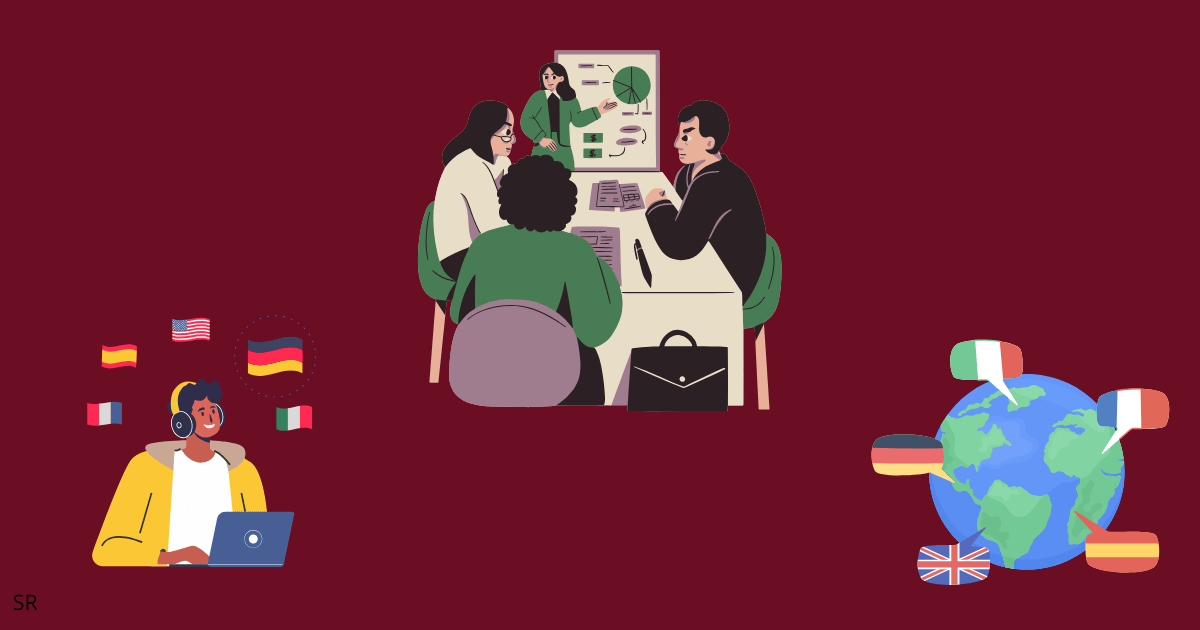
In today’s global economy, language is more than just communication — it’s a competitive edge. The best languages to learn for international Business in 2026 are Mandarin Chinese, Spanish, German, French, Arabic, and increasingly Portuguese for Brazil.
These are the top languages to learn because they’re widely spoken, serve as official languages in global organizations, and open doors to multinational companies, international trade, and high-growth regions.
Many learners start their language learning journey with apps such as Babbel, while others rely on AI language apps designed for faster practice and global communication.
Whether you’re aiming for career advancement, building business relationships, or entrepreneurship, choosing the correct foreign language can set you apart in global Business.
Why Does Learning a Business Language Matter?

Learning a business language matters because it expands business opportunities, builds trust with foreign clients, and helps you negotiate across cultures.
Companies globally want employees who can conduct Business in different languages, and those with proficiency often see higher salaries and faster promotions.
In short, learning the language of your partners isn’t just “nice to have,” it’s one of the essential business skills of the future.
When I first started working in international Business, I assumed English was enough—big mistake.
During a meeting in Switzerland, I observed a colleague transition seamlessly into speaking German with a client.
The client’s tone softened, and suddenly, details of a deal that had been stuck for weeks started flowing.
That’s when I realized: foreign language proficiency doesn’t just improve communication—it unlocks trust and better business relations.
Why it matters:
- Career growth: Multinationals like Deloitte, Siemens, and Nestlé want employees with proficiency in multiple languages. Adding Spanish, German, or Arabic to your resume shows you’re serious about international business opportunities.
- Client relationships: Using even a few words in a foreign language tells business partners you value them. It breaks down barriers in ways English alone can’t.
- Negotiation edge: Subtle cues in commonly spoken languages often decide whether deals close.
- Financial upside: Studies from the British Council show bilinguals can earn 5–20% more across the most competitive economies in the world.
Human Signals Spot
My friend Arjun is proof. He was interviewing for a global supply chain role.
The panel asked about international communication, and he mentioned he could speak Mandarin after a semester in Shanghai. Suddenly, the mood shifted.
The company had been struggling with a Chinese partner, and Arjun was the missing puzzle piece.
Two weeks later, he wasn’t just hired—he was flown to China to conduct Business on their behalf. One foreign language skill made him irreplaceable.
Takeaway: Learning a foreign language for Business isn’t just about vocabulary—it’s about signaling adaptability, cultural respect, and readiness for the languages of the future.
What are the Best Languages to Learn for international Business in 2026?

In 2026, The best languages to learn for international Business and that matter most are Mandarin Chinese, Spanish, German, French, Arabic, and Portuguese.
Each of these ties to international organizations, high-growth markets, and growing economies in the world.
They are also official languages of the United Nations, which signals their weight in global diplomacy and trade.
I used to believe learning “any” foreign language in school would help me. The truth? The languages that may make the most impact are those aligned with your industry.
Mandarin Chinese
Mandarin is the first language for more than a billion people and one of the most commonly spoken languages in the world. It’s not just a spoken language—it’s the default for tech, supply chains, and manufacturing in Asia.
China is a hub for Business in electronics, e-commerce, and finance. For anyone in trade or logistics, to learn Mandarin is to future-proof your career.
When a colleague of mine negotiated in Mandarin, our Chinese partners treated us as insiders instead of outsiders. Deals moved faster, trust grew, and costs dropped.
Mandarin is tough—over 2,000+ hours to master—but it’s undeniably one of the languages of the future. (China’s shifting industries reshape long-term growth model)
Spanish
Spanish is the spoken language of over 20 countries and is widely spoken across Central and South America, Spain, and the U.S.
It’s one of the most commonly spoken languages globally. For U.S. companies, it’s impossible to ignore.
If you speak Spanish, you instantly connect with markets in Mexico, Colombia, Argentina, and beyond.
Spanish is also one of the official languages of the United Nations, which cements its role in international organizations.
A friend of mine got promoted purely because she could handle supplier calls in Mexico. Her boss couldn’t.
That one foreign language for business skills gave her direct access to international business opportunities her peers didn’t have.
Spanish is also one of the easiest languages for English speakers to learn, taking about 600–750 hours of language learning.
It’s genuinely one of the best languages to learn for international Business if you want quick wins.
German
German is the backbone of Central Europe and a key official language within the European Union.
It’s spoken in Austria, Switzerland, and Germany—countries that run some of the strongest economies in the world.
If you speak German, you’re instantly more valuable in engineering, STEM, and finance. Firms like BMW, Siemens, and SAP conduct daily global Business in German, and being able to join those conversations makes you a stronger hire.
German can take around 900–1,100 hours for English speakers to learn, but it’s one of the most critical business languages in Europe. It’s also one of the languages for international Business that combines cultural influence with economic weight.
French
French is spoken across 29 countries, making it one of the most widely spoken official languages globally. It’s also one of the six official languages of the United Nations and a working language for countless international organizations.
Why is it so important? Beyond Paris, France dominates growing economies in the world, especially in Africa.
Countries like Senegal, the Ivory Coast, and Cameroon use French as an official language, and these are some of the growing economies in the world that investors are watching.
I used to overlook French until I saw a consulting firm win contracts in West Africa purely because its team could speak French.
That’s international business opportunities unlocked overnight.
Arabic
Arabic is spoken in more than 20 countries across the Middle East and Africa. It’s not just about culture—it’s tied directly to oil and gas industries, finance, and logistics.
If you speak Arabic, you can enter boardrooms where English doesn’t carry the same trust.
For professionals in oil and gas, banking, or international trade, Arabic is one of the languages of the future.
Yes, it takes more than 2,000 hours to reach proficiency, but it’s a gateway to some of the fastest-growing business opportunities globally.
Portuguese (Bonus: Brazil)
While not always listed in the “big five,” Portuguese is one of the commonly spoken languages of the Americas, and Brazil alone makes it one of the languages for international Business you can’t ignore.
Brazil is Latin America’s largest economy and a rising hub for Business in energy, fintech, and e-commerce.
If you learn a foreign language beyond Spanish, Portuguese is the logical choice. It’s a foreign language for Business that connects you not just to Brazil but also to Portugal, Mozambique, and Angola—all growing economies in the world.
I met a colleague who spoke Portuguese as a second or third language.
When his firm expanded into São Paulo, he was the only one who could conduct Business directly. Guess who got the promotion?
How Do You Choose the Right Language for Business?

The right choice depends on your career goals, the regions you’ll target, and how much time you’re willing to invest in language learning.
Here’s a framework:
-
- Career goals: Finance → German, Mandarin, Arabic.
- Tech/engineering → Mandarin, German.
- Diplomacy/law → French, Arabic.
- Trade/logistics → Spanish, Portuguese.
- Target regions: European countries / within the European Union → German, French.
- Asia → Mandarin.
- Middle East and Africa → Arabic, French.
- Central and South America → Spanish, Portuguese.
- Difficulty: Easier for English speakers to learn: Spanish, French, German.
- Harder: Arabic, Mandarin (but high ROI).
Quick story: A coworker debated Arabic vs. Spanish. She was in the oil and gas industry, so Arabic made sense. But she couldn’t keep up with new scripts.
She switched to Spanish, became fluent in 12 months, and doubled her clients across Central and South America. Sometimes the “best” language is the one you’ll actually master.
Best Strategies to Learn a Business Language Faster
The fastest way to learn a language for international Business is to:
- Focus on business vocabulary → Learn words tied to important Business concepts like “quarterly report” or “profit margin,” not “butterfly.” (Harvard Business Review – Why Language Skills Matter in Business)
- Take online courses → Platforms like Babbel, Coursera, and iTalki help target a foreign language for business needs.
- Immerse in media → Listen to business news (BBC Business News), podcasts, or YouTube in your target language.
- Join networking groups → LinkedIn groups, local meetups, or industry events in European countries or Central Europe.
- Apply it in real work → Write emails, take calls, or even add small phrases in your foreign language with business partners.
Pros: Builds proficiency, faster trust with foreign clients, and expands international business opportunities.
Cons: Awkward at first, mistakes happen, takes time.
Takeaway: Don’t wait for “perfect.” Use your foreign language from day one in global business settings.
Conclusion
Learning a foreign language isn’t just about words—it’s about unlocking international business opportunities.
The languages to learn for global Business in 2026 are Mandarin, Spanish, German, French, Arabic, and Portuguese for Brazil.
Mastering even one of these languages for English speakers can help you thrive in growing economies in the world, build trust with foreign clients, and give you an edge in important business sectors.
FAQs
Q1: What is the easiest business language to learn?
Spanish and French are the easiest foreign languages in schools for English speakers to learn due to their similarities and resources.
Q2: Which language gives the most significant salary boost?
Mandarin and German often lead in high-pay industries like engineering, finance, and the oil and gas industries in the strongest economies in the world.
Q3: Is it better to learn Spanish or Mandarin for Business?
Speak Spanish if you want quick fluency and international business opportunities in the Americas. Learn Mandarin for long-term growth in Asia—one of the clear languages of the future.
Q4: Are business languages worth learning if I use English daily?
Yes. English is global, but languages spoken by foreign clients strengthen business relations and make you stand out in international organizations.
Q5: How long does it take to learn a business language?
FSI estimates: Spanish/French (600–750 hours), German (900–1,100), Mandarin/Arabic (2,200+). That’s why these are languages that may require heavy effort but yield the strongest international business opportunities.
