
Did you know that a Spanish speaker can understand up to 89% of written Portuguese without any formal training? That’s right!
The similarities become even more noticeable when using structured practice methods alongside adaptive study systems that reveal how vocabulary and phonetics overlap across regions.
Whether you’re a language enthusiast, a Spanish learner looking to expand your linguistic horizons, or simply curious about the fascinating connections between languages, you’re about to discover which languages share the most DNA with Spanish— and how tools like the language learning apps can help you explore them faster.
From shared vocabulary to nearly identical grammar structures, I’ll dive deep into the Romance language family tree and reveal why some languages feel like Spanish’s linguistic siblings!
Portuguese: Most similar language to spanish
Let me tell you, the first time you try speaking Spanish in Portugal, you’ll think you’re gonna be FINE. 89% lexical similarity, right? Wrong. You’ll confidently ask for “salada” (salad) and get exactly what you want. But then you’ll try to say you’re embarrassed – “embarazada” – and watch the waiter’s eyes go wide. Turns out you just announced you’re pregnant!
Portuguese and Spanish are like siblings who grew up in different houses. They share the same Latin parents, developed side by side through history but picked up different habits along the way.
When you read Portuguese newspapers, you’ll understand almost everything – that 90% written intelligibility is no joke.
But listening? That drops to maybe 50% on a good day. Portuguese is the closest Romance language to Spanish, which makes it one of the easiest languages to learn if you already speak Spanish.
The pronunciation throws you for a loop. Portuguese speakers sound like they’re speaking Spanish with marbles in their mouths sometimes.
All those nasal tones and the “sh” pronunciations – Brazilian Portuguese especially loves turning “s” sounds into “sh” at the end of words. The phonetic differences between these two languages can be jarring at first.
Here’s what helps: false friends will trip you up badly. “Largo” means wide in Spanish but long in Portuguese. “Borracha” is drunk in Spanish but rubber in Portuguese (I learned that one the hard way at a hardware store).
But then you’ve got gifts like “comer” (to eat), “beber” (to drink), and “dormir” (to sleep) – the same in both languages.
Brazilian Portuguese actually feels easier for Spanish speakers compared to European Portuguese. Brazilians pronounce vowels more clearly and speak slower. It’s been your gateway to understanding Portuguese better.
To some extent, you’ll automatically understand basic conversations once you get used to the rhythm.
The Romance Language Family Tree: Understanding Spanish’s Relatives
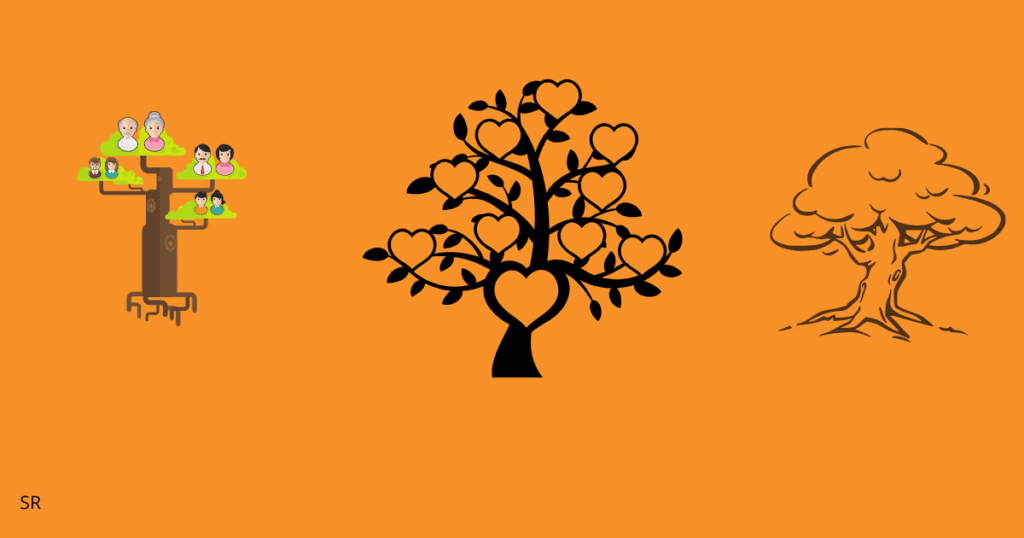
Do you know how family reunions get weird when cousins start comparing who looks more like grandma? That’s basically the Romance language family tree.
They’re all fighting over who inherited the most from Vulgar Latin, their common ancestor.
Spanish sits pretty close to the trunk of this family tree, sharing branches with its Romance siblings.
You’ve got Italian being the dramatic cousin who kept the most Latin vocabulary – seriously, about 85% of Italian words come straight from Latin.
French is like that cousin who moved to the city and got fancy, changing so much that Latin would barely recognize her anymore.
The historical development of these languages from their Latin root is fascinating to study.According to Ethnologue, there are actually 44 living Romance languages today, all descended from Vulgar Latin – way more than most people realize!
Here’s where it gets interesting: Spanish and Portuguese are basically twins separated at birth.
They share about 89% of their vocabulary, which means you can kinda-sorta understand Portuguese if you speak Spanish.
Romanian? That’s the cousin nobody talks about who moved to Eastern Europe and picked up some Slavic habits along the way.
Each major Romance language evolved differently based on geographical influences.
The coolest part is seeing how they all handle the same Latin word differently.
Take the Latin word “noctem” (night). Spanish says “noche,” Italian goes with “notte,” French gets fancy with “nuit,” and Portuguese keeps it chill with “noite.”
You can see the family resemblance! This analysis of word evolution helps you understand the group as a whole.
Catalan throws everyone for a loop because it sits right between Spanish and French – like that cousin who can’t pick a side at family arguments.
And don’t even get me started on Sardinian, which somehow kept ancient Latin features that everyone else dropped centuries ago.
Understanding these relationships makes learning any Romance language SO much easier.
The idea is that once you understand one, learning another language in the family becomes much more manageable.
H2: Italian: The Mediterranean Connection to Spanish
OMG, you wanna know something wild?
Spanish and Italian are so similar that you can literally fake your way through basic Italian conversations just by adding vowels to the end of Spanish words.
I am not kidding – this actually works like 60% of the time! If you want to learn Italian after Spanish, you’ve got a huge head start.
These Mediterranean cousins share about 82% lexical similarity, which basically means they’re close enough to accidentally understand each other at family dinners.
When you look at basic vocabulary, it’s almost comical how similar they are. Spanish says “comer,” and Italian says “mangiare” – okay, that one’s different.
But then you get “hablar” vs “parlare,” “vivir” vs “vivere,” and “dormir” vs “dormire.” See the pattern?
These writing systems might look different, but the base vocabulary is surprisingly similar.
The pronunciation is where things get fun. Italian has this musical quality that makes everything sound like opera (stereotypical but true).
While Spanish keeps it pretty straightforward with five vowel sounds, Italian doubles down on those open vowels and adds dramatic hand gestures for emphasis.
You’ll notice Italians pronounce every single letter – no dropping sounds like Spanish speakers do with their “d” endings.
The phonological differences are what make Italian sound so distinct as a spoken language.
Here’s a trick that’ll blow your mind: tons of Spanish words ending in “-ción” become “-zione” in Italian.
“Nación” becomes “nazione,” “estación” becomes “stazione.” Once you catch onto these patterns, you’re basically halfway to reading Italian newspapers.
This is why Italian is considered one of the most popular languages to learn for Spanish speakers.
The false friends, though? They’ll get you.
“Burro” means butter in Italian, not donkey.
“Salire” means to go up, not to leave.
But honestly, the similarities outweigh the differences so much that learning Italian after Spanish feels like unlocking a cheat code.
You can become fluent much faster than starting from scratch.
Catalan: Spain’s Other Native Language
Have you ever met someone who insists they’re not speaking Spanish, and you’re like,… but it kinda sounds like Spanish?
Welcome to the world of Catalan!
This language throws everyone for a loop because it’s Spain’s other native language that definitely isn’t Spanish, even though your brain keeps trying to decode it that way.
Catalan is spoken by about 10 million people, mostly in Catalonia, Valencia, and the Balearic Islands.
Here’s the thing that’ll mess with your head – it’s actually closer to French than Spanish in some ways.
When you hear “bon dia” (good morning) instead of “Buenos días” or “si us plau” (please) instead of “por favour,” you realize this isn’t just Spanish with an accent.
People who live in Barcelona deal with this language duality every day.
The pronunciation will throw you off completely. Catalan loves consonant clusters that Spanish would never touch.
Words like “request” (this) or “llengua” (language) have sounds that’ll tie your tongue in knots if you’re used to Spanish’s smoother flow.
And don’t get me started on that neutral vowel sound – it’s like the “uh” sound in English “about.” Many high school students in Catalonia learn both languages from an early age.
What really trips people up is the vocabulary overlap. You’ll understand maybe 70% of written Catalan if you know Spanish, but then random words come outta nowhere.
“Gossos” means dogs (Spanish: perros), and “finestra” means window (Spanish: Ventana).
It’s like your Spanish knowledge helps just enough to make you overconfident, and then BAM – you’re lost.
In the long term, understanding Catalan helps you grasp the diversity of the Iberian Peninsula.
Barcelona street signs really bring this home.
Everything’s in Catalan first, Spanish second. You’ll see “Sortida” instead of “Salida” (exit) and slowly realize Catalan isn’t playing around – it’s a whole separate language with its own personality.
This language is also spoken in parts of France and even has official status in Andorra.
French: The Distant Romance Cousin
Okay, so French is like that cousin who studied abroad and came back all different. You know they’re family, but man, they’ve changed!
While the Spanish kept things pretty close to Latin, the French went off and did their own thing completely. Many people who want to learn French after Spanish find it surprisingly challenging.
The numbers really tell the story here – French and Spanish only share around 75% lexical similarity. That might sound like a lot, but trust me, it’s not enough to wing it.
You’ll recognize some words like “hospital” (hôpital) or “animal” (animal), but then French hits you with “Eau” for water (Spanish: agua), and you’re like… where did THAT come from?
French is a major language in the Western world, spoken in France, Belgium, Switzerland, and many African countries.
The pronunciation gap is honestly brutal. Spanish speakers pronounce every letter nice and clear, while French decided half their letters were just decorative.
You write “beaucoup” but say “boh-koo.” Those silent letters everywhere will drive you crazy! And don’t even get me started on the French “r” – it’s nothing like the Spanish rolled “rr.”
Here’s what kills me: the grammar similarities are actually pretty strong. Both use two genders, similar verb conjugations and put adjectives after nouns (mostly).
But French had to go and make counting weird – “four twenties and ten” for 90? Really?
The false friends between these two are legendary.
“Embarazada” (pregnant) vs “embarrassé” (embarrassed) gets everyone.
“Constipado” means you have a cold in Spanish, but “constipé” in French means… let’s just say you need more fibre. These mix-ups have caused some seriously awkward moments in French class!
Comparing Mutual Intelligibility: Which Languages Can Spanish Speakers Understand?
Do you ever wonder why some languages just click while others leave you completely lost?
Well, buckle up because mutual intelligibility between Spanish and other languages is a wild ride that’ll surprise you.
Portuguese takes the crown here – Spanish speakers can understand about 50-60% of spoken Portuguese and a whopping 90% of written Portuguese.
That’s crazy good! The written stuff makes sense because the spelling is similar, but spoken Portuguese?
That’s where things get tricky. Those nasal sounds and the way Brazilians turn every “s” into “sh” will mess with your head.
Italian comes in second place, with Spanish speakers understanding roughly 30-40% of spoken Italian.
Not bad, right? The rhythm and intonation feel familiar, and you’ll catch enough words to follow basic conversations.
Written Italian bumps up to maybe 60% comprehension – those similar word endings really help.
Now French? Oh boy. You’re looking at maybe 15-20% spoken intelligibility on a good day. French has changed so much from Latin that Spanish speakers are basically starting from scratch.
Written French helps a tiny bit – maybe 30% – but those silent letters everywhere make it rough.
Here’s what nobody tells you: understanding isn’t equal both ways! Portuguese speakers generally understand Spanish better than Spanish speakers understand Portuguese. Weird but true.
And Catalan throws everyone off because Spanish speakers might catch 60-70% but think they understand 90%.
The real game-changer?
Context helps massively. Watching Portuguese news about a topic you know? Your comprehension shoots up. But drop yourself in a Brazilian bar with people talking fast about local stuff? Good luck catching even 20%.
Practical Applications: Leveraging Language Similarities
So you wanna use these language similarities to actually get somewhere? Smart move! Understanding how languages connect can literally save you years of study time and open doors you didn’t even know existed.
The job market goes crazy for people who can leverage these similarities. Do you speak Spanish?
Boom – you’re already 60% of the way to adding Portuguese to your resume. Companies doing business in Brazil will pick you over monolingual candidates every single time.
One recruiter told me they specifically look for Spanish speakers because training them in Portuguese takes three months instead of two years.
Here’s the travel hack nobody talks about: Spanish gets you WAY further than you think.
You can navigate Portugal, parts of Italy, and even Romania without being completely lost. Sure, you won’t have deep conversations, but ordering food, finding bathrooms, asking directions? Totally doable. Just remember to speak slowly and use lots of hand gestures!
Translation work becomes super lucrative when you understand these patterns. Spanish-to-Portuguese translation pays well because clients know you’ll catch nuances that Google Translate misses.
Those false friends we talked about? They’re literally worth money when you don’t mess them up in business documents.
Learning strategies get supercharged, too. Instead of starting Italian from zero, focus on the differences from Spanish.
Skip the stuff you already know and zoom in on those tricky pronunciation changes. You’ll reach a conversational level in six months instead of two years.
The confidence boost is real, too. Once you successfully fake your way through ordering lunch in Lisbon using Spanish-ified Portuguese, learning languages stops feeling impossible.
Conclusion:
So, what language is most similar to Spanish? The crown undoubtedly goes to Portuguese, with its remarkable 89% lexical similarity and high mutual intelligibility rates.
But as we’ve discovered, Spanish’s relationship with its Romance language siblings creates a fascinating web of connections that extends far beyond just Portuguese.
Whether you’re drawn to the melodic sounds of Italian, the regional flavor of Catalan, or even the more distant French, understanding these linguistic relationships opens doors to faster language learning and deeper cultural connections.
Ready to expand your linguistic horizons?
Start with Portuguese or Italian – your Spanish skills have already given you a massive head start! Remember, every Romance language you explore brings you closer to understanding the beautiful tapestry of Latin’s modern descendants.
